Maye Musk challenges 20 years of negative press on Tesla and Elon

scanx
Reviewed by
Ashish TScanX News Team
Key Highlights
  • Maye Musk disputes claims of 20 years of negative press for Tesla and Elon Musk
  • She cites personal gratitude from individuals as contradicting media narratives
  • Response followed THR coverage of Alex Gibney’s documentary calling Musk miserable
  • Tesla faces scrutiny over safety, software, and Musk’s public conduct
  • Musk’s companies continue to generate both positive and negative headlines
powered bylight_fuzz_icon
51205819

*this image is generated using AI for illustrative purposes only.

Maye Musk has publicly challenged the narrative of predominantly negative media coverage surrounding her son, Elon Musk, and Tesla over the past two decades. She highlighted a disconnect between press reports and the gratitude she receives from individuals regarding Musk’s companies.

The model and author responded to recent coverage by The Hollywood Reporter concerning filmmaker Alex Gibney’s upcoming documentary about Musk. The report included a description from a former colleague who called Musk "the most miserable man I’ve ever met."

Maye Musk Points To The Disconnect

Maye Musk disputed the characterization on X, stating she has not seen her son as miserable. She noted that while the media has focused on negative aspects for 20 years, people regularly thank her for the impact of Musk’s companies.

She questioned whether the public believes the media narrative, pointing to the contrast between headlines and personal interactions. Actor James Woods joined the exchange in support of Maye and Elon Musk.

Tesla’s Headlines Have Covered Plenty Of Ground

The criticism surrounding Tesla has spanned multiple areas, including vehicle safety investigations, recalls, software concerns, and financial results. Musk’s activities on X and political involvement have also generated significant controversy.

Tesla has faced scrutiny over Autopilot, Full Self-Driving capabilities, and production issues. Despite this, the company’s transformation of the electric vehicle market and SpaceX’s achievements have produced substantial positive coverage.

A Different Kind Of Investment Conversation

The exchange underscores how headlines can shape market sentiment independent of underlying business performance. Musk’s public profile continues to dominate news cycles for reasons often unrelated to vehicle performance or operational metrics.

Maye Musk directed followers to her upcoming book, Timeless, where she discusses these themes further. The situation illustrates the gap between public perception driven by media and the private experiences reported by those close to the Musk family.

Disclaimer: This article is AI-generated using data from ViewTrade. ScanX is not liable for any inaccuracies.

How might the release of Alex Gibney’s documentary influence Tesla’s stock volatility and investor sentiment in the short term?

Will Maye Musk’s public defense and upcoming book, *Timeless*, effectively shift the narrative around Elon Musk’s leadership style among retail investors?

To what extent does the disconnect between media perception and user gratitude impact Tesla’s brand loyalty and long-term customer retention?

like20
dislike

Tesla, SpaceX sue TERA-print over Terafab name for $16.8 billion chip plant

scanx
Reviewed by
Suketu GScanX News Team
Key Highlights
  • Tesla and SpaceX sued TERA-print LLC in Austin federal court over the 'Terafab' trademark.
  • The dispute involves a planned $16.8 billion AI chip complex in Grimes County, Texas.
  • TERA-print claims its 'Tera-Fab' mark for bioengineering lithography systems is infringed.
  • Musk estimates 75% of compute output will go to SpaceX, with 25% for Tesla robots.
  • Future investment phases could raise total spending to as high as $119 billion.
powered bylight_fuzz_icon
51186981

*this image is generated using AI for illustrative purposes only.

Tesla Inc. (NASDAQ: TSLA) and Space Exploration Technologies Corp. (NASDAQ: SPCX) filed a lawsuit against Illinois-based nanotechnology firm TERA-print LLC in federal court in Austin on Tuesday. The companies seek a declaration that their use of the "Terafab" name for a planned $16.8 billion AI chip complex in Texas does not infringe TERA-print’s registered "Tera-Fab" trademark.

The legal action follows a cease-and-desist letter from TERA-print after Tesla filed three trademark applications with the U.S. Patent and Trademark Office (USPTO) in May. TERA-print holds a federal registration for "TERA-FAB," which covers a desktop photolithography system used in bioengineering. The company argued in June that Musk’s ventures could create consumer confusion and threatened litigation.

Trademark Dispute Details

Tesla and SpaceX reject the infringement claim, stating that "no reasonable consumer is likely to believe" their chip manufacturing facility is affiliated with TERA-print’s desktop lithography products. The complaint emphasizes that the entities serve different customers and operate in distinct technology sectors.

TERA-print stated it discussed a settlement with Tesla as recently as Sept. 2. However, the company said it was "misled by Tesla’s professed interest in settling this matter" and will now "vigorously defend its rights." Tesla did not immediately respond to requests for comment.

Terafab Project Scale

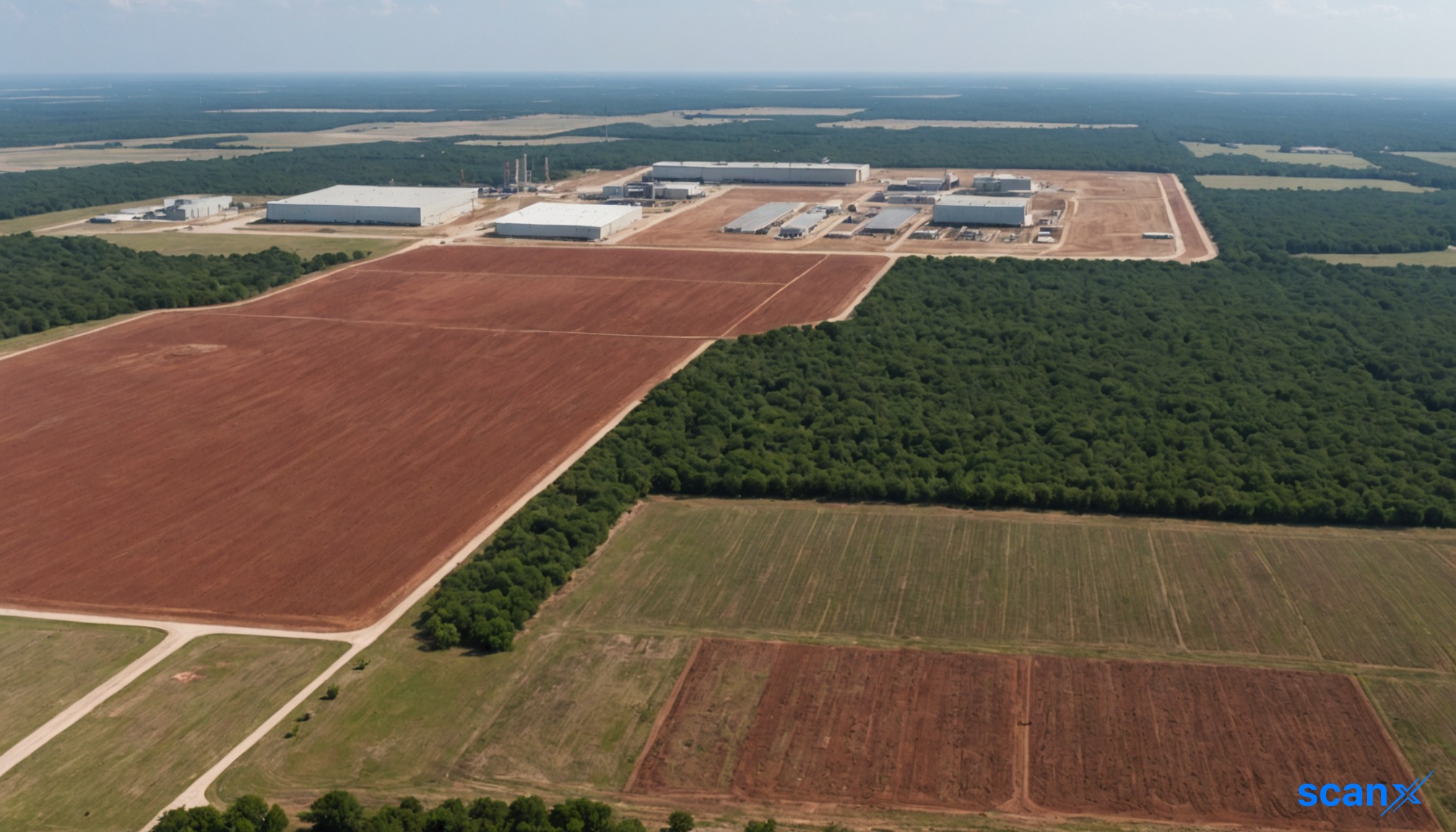
The dispute coincides with significant expansion plans for Musk’s manufacturing ambitions. In August, Tesla and SpaceX confirmed Grimes County as the site for Terafab. The initial investment of $16.8 billion targets a 100-million-square-foot complex designed to make, package, and test advanced logic and memory chips under one roof.

SpaceX indicated the facility will employ at least 3,000 people. Filings suggest future phases could push total investment as high as $119 billion. Musk has described the facility as essential for producing AI chips "at scale for use on Earth and in space."

Compute Allocation Estimates

Musk previously estimated the split of Terafab’s AI-compute output, though he characterized the figures as a "very approximate guess." The projected allocation is as follows:

End User Estimated Share
SpaceX (AI spacecraft) 75%
Tesla (Optimus robots) 25%

The plant aims to supply chips for Tesla’s Optimus robots and Cybercabs, as well as SpaceX’s proposed space-based data centers. Nvidia CEO Jensen Huang recently commented that while the project may look audacious, Musk is capable of executing it.

Disclaimer: This article is AI-generated using data from ViewTrade. ScanX is not liable for any inaccuracies.

How might a prolonged legal battle over the 'Terafab' trademark impact the $16.8 billion construction timeline and initial production schedules for the Texas AI chip complex?

Given the projected 75% allocation of compute to SpaceX, what are the potential regulatory or geopolitical implications of developing space-based data centers and AI spacecraft capabilities?

If TERA-print prevails in court, how significant would a rebranding effort be for Tesla and SpaceX in terms of marketing costs and brand recognition for the massive Grimes County facility?

like19
dislike

More News on Tesla Inc