

Tesla Optimus faces durability issues; FF chair sees 2027 commercialization


- Tesla targets producing more than 1,000 Optimus robots weekly by end of 2026
- Faraday Future chairman Jerry Wang views 2027 as a realistic year for Optimus commercialization
- Hardware rated 60/100 but software only 10/100, with training data identified as key barrier
- Polymarket assigns 10% probability to public purchase availability by end of 2026
- Faraday Future delivered over 500 robots across various models this year

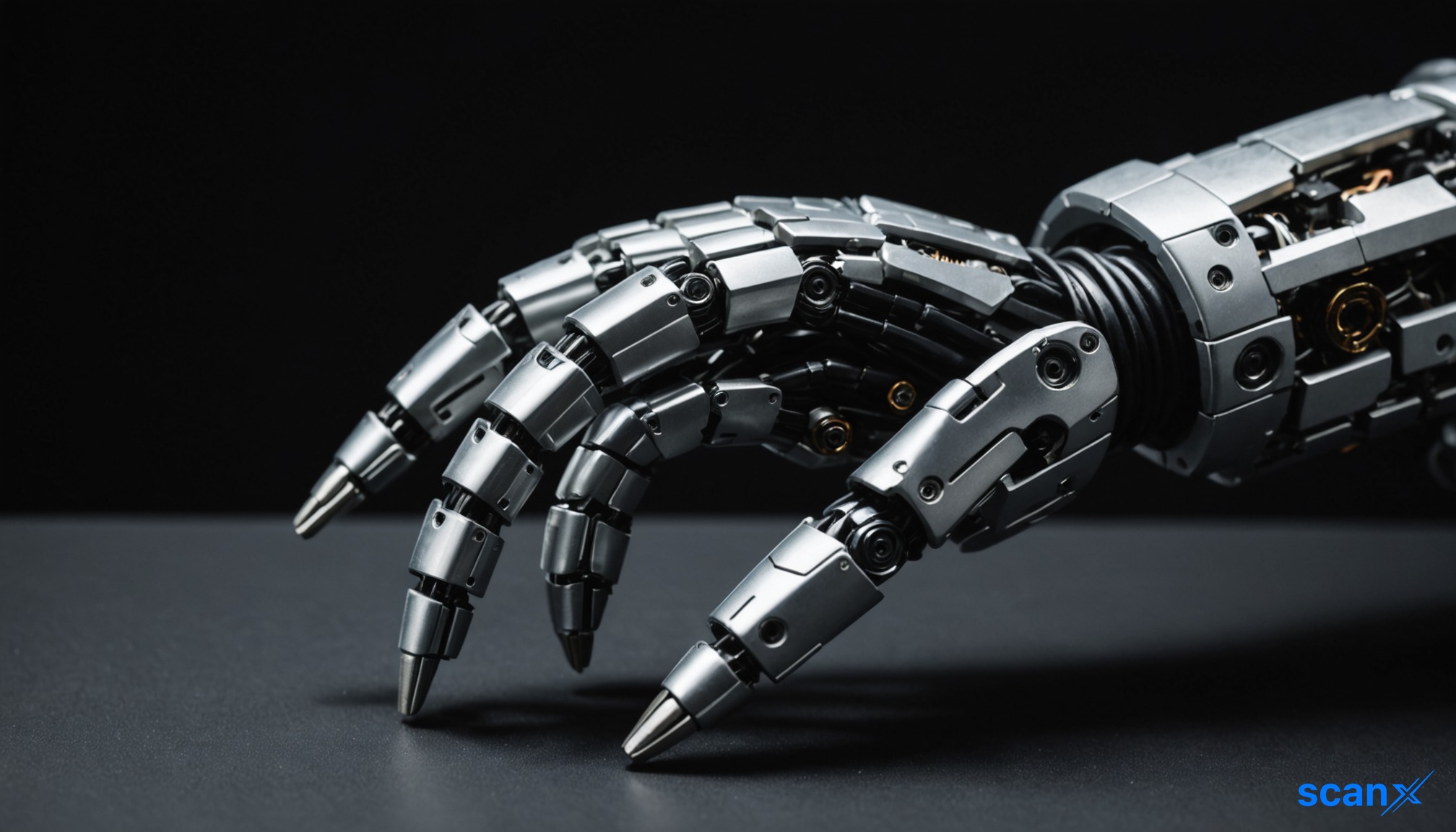

*this image is generated using AI for illustrative purposes only.
Tesla Inc. (NASDAQ: TSLA) is encountering significant challenges in its Optimus humanoid robot project, specifically regarding dexterous hands and supplier networks, while industry peers debate the timeline for commercial deployment. These operational snags threaten to delay the broader rollout of the autonomous machine.
The difficulties specifically impact the robot's ability to perform fine motor tasks, a critical requirement for industrial applications. Supply chain constraints further complicate the procurement of specialized components needed for mass production.
Production Targets and Ramp-Up
According to a report by The Information, cited by Reuters, Tesla aims to establish a production line capable of producing more than 1,000 robots per week by the end of 2026. This ambitious target follows a recent period of rapid expansion, with the company having ramped up production of the Optimus robot approximately tenfold in recent months.
Manufacturing and Durability Concerns
The sophisticated hands of the Optimus robot pose major manufacturing and durability issues. These technical hurdles are central to the current bottlenecks in scaling up operations. The combination of design complexity and supply chain limitations highlights the gap between prototype success and mass-market viability.
| Metric | Status/Target |
|---|---|
| Current Production Ramp | Approximately 10x increase in recent months |
| Weekly Production Target | 1,000+ robots |
| Target Deadline | End of 2026 |
| Primary Challenge | Hand durability and manufacturing complexity |
Commercialization Timeline Debate
Jerry Wang, Global Executive Chairman of Faraday Future (NASDAQ: FFAI), stated that Tesla could realistically turn its Optimus humanoid into a commercial product next year. "I think it's very realistic," Wang said when asked about a 2027 launch. He argued that hardware is no longer the primary barrier; instead, software and training remain the critical hurdles.
"The hardware is not a barrier right now. The barrier is software and training," Wang noted, pointing to Tesla's computing power and data access as advantages. He rated current robot hardware at 60 out of 100, while rating the necessary software at just 10 out of 100.
Data Bottleneck and Market Skepticism
Wang identified a data bottleneck as a key constraint, explaining that robots require experience from physical machines operating in real-world environments to learn effectively. "Without enough robots, you won't have enough data," he said. "Even failure is a great data; [a] robot will know what not to do."
Tesla CEO Elon Musk has acknowledged this gap, stating during the second-quarter earnings call that no humanoid robot can currently perform generalized tasks. While JPMorgan suggests commercial sales of Optimus Gen 3 could begin in the second half of 2027, prediction markets remain skeptical. Polymarket prices in about a 10% chance that Tesla makes Optimus available for public purchase by the end of 2026.
Competitive Landscape and Pricing
Faraday Future has shifted focus toward robotics, delivering more than 500 robots across humanoid, quadruped, and wheeled models this year. Wang predicts useful humanoid robots could cost less than $20,000 within three to five years. He expects humanoids to eventually account for roughly half of the robotics market due to their suitability for human-designed environments.
However, Wang noted that humanoids are not always the optimal tool. For simple warehouse jobs, wheeled robots with arms may be cheaper and more efficient than bipedal machines requiring balance and walking capabilities.

How might Tesla's reliance on external suppliers for dexterous hand components impact its ability to meet the 1,000 robots per week production target by late 2026?
If hardware maturity outpaces software training as suggested by industry experts, what specific AI breakthroughs are required to close the gap for generalized task performance?
How will the projected drop in humanoid robot costs to under $20,000 within five years affect the adoption rates of specialized wheeled or quadruped robots in industrial settings?
 20
20



 Create Custom Screeners
  Access 200+ Pre-built Filters
  Use 50+ Readymade Screener





