

Micron rises 5% as Intel CEO warns of severe memory supply constraints


- Micron shares rose more than 5% after Intel CEO warned of severe memory supply constraints.
- Intel CEO Lip-Bu Tan stated memory chip prices have climbed five to seven times due to AI demand.
- Micron Q3FY26 revenue surged 345% to $41.46 billion with an 84.9% non-GAAP gross margin.
- TrendForce estimates server DRAM prices could reach six times mid-2025 levels by end of 2026.


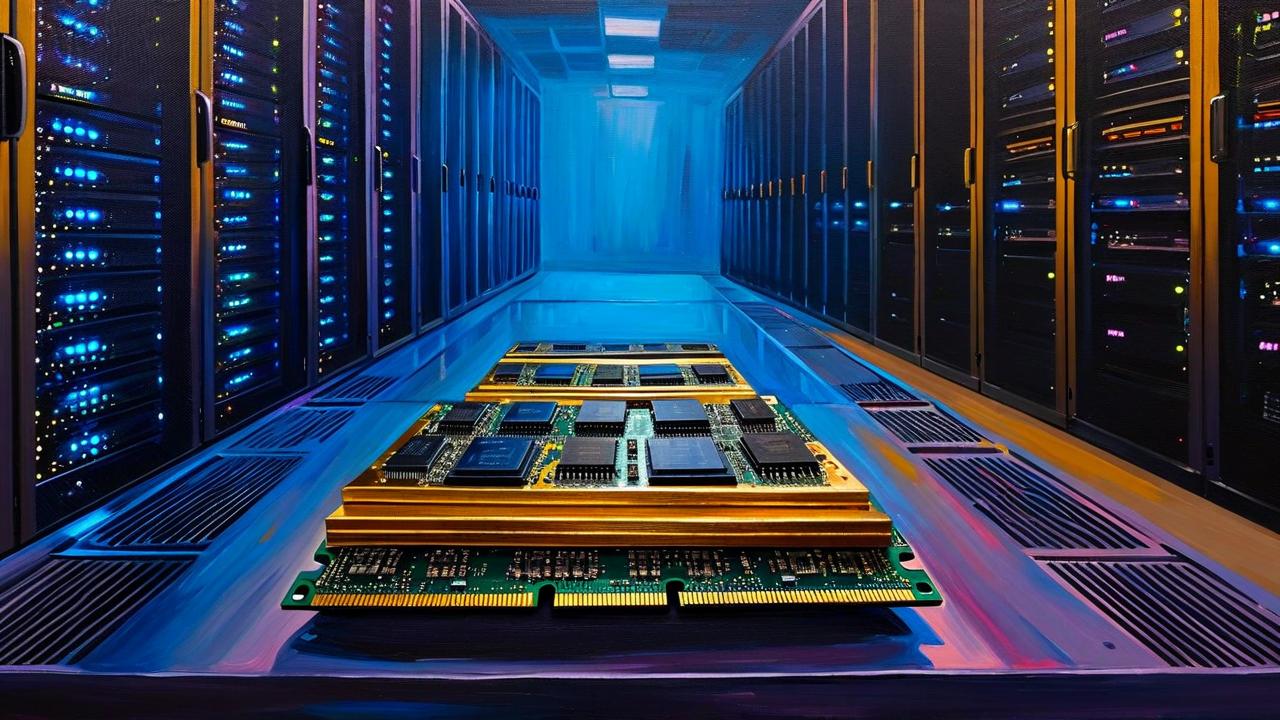
*this image is generated using AI for illustrative purposes only.
Micron Technology Inc. (NASDAQ: MU) shares rose more than 5% Thursday, driven by comments from Intel Corp. (NASDAQ: INTC) CEO Lip-Bu Tan regarding severe memory supply constraints. Tan warned that memory chip prices have climbed between five and seven times as limited supply struggles to keep pace with artificial intelligence demand.
SK hynix Inc. (NASDAQ: SKHY) also gained about 5% in the session, while the Nasdaq rose more than 1% following the Federal Reserve’s decision. Micron is scheduled to report fiscal fourth-quarter results on Sept. 30, providing investors with further data on whether the shortage continues to support pricing power.
Market Context and Supply Constraints
Tan made his remarks at the AI Infrastructure Summit in Santa Clara on Tuesday. He indicated that the bottleneck could worsen next year. This view aligns with SK hynix CEO Kwak Noh-jung, who told Reuters in July that 2027 would be the worst year in the industry’s history for supply.
TrendForce estimates server DRAM contract prices rose 64% in the second half of 2025 and could climb another 270% during 2026. Compounded, these figures suggest prices could reach roughly six times their mid-2025 level by the end of 2026.
What the Numbers Show
Micron’s financial performance reflects the impact of these tight supply conditions. Fiscal third-quarter revenue reached $41.46 billion, up from $9.30 billion a year earlier. During the same period, non-GAAP gross margin hit 84.9%. The combination of massive revenue growth and near-85% margins indicates that price increases are translating directly into profitability rather than just volume expansion.
| Metric | Q3FY26 | Q3FY25 | Change |
|---|---|---|---|
| Revenue | $41.46 billion | $9.30 billion | +345.8% |
| Non-GAAP Gross Margin | 84.9% | Not disclosed | N/A |
The company guided to roughly $50 billion in fourth-quarter revenue and an 86% gross margin. Micron stated in June that 14 of its first 16 strategic customer agreements carried about $100 billion in minimum contracted revenue. These agreements utilize price bands designed to provide visibility through the memory cycle.
Long-Term Outlook
Yorkville America CEO Steve Neamtz told Benzinga this week that new factories capable of materially easing the memory shortage may not reach full production until 2028 or 2029. Micron CEO Sanjay Mehrotra said in June that supply should improve only gradually in 2028. This timeline suggests Micron may benefit from tight supply well beyond 2027 if demand holds.
Prediction traders remain bullish on the AI spending cycle supporting memory demand. Polymarket gives Nvidia Corp. (NASDAQ: NVDA) about a 71% chance of ending 2026 as the world’s largest company, with more than $7 million traded. This matters for Micron because Nvidia’s AI accelerators require large amounts of high-bandwidth memory, one of the tightest parts of the memory market.

How might the projected 270% price increase in server DRAM by 2026 impact the capital expenditure budgets of major cloud service providers and AI developers?
Given that new memory factories may not reach full production until 2028 or 2029, what alternative supply chain strategies are hyperscalers employing to mitigate long-term dependency on Micron, SK hynix, and Samsung?
Could the sustained high margins (86%+) trigger antitrust scrutiny or regulatory intervention regarding pricing power in the concentrated memory chip market?
 19
19







 Create Custom Screeners
  Access 200+ Pre-built Filters
  Use 50+ Readymade Screener





