

Micron stock falls 2% as tariff fears overshadow AI memory demand


- Micron stock fell 2.2% to $937.60 in premarket trading amid tariff fears
- Nasdaq futures dropped 1.23% while S&P 500 futures shed 0.65%
- Former Nvidia exec Jeff Herbst says memory makers operate at capacity
- Analysts estimate EPS of $31.26 and revenue of $50.78 billion for Sept. 30 earnings



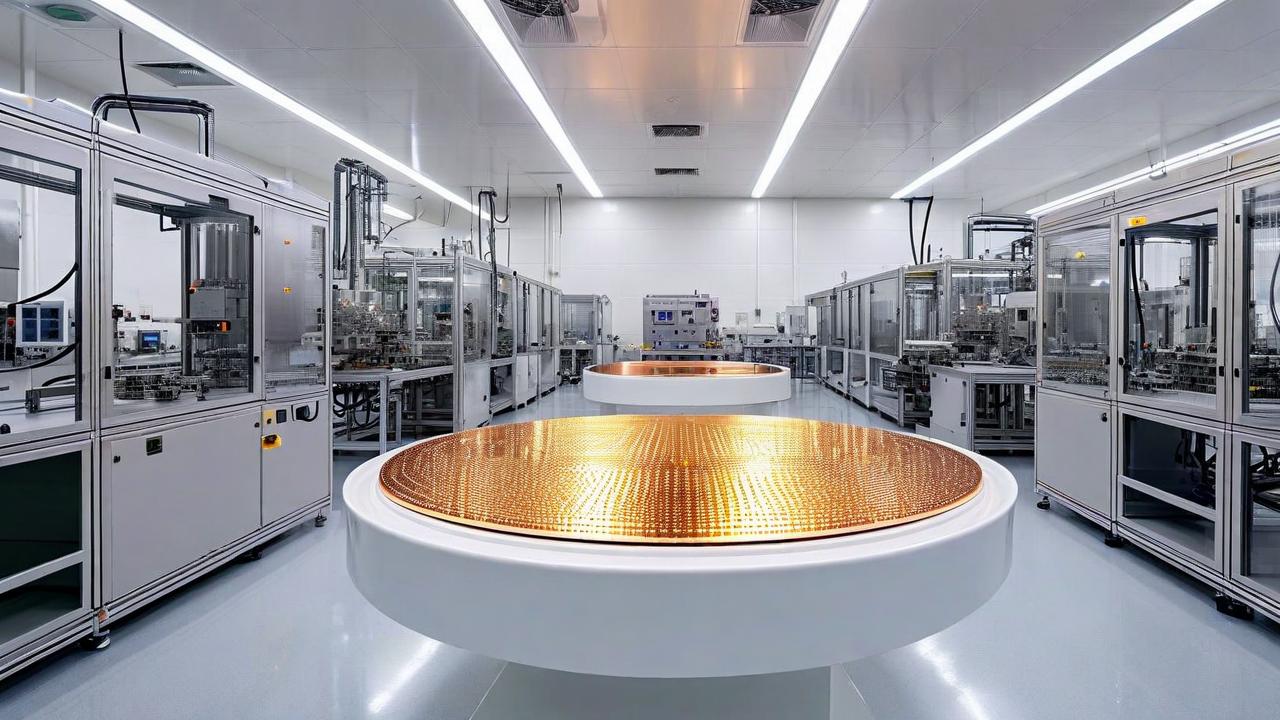
*this image is generated using AI for illustrative purposes only.
Micron Technology Inc. (NASDAQ: MU) shares declined 2.20% to $937.60 in Tuesday premarket trading, pressured by fresh policy uncertainty and a softer broader market backdrop.
Nasdaq futures dropped 1.23% while S&P 500 futures shed 0.65% during the same period, reflecting investor caution ahead of the company’s quarterly earnings report on Sept. 30.
Nvidia Highlights Memory Supply Constraints
Nvidia’s recent earnings underscored the tight supply dynamics benefiting Micron. Nvidia CFO Colette Kress noted "extreme pricing conditions in memory," stating that price increases have exceeded prior expectations and could rise further next year.
Nvidia CEO Jensen Huang projected that demand could grow about 100% next year, but supply constraints may limit revenue growth to roughly 70%. Micron supplies high-bandwidth memory alongside SK Hynix and Samsung.
Former Nvidia executive Jeff Herbst reinforced this view, stating that Samsung Electronics Co. Ltd., SK Hynix Inc., and Micron are operating at capacity. He noted that new fabrication plants take years to build, which he expects will keep memory prices elevated. Herbst also confirmed that Nvidia has secured long-term supply agreements with all three major memory manufacturers.
Gartner Forecasts Massive Memory Revenue Surge
Gartner expects worldwide semiconductor revenue to rise 92% to approximately $1.6 trillion in 2026 and $1.9 trillion in 2027, driven by AI infrastructure spending.
Memory revenue is forecast to surge from $220.1 billion in 2025 to $837.3 billion in 2026, exceeding $1 trillion in 2027. DRAM revenue is expected to rise 246.6% this year, while NAND revenue could jump 371.9%.
| Metric | 2025 Forecast | 2026 Forecast | 2027 Forecast |
|---|---|---|---|
| Worldwide Semiconductor Revenue | - | $1.6 trillion | $1.9 trillion |
| Memory Revenue | $220.1 billion | $837.3 billion | >$1 trillion |
U.S. Expansion and Policy Risks
President Donald Trump praised Micron’s new $10 billion U.S. research investment, adding to its earlier $250 billion commitment to domestic manufacturing. The Boise, Idaho-based Micron Research Labs focuses on memory and AI technologies.
Micron remains the only U.S.-based manufacturer of high-bandwidth memory, a critical component for domestic AI supply-chain security. However, reports suggest the Trump administration is considering new semiconductor tariffs on data center servers, laptops, and gaming consoles, raising cost concerns for technology companies.
What the Numbers Show
The divergence between Nvidia’s projected 100% demand growth and its capped 70% revenue growth highlights the severity of supply constraints. This bottleneck supports the pricing power cited by Nvidia’s CFO, validating the strong margin environment for memory suppliers like Micron despite broader market volatility.
Analyst Outlook and ETF Exposure
Micron reports earnings on Sept. 30. Analysts estimate EPS of $31.26, up from $3.03 year-over-year, and revenue of $50.78 billion, up from $11.31 billion. The stock trades at a P/E of 21.7x.
The consensus rating is Buy with an average price target of $1,521.74 (range: $1,100 to $2,000) across 50 analysts. Recent actions include:
- Mizuho: Outperform (target lowered to $1,300)
- New Street Research: Upgraded to Buy (target $1,250)
- Citigroup: Buy (target lowered to $1,150)
Micron holds significant weight in key ETFs, including Invesco S&P 500 Momentum ETF (SPMO) at 9.81%, State Street SPDR NYSE Technology ETF (XNTK) at 8.14%, and SMART Earnings Growth 30 ETF (SGRT) at 9.67%. Fund flows will directly impact stock price action.

How might potential new U.S. semiconductor tariffs on data center servers impact Micron's competitive advantage as the sole domestic HBM manufacturer?
Could the projected 100% demand growth outpace Micron's capacity expansion plans, leading to further supply bottlenecks and sustained high pricing power?
What risks do Micron's elevated valuation multiples pose if the upcoming September 30 earnings report fails to meet the significant year-over-year growth expectations?
 15
15











 Access 50+ Readymade Screeners
  Use 200+ Custom Filters
  Get Full Market Insights





