Starlink to back up mobile networks during hurricanes

1 min read     Updated on 19 Jun 2026, 02:48 PM
scanx
Reviewed by
Suketu GScanX News Team
AI Summary

Flow Cayman partners with Starlink to provide satellite backup for mobile networks during hurricanes, ensuring automatic failover when terrestrial links fail. The service comes at no extra cost to customers and builds on previous emergency uses of Starlink in the Caribbean. SpaceX stock recently closed at $185.00.

powered bylight_fuzz_icon
43406298

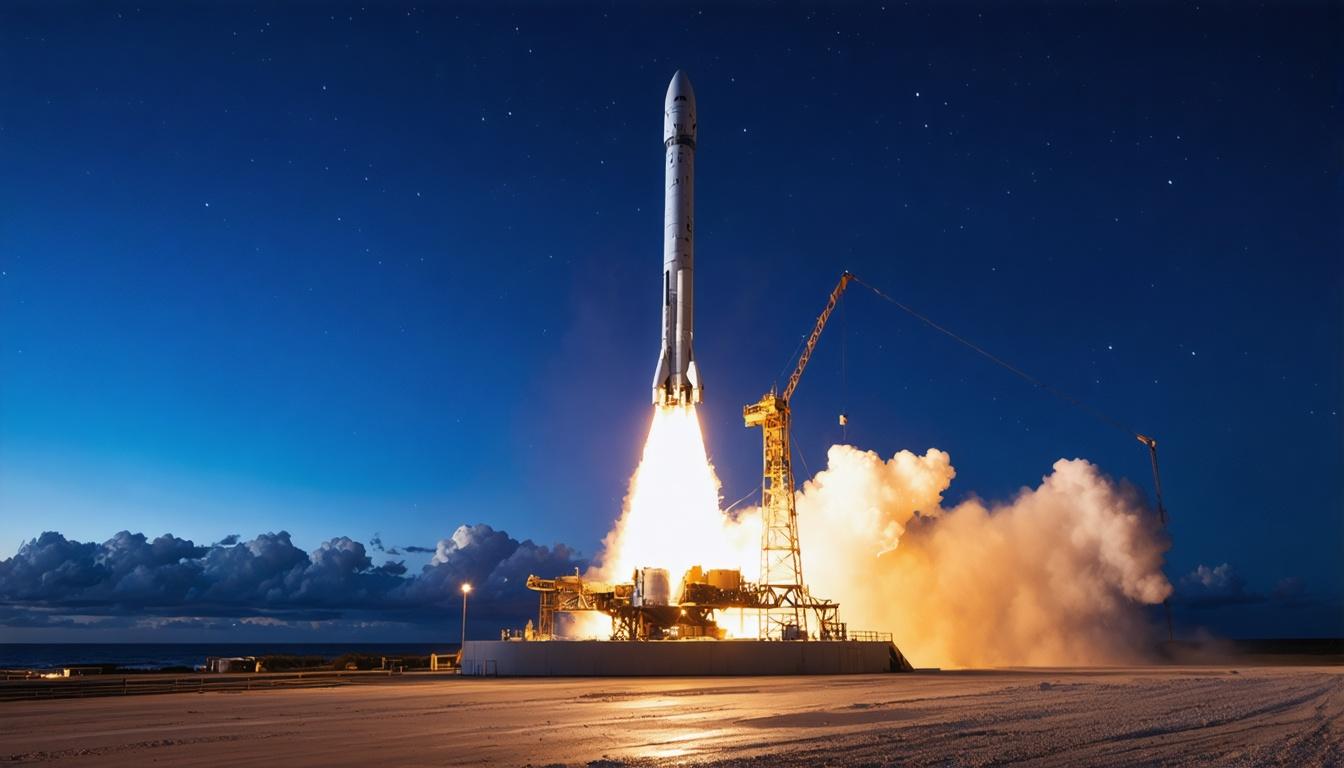
*this image is generated using AI for illustrative purposes only.

Flow Cayman has partnered with Starlink to provide satellite-based backup connectivity for its mobile network ahead of the peak Atlantic hurricane season. The agreement aims to prevent network blackouts by addressing the vulnerability of fiber-optic and terrestrial links during major infrastructure failures. Elon Musk highlighted the initiative, stating that Starlink provides backup connectivity to cell towers, ensuring phone service works when it is most needed.

Automatic Failover Mechanism

The new system is designed to maintain mobile services even when traditional infrastructure is disrupted. While mobile towers already possess battery and generator backups for power, the Starlink integration resolves the issue of lost network connectivity due to damaged landlines. Flow Cayman Country Manager Bruno Delhaise explained that if the primary connection is lost, connectivity will automatically fail over to satellite links.

"Everything happens in the background," Delhaise said. "They would use their phone seamlessly, and that phone will connect as usual to their mobile connections." The transition requires no action from customers, and the service will be provided at no additional cost.

Starlink's Emergency Role

This deployment reflects Starlink's increasing use as emergency communications infrastructure. The partnership builds on lessons learned from previous hurricanes in the Caribbean, including Jamaica, where Starlink was utilized to restore connectivity in affected areas. Beyond this specific agreement, Starlink has been used to support remote healthcare facilities and disaster-hit regions globally.

In 2024, SpaceX offered free Starlink internet access to people affected by Hurricanes Helene and Milton through the end of the year. The company continues to expand its footprint in critical communication sectors, leveraging its satellite constellation to bridge gaps during crises.

SpaceX Stock Performance

SpaceX shares closed at $185.00 on Thursday, down 3.56% for the day. The stock fell a further 1.84% to $181.60 in after-hours trading. Despite recent volatility, analyst ratings indicate a positive trend for the stock over the short, medium, and long term.

Will this partnership model be expanded to other Flow Caribbean territories or regions prone to natural disasters?

How will the implementation of satellite failover impact Flow Cayman's operational costs and capital expenditures?

Could this integration accelerate regulatory approval for similar direct-to-cell satellite partnerships in other markets?

like20
dislike

SpaceX IPO surges as Draper hails Musk's vision

3 min read     Updated on 19 Jun 2026, 10:56 AM
scanx
Reviewed by
Riya DScanX News Team
AI Summary

SpaceX launched the largest IPO in history, raising $75 billion, with shares initially surging 43% before experiencing significant volatility. Venture capitalist Tim Draper commended Elon Musk for revitalizing the space and transportation industries, drawing parallels to Tesla and PayPal. The stock saw wild swings, hitting $225 before retreating to $174, amid an all-stock deal to acquire Anysphere and a hawkish Fed outlook.

powered bylight_fuzz_icon
42563555

*this image is generated using AI for illustrative purposes only.

Space Exploration Technologies Corp. began trading on the Nasdaq on June 12, setting a record for retail investor demand in a single session. The IPO generated roughly $75 billion in gross proceeds from 555.6 million shares sold at $135 each, surpassing Saudi Aramco's 2019 listing as the largest IPO on record. The stock climbed sharply in early trading, closing Monday at $192.50, a gain of nearly 43% from the listing price. The debut has triggered not only a historic market milestone but also an unconventional scientific reflection from venture capitalist Tim Draper, who suggested the event could reshape how humanity thinks about space and energy.

Draper Links IPO To Scientific Reframing

In a post on X on Monday, Draper argued that the company's massive IPO represents more than a financial event and could push science to reconsider foundational ideas about matter and energy. "In the wake of the SpaceX IPO, with space being the final frontier, I think it is time for science to rethink their fundamental theories," Draper wrote. He suggested a shift in perspective, stating, "If instead of looking at this as mass and energy, let's just look at it as energy," and referenced a broader philosophical view: "We are all energy."

Draper Says Musk Revived Transportation And Space

Draper further praised the listing as a defining moment for Elon Musk and private innovation, noting it showed how founders can force industries to imagine a different future. "My take on @SpaceX going public: $75 billion raised. Largest IPO in history. Stock up 19% on day one," Draper wrote. He said Musk "brought new life to the space and transportation markets" after years in which legacy automakers and governments set the pace. Draper argued that Tesla Inc. challenged the old "big three" auto model and SpaceX turned space from a government-led field into one full of "extraordinary Star Trekkian possibilities." "The biggest returns don't come from the financial models, but rather from the moment a founder forces the world to see something differently," Draper wrote.

IPO Frenzy Turns Into Early Volatility Test

The rally took another jolt after SpaceX agreed to buy the parent of AI coding startup Cursor, Anysphere, in an all-stock deal valued at about $60 billion. Excitement also spilled into options trading, where contracts on SpaceX drew heavy activity. But the stock later pulled back as the Federal Reserve signaled a more hawkish 2026 rate outlook, pressuring high-valuation growth names. In seven days, SPCX went from $135 to $225 and back to $174, a 67% surge followed by a 22% drop before SpaceX filed its first public earnings report. SpaceX shares closed 3.56% lower at $185.00 on Thursday, dropping a further 1.84% to $181.60 in after-hours trading.

Wall Street Raises Expectations

Analysts quickly adjusted expectations following the debut, with price targets ranging from $165 to $190. Wedbush analyst Dan Ives called the listing a definitive triumph for the tech sector, noting it could help pave the way for future artificial intelligence IPOs. According to Benzinga Edge Stock Rankings, SpaceX is showing a positive price trend across the short, medium, and long-term timeframes.

Trading Volume And Financial Metrics

Leif Abraham, co-CEO of financial platform Public, noted that SpaceX's debut trading day was unlike anything his platform had ever seen. The stock was 533% above the second most traded stock that day. Over 522 million shares exchanged hands on Nasdaq alone on Friday, a debut-day turnover figure that shattered previous records. Despite a $4.9 billion loss in 2025, investor appetite remains strong. Based on 2025 revenue of $18.7 billion, SpaceX's valuation exceeds the combined market capitalization of all 12 aerospace and defense companies on the S&P 500.

Company Price-to-Sales Ratio
NVIDIA Corp 20.03
Apple Inc 9.48
Alphabet Inc 10.53
Microsoft Corp 9.44
Tesla Inc 14.34
Amazon.com Inc 3.57
Meta Platforms Inc 6.97

Segment Performance

Starlink generated approximately $11.4 billion in revenue during 2025, accounting for 61% of SpaceX's total revenue. The satellite internet unit produced operating income of about $4.4 billion on margins of roughly 36%, supported by more than 10 million subscribers across 164 countries. SpaceX's launch services business generated an estimated $4 billion in revenue, while Starship development consumes about $3 billion annually in research and development spending.

How will the $60 billion all-stock acquisition of Anysphere impact SpaceX's cash flow and debt profile given the company's recent $4.9 billion net loss?

Can Starlink maintain its 36% operating margins as the subscriber base expands into more competitive and lower-revenue international markets?

Will the Federal Reserve's hawkish rate outlook for 2026 continue to pressure SpaceX's valuation, considering its high price-to-sales ratio compared to tech giants like Apple and Microsoft?

like15
dislike

More News on SpaceX