

SpaceX hits $2.65 trillion valuation as index inclusion looms


SpaceX (SPCX) reached a $2.65 trillion market cap, surpassing Amazon, driven by a tiny 4% float and anticipation of Nasdaq 100 inclusion. Morningstar values the company at $780 billion, citing a $4.94 billion net loss in 2025 and a $4.28 billion loss in Q1 2026, largely due to $12.7 billion in AI investments. While Starlink remains profitable, the xAI unit lost $6.4 billion, and prediction markets suggest low odds for near-term orbital data center success.

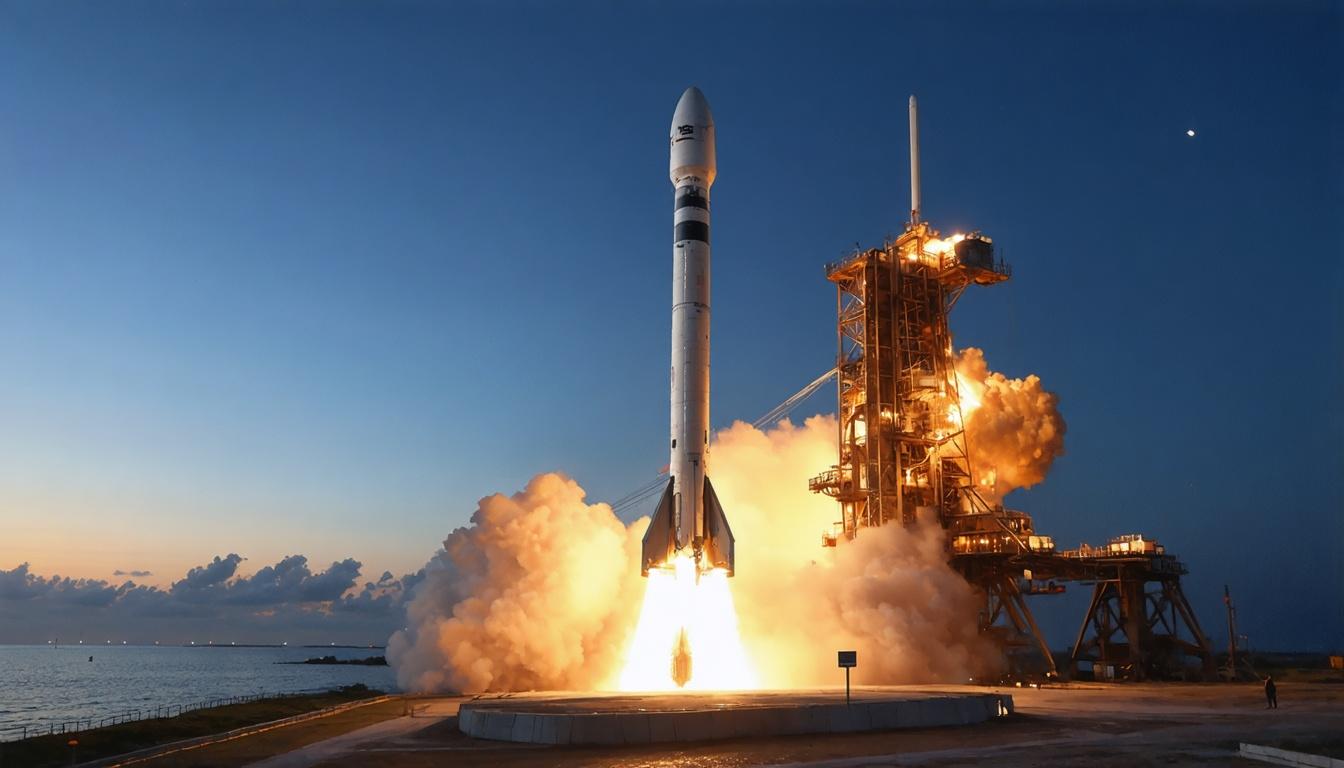

*this image is generated using AI for illustrative purposes only.
SpaceX (SPCX) has surged to a $2.65 trillion market cap, surpassing Amazon.com Inc., driven by a tiny 4% float of available shares and intense investor hype. This valuation stands in stark contrast to the $780 billion fair value estimate by Morningstar equity analyst Nicolas Owens. The company's rapid ascent follows its June 12 debut, where shares closed at $161, and has since climbed to $192.50, fueled by a forced wave of buying from index funds and a staggered lock-up schedule that limits supply.
Business Breakdown and Valuation
The company's revenue composition and profitability differ significantly from its "space" branding. In 2025, SpaceX generated $18.67 billion in total revenue. Starlink contributed approximately 69% of this total, delivering $4.4 billion in operating income at a 39% margin. Conversely, the rocket launch business contributed only 13% of revenue with 9% year-over-year growth. The xAI unit, absorbed in February 2026, brought in $3.2 billion in revenue but recorded $6.4 billion in operating losses. Owens' discounted cash flow model values the mature core of rockets and Starlink at $611 billion, while the AI segment adds roughly $170 billion on a probability-weighted basis.
Financial Performance and AI Spending
SpaceX posted a $4.94 billion net loss in 2025 following the xAI merger and lost another $4.28 billion in the first quarter of 2026. The AI segment remains the primary financial drain, with the company pouring $12.7 billion into AI initiatives last year. Owens estimates only a 7% chance that Starship becomes rapidly reusable and that orbital data centers prove cheaper than ground sites simultaneously. Prediction markets on Kalshi give a 39% chance of a one-megawatt data center going live in orbit before 2035.
Index Inclusion and Lock-Up Calendar
A major catalyst for the stock is the upcoming Nasdaq 100 inclusion. Following a March 2026 rule change creating a "Fast Entry" pathway, SpaceX qualifies for index addition in roughly 15 trading days. Analysts estimate passive funds could purchase close to 30% of the available float. The S&P 500, however, will not allow SpaceX to join for at least a year. Concurrently, SpaceX has implemented a staggered lock-up schedule. Insiders can sell 20% of holdings two days after the first earnings report in August, with additional tranches unlocking through day 180. Elon Musk and major backers have voluntarily extended their restrictions to 366 days.
Key Financial Metrics
| Company | Metric | Value |
|---|---|---|
| SpaceX | IPO Price | $135 |
| SpaceX | Open Price | $150 |
| SpaceX | Close (June 12) | $161 |
| SpaceX | Close (June 15) | $192.50 |
| SpaceX | Market Cap | $2.65 trillion |
| SpaceX | 2025 Revenue | $18.67 billion |
| SpaceX | 2025 Net Loss | $4.94 billion |
| SpaceX | Q1 2026 Loss | $4.28 billion |
| SpaceX | Starlink Operating Income | $4.4 billion |
| SpaceX | xAI Operating Loss | $6.4 billion |
| SpaceX | AI Investment (2025) | $12.7 billion |
| SpaceX | Morningstar Fair Value | $780 billion |
| SpaceX | Analyst High Target | $227 |
| SpaceX | Analyst Low Target | $63 |

How will the stock price react when the staggered lock-up schedule begins releasing additional shares into the market in August?
Can the xAI unit reduce its operating burn rate to justify the $170 billion probability-weighted valuation assigned to it?
What impact will the eventual S&P 500 eligibility have on the stock once the one-year waiting period expires?
 17
17













 Access 50+ Readymade Screeners
  Use 200+ Custom Filters
  Get Full Market Insights





