

Michael Burry flags Nvidia's $105B OpenAI guarantee as circular financing risk


- Michael Burry cites Nvidia's $105B guarantee for OpenAI data centers as evidence of circular financing.
- Nvidia guarantees credit support for 4.25 gigawatts of IT load at an Ohio campus leasing exclusively to Nvidia.
- CEO Jensen Huang and CFO Colette Kress dismissed concerns, stating OpenAI will pay the lease.
- Nvidia stock closed at $227.98, up 8.74% for the day and 22.24% year-to-date.
- Burry maintains a massive short position on the AI ecosystem despite hedging with call options.


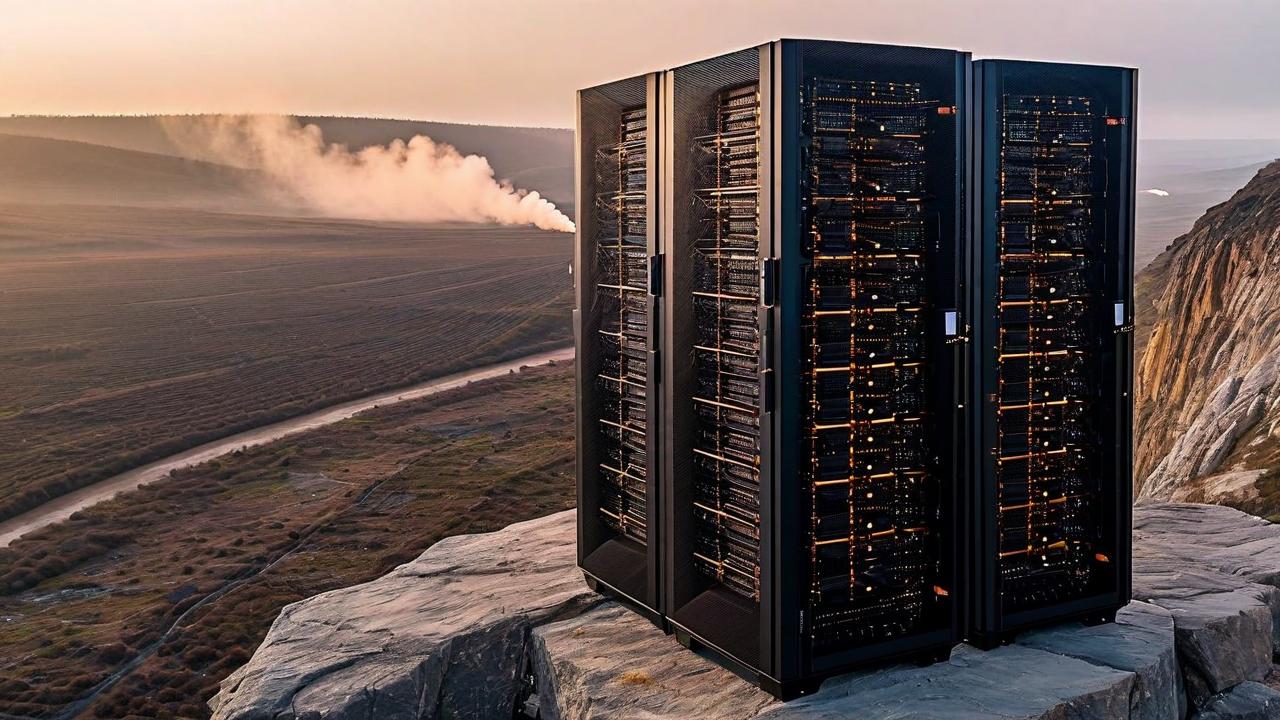
*this image is generated using AI for illustrative purposes only.
Michael Burry has escalated his criticism of Nvidia Corp. (NASDAQ: NVDA), citing the company's recent 10-Q filing as evidence of risky circular financing practices within the AI sector.
The investor highlighted a specific agreement disclosed in the filing involving SoftBank’s SB Energy and OpenAI. Nvidia has entered into guarantees capped at $105 billion to provide credit support for the buildout of land, power, and shell infrastructure at SB Energy’s PORTS Technology Campus in Ohio.
The Financing Structure
According to the 10-Q, the campus involves leases for approximately 4.25 gigawatts of IT load and will exclusively host Nvidia AI infrastructure. Burry characterized this arrangement as a self-reinforcing financial loop, warning that investors are "Whistling past the graveyard" by ignoring these red flags.
Nvidia management has actively defended the strategy during its latest earnings call. CFO Colette Kress acknowledged the scale of the support but rejected the label of circular financing. CEO Jensen Huang further clarified that OpenAI will pay the lease, denying that these private credit deals artificially inflate revenue.
Market Position and Performance
Despite Burry’s bearish thesis and his maintenance of a massive short position against the broader AI ecosystem, Nvidia shares have shown resilience. The stock closed at $227.98, up 8.74% on Thursday. Year-to-date, NVDA is up 22.24%, while it has advanced 25.54% over the last year.
Burry recently purchased December Nvidia call options as a hedge against his bearish position, yet he maintains that the mechanics revealed in the 10-Q validate his long-term skepticism regarding the sector's valuation.
What the Numbers Show
The $105 billion guarantee represents a significant off-balance-sheet commitment relative to the company's operational scale. By tying this massive credit support to infrastructure that exclusively hosts Nvidia hardware, the filing reveals a deep structural dependency between Nvidia’s supply chain financing and its largest AI customers. This linkage suggests that demand visibility is partially supported by corporate credit guarantees rather than purely organic customer capital expenditure.

How might the $105 billion credit guarantee impact Nvidia's future debt covenants or credit ratings if the broader AI infrastructure market faces a downturn?
What are the potential legal or financial consequences for Nvidia if OpenAI or SoftBank defaults on the lease payments tied to the PORTS Technology Campus?
Could other major AI infrastructure providers adopt similar off-balance-sheet financing structures, potentially creating systemic risk across the semiconductor sector?
 16
16










 Access Market Heat-map & Insights
  Create, Save & Share your Screener
  Use 200+ Screening Filters





