

Nvidia Q2 revenue surges 106%; market cap adds $370 billion


- Nvidia Q2 revenue surged 106% YoY to $96.22 billion, beating estimates
- Shares jumped 7.32% post-open, adding $371.7 billion to market cap
- Next quarter guidance set at $108 billion, exceeding analyst estimates
- Data Center revenue grew 117% to $89 billion, driving overall growth
- Market cap reaches $5.4 trillion, equivalent to adding a Coca-Cola



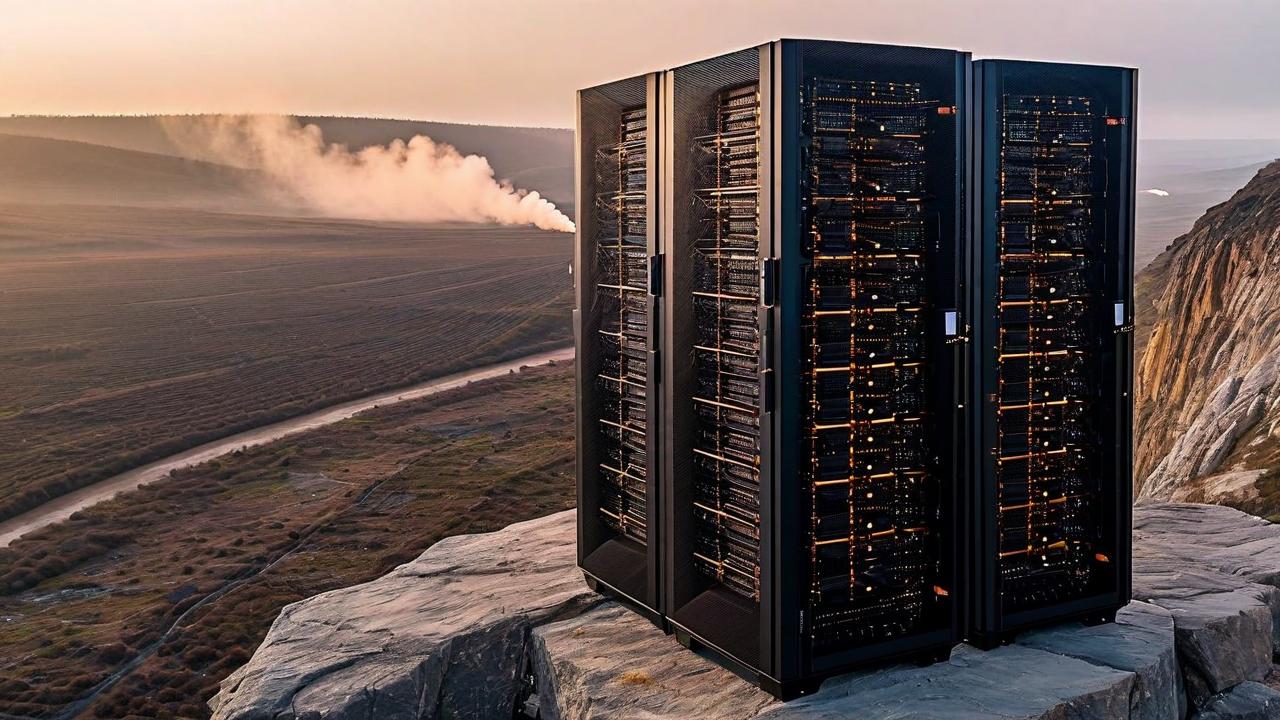
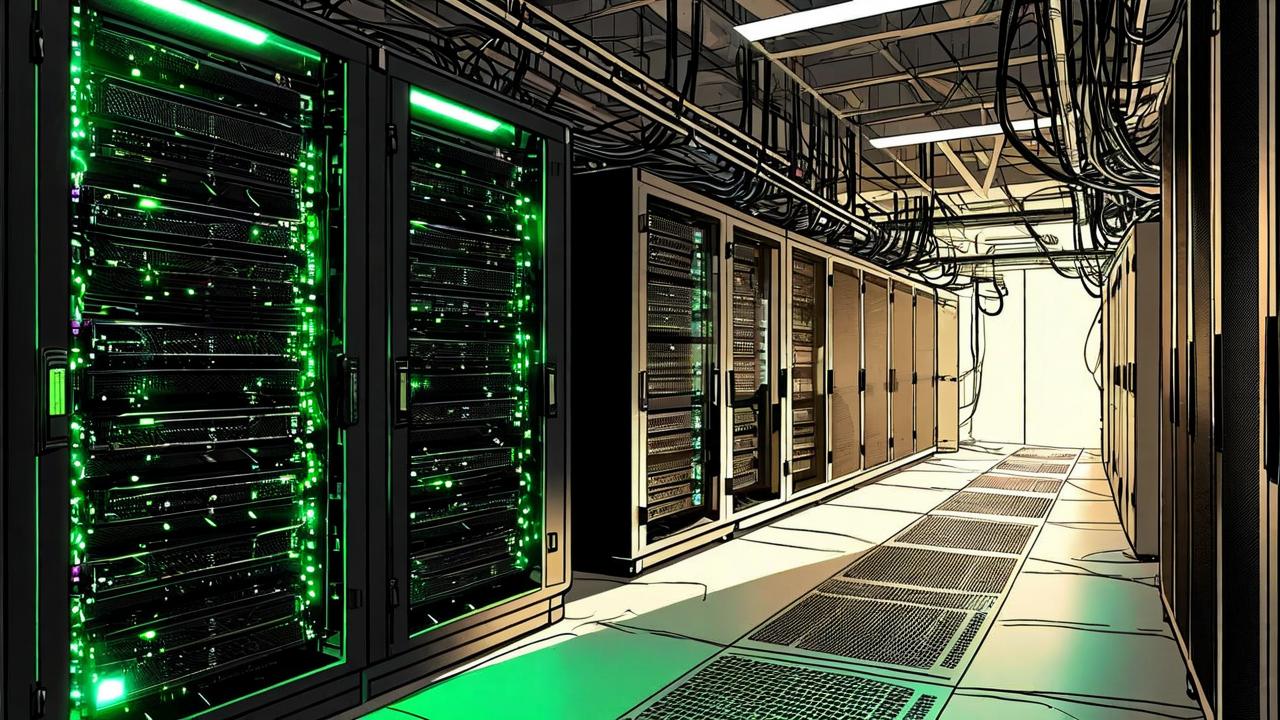
*this image is generated using AI for illustrative purposes only.
Nvidia Corp. (NASDAQ: NVDA) shares jumped 7.32% to $225 shortly after Thursday’s market open, adding $371.7 billion to its market capitalization in a single session. The surge followed the company’s report of a 106% year-over-year revenue increase to $96.22 billion for the second quarter, surpassing consensus estimates.
The market value addition is roughly equivalent to the entire market capitalization of The Coca-Cola Co. (NYSE: KO). Nvidia’s total market capitalization now stands at $5.4 trillion, reinforcing its position as the world’s largest company and signaling sustained momentum in the AI infrastructure buildout.
Guidance and Supply Constraints
Nvidia CFO Colette Kress projected 70% revenue growth for fiscal 2028, covering the period from February 2027 to January 2028. This outlook significantly exceeds Wall Street’s expectation of roughly 44% growth. For the immediate next quarter, Nvidia guided to $108 billion in revenue, topping the $103.52 billion analyst estimate. New data specifies the guidance range as $105.84 billion to $110.16 billion, representing year-over-year growth of 85.7% to 93.2% from the $57.01 billion reported in the year-ago quarter.
CEO Jensen Huang noted that actual demand exceeds this projection, but supply remains constrained. Key bottlenecks include capacity limits at primary manufacturer Taiwan Semiconductor Manufacturing Co Ltd. (NYSE: TSM) and shortages in memory chips. Huang stated that Nvidia has "never forecasted" a full year in advance but now possesses greater visibility across the supply chain.
Former Nvidia executive Jeff Herbst, who serves on SK Hynix’s CEO Advisory Board, told CNBC that memory manufacturers Samsung Electronics Co. Ltd. (OTC: SSNLF), SK Hynix Inc. (NASDAQ: SKHY), and Micron are operating at capacity. Herbst stated that new fabrication plants take years to bring online, expecting elevated memory prices to persist. He highlighted that SK Hynix’s high-bandwidth memory supply remains sold out for at least a couple of years. Nvidia has secured long-term supply agreements with all three major memory manufacturers.
Open vs Closed AI Models
During the earnings call, UBS analyst Timothy Arcuri asked whether the growing popularity of open models could hurt Nvidia by reducing demand for major frontier AI companies. Huang pushed back, stating that "the world will need both closed models and open models" and that both are seeing explosive adoption.
Huang argued that nearly all open models run on Nvidia hardware due to its broad footprint and CUDA software ecosystem. He added that open models reaching frontier-level capabilities help startups, enterprises, and governments build domain-specific proprietary AI systems, creating additional demand for Nvidia’s platforms across PCs, workstations, data centers, robots, and edge devices.
"We’re delighted by any model succeeding," Huang said. "So long as models succeed, I’m very happy. And both closed and open models are going to succeed and they’re both simultaneously driving our sales."
Circular Financing Debate
Nvidia leadership pushed back against criticism that its investments and financing arrangements could create a circular flow of capital that artificially boosts demand for its chips. This controversy centers on Nvidia’s massive $500 billion institutional credit financing push in partnership with six financial institutions and its support for a multibillion-dollar OpenAI data center in Ohio.
CFO Colette Kress acknowledged the market’s unease but remained resolute: "We recognize the scale of this support, and we know some will call this circular financing. We see it differently." Huang had previously written in an Nvidia blog post about the Ohio project: "Is this circular financing? No. OpenAI will pay the lease."
Huang and Kress argue that Nvidia is simply turning compute into an investable asset class. "In the AI economy, compute is revenue," Huang added, framing the deals as necessary support for frontier AI labs that are "growing faster than their balance sheets and long-term credit profiles can support."
Bearish Sentiment and Market Reaction
Despite record earnings, critics remain unconvinced. "Big Short" investor Michael Burry has been a vocal opponent, previously slamming the financing mechanisms as a "Wall Street stunt." Highlighting a surge in Nvidia’s credit default swaps, Burry warned that Nvidia’s "overreaching" is pushing "circular spending to biblical proportions," quipping about the OpenAI guarantee, "Around and around we go."
Following the second-quarter report, Burry doubled down on the stock’s stagnation, noting that while NVDA appears "wildly undervalued" on paper with a low P/E, the share price is simply "treading water" and remains "not congruent with the market’s narrative."
NVDA shares rose 12.42% year-to-date, advanced by 15.34% over the last year, and gained 13.40% over the last six months. It closed 1.59% lower at $209.66 per share on Wednesday, and it was 5.91% higher in premarket trading on Thursday. According to Benzinga Pro data, NVIDIA shares were up 6.00% at $222.25 during premarket trading on Thursday.
Strategic Expansion
The company announced an agreement to acquire Hugging Face, an open-source AI model repository, for $12.9 billion. This marks one of Nvidia’s largest acquisitions to date, second only to its $20 billion purchase of Groq. The move aims to expand Nvidia’s control over open-source AI models.
Huang described the current state of the sector as having the "AI infrastructure buildout at full steam," underscoring the aggressive expansion in the artificial intelligence sector.
Market Impact of CEO Comments
Huang’s comments have historically triggered significant market movements. In October 2025, a dinner with Samsung Electronics Chairman Lee Jae-yong and Hyundai Motor Group Chairman Chung Eui-sun sent shares of local fried chicken chains soaring in South Korea. The outing coincided with announcements that Nvidia would supply more GPUs to South Korean firms.
Similarly, Marvell Technology Inc. (NASDAQ: MRVL) shares climbed as much as 32% in a single session in June after Huang called it the "next $1 trillion company." Software stocks also rallied sharply after Huang stated it was an "incredible time to be a software company," with the iShares Expanded Tech-Software Sector ETF (BATS: IGV) gaining nearly 6%.
Analyst Perspectives
Moor Insights & Strategy CEO Patrick Moorhead stated that Nvidia remains the AI bellwether because far more software companies use its GPUs than competing platforms. He noted that Nvidia delivered a four-way beat and 126% revenue growth, though it failed to reach some buy-side whisper expectations. Moorhead expects large hyperscalers to create their own chips but believes rapidly expanding AI demand makes it difficult for rivals to take enough share to materially disrupt Nvidia in the near term.
Freedom Capital Markets Head of Technology Research Paul Meeks said he does not expect a meaningful slowdown until 2028 or later. He highlighted Nvidia’s valuation, noting the stock trades at roughly 16 to 17 times earnings, below the broader S&P 500 multiple and at about half AMD’s multiple. Meeks believes stronger evidence that companies can monetize AI investments could unlock further upside.
Bespoke Investment Group co-founder Paul Hickey took a more measured view, stating that Nvidia’s enormous size ensures it will remain important to the broader market, but heavy investor attention makes it increasingly difficult for the company to deliver surprises capable of driving outsized share-price gains. He noted that Nvidia showed essentially zero correlation with the SOXX semiconductor ETF over the previous three months.
What the Numbers Show
Nvidia’s adjusted earnings of $2.22 per share beat the Wall Street forecast of $2.09. The combination of record revenue growth and higher-than-expected earnings per share highlights strong operational leverage despite the acknowledged supply chain bottlenecks. Gross margin stood at 75.0%. Nvidia ended the quarter with $99.0 billion remaining under its share repurchase authorization. The guidance for the next quarter at $108 billion implies continued momentum, suggesting that demand outstrips current production capabilities across the entire supply chain.
Data Center revenue surged 117% to $89 billion, accounting for the majority of the total $96.2 billion quarterly revenue. This concentration underscores the critical role of enterprise and cloud computing demand in driving Nvidia’s financial performance.

How will the integration of Hugging Face and Groq reshape Nvidia's competitive moat against hyperscalers developing proprietary AI chips?
To what extent could persistent memory chip shortages and TSMC capacity limits force Nvidia to prioritize customers, potentially alienating key enterprise partners?
Will the 'circular financing' narrative gain traction among institutional investors if AI monetization timelines for data center clients are delayed beyond 2028?
 17
17






 Create Custom Screeners
  Access 200+ Pre-built Filters
  Use 50+ Readymade Screener





