

Asia-Pacific equities rise as NVIDIA beats estimates and flags 70% FY28 growth


- Asia-Pacific equities opened mostly higher, led by semiconductor stocks
- NVIDIA beat Q2 FY27 revenue estimates with $96.2 billion in sales
- Company projects 70% revenue growth for fiscal 2028, above analyst models
- KOSPI rose 2.29% while Nikkei 225 gained 0.34% at open

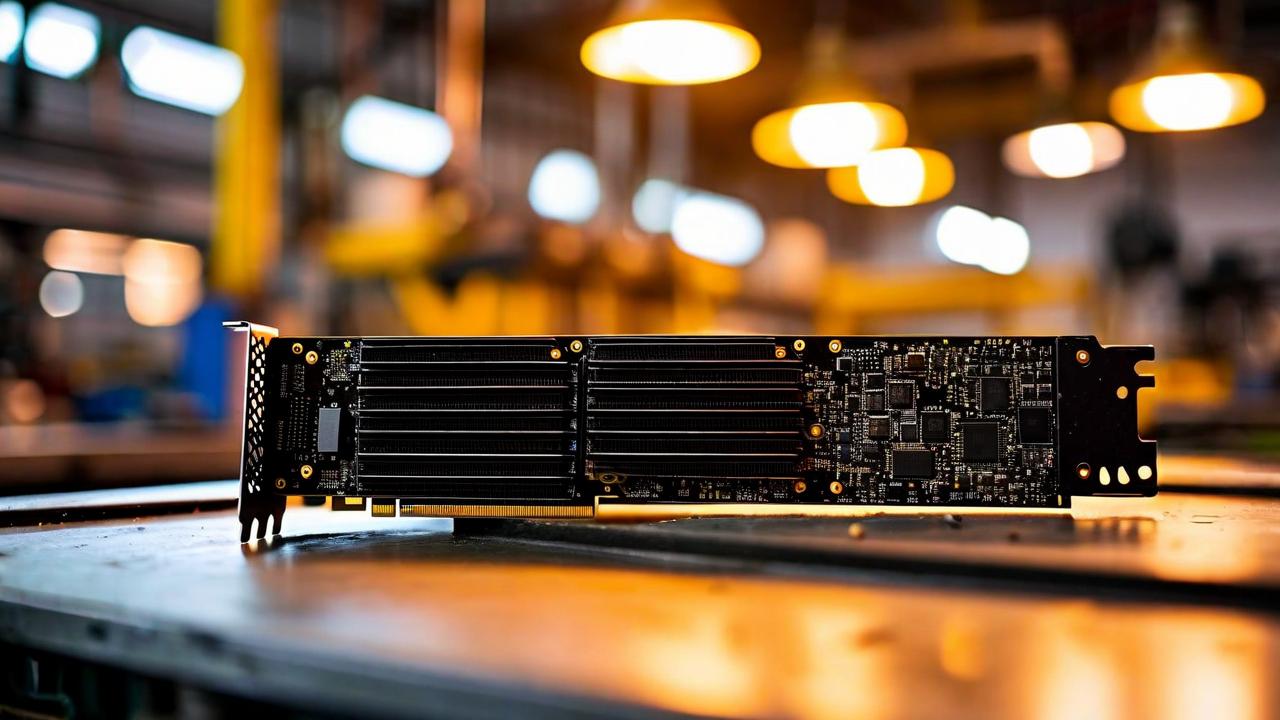

*this image is generated using AI for illustrative purposes only.
Asia-Pacific equities opened mostly in positive territory on Tuesday, driven by gains in the semiconductor sector following strong results from NVIDIA. The chipmaker’s better-than-expected earnings and robust fiscal 2028 outlook provided early momentum for regional markets.
NVIDIA (NASDAQ: NVDA) reported second-quarter fiscal 2027 revenue of $96.2 billion, beating the analyst consensus estimate of $92.18 billion. The chipmaker’s adjusted earnings per share came in at $2.22, surpassing the estimate of $2.10.
GAAP net income rose 126% year-over-year to $59.7 billion, driven by surging demand for AI infrastructure. This represents a significant increase from $26.4 billion in the prior-year quarter.
Financial Performance
Data Center revenue reached $89.0 billion, accounting for roughly 92% of total sales and growing 117% from Q2FY26. Edge Computing revenue also expanded, rising 27% year-over-year to $7.2 billion.
| Metric | Q2 FY27 | Q1 FY27 | Q2 FY26 | Change |
|---|---|---|---|---|
| Revenue | $96.2 billion | $81.6 billion | $46.7 billion | +106% |
| Net Income | $59.7 billion | $58.3 billion | $26.4 billion | +126% |
| Gross Margin | 75.0% | 74.9% | 72.4% | +260 bps |
Gross margin expanded 260 basis points year-over-year to 75.0%. Operating income more than doubled, increasing 124% to $63.7 billion.
Diluted earnings per share came in at $2.46 on a GAAP basis, compared to $1.08 in the prior-year quarter. On an adjusted basis, earnings of $2.22 per share marked a 119.8 percent increase over $1.01 per share from the same period last year.
Product Updates and Leadership Commentary
The company stated that its Vera Rubin platform is ramping into full production. NVIDIA CFO confirmed that production shipments of the Vera Rubin platform commenced earlier this month. Named partners include CoreWeave, Nebius, Microsoft Azure, Google Cloud, and Oracle Cloud.
During the conference call, the CFO projected that Vera Rubin would account for about 20% of Data Center revenue in the third quarter. He also stated that he expects demand from AI labs to contribute toward roughly one-fourth of the company’s business next year.
NVIDIA CEO Jensen Huang stated that AI has reached its inflection point, noting that compute is now generating revenue. He highlighted strong momentum in the United States and globally, adding that the AI infrastructure buildout is at full steam.
What the Numbers Show
GAAP net income significantly outpaced non-GAAP net income in the quarter, reflecting substantial non-operating contributions. While non-GAAP net income was $54.0 billion, GAAP net income stood at $59.7 billion. This divergence is primarily due to $7.8 billion in other income, largely driven by gains from equity securities, which boosted the bottom line beyond core operational performance.
Balance Sheet and Cash Flow
The company returned approximately $26.0 billion to shareholders through share repurchases and dividends during the quarter. NVIDIA ended the second quarter with $99.0 billion under its share repurchase authorization plan. As of July 26, 2026, NVIDIA held $22.4 billion in cash and cash equivalents, alongside $34.1 billion in marketable debt securities. Long-term debt increased to $32.4 billion from $7.5 billion at the start of the fiscal year.
Outlook and Commitments
For the third quarter of fiscal 2027, NVIDIA expects revenue between $105.84 billion and $110.16 billion. The company noted it is not assuming any Data Center compute revenue from China in this outlook. Gross margins are projected at 74.0%, plus or minus 50 basis points.
NVIDIA’s CFO stated that shipments of Data Center Hopper products to China during Q2 were less than 1% of Data Center revenue. Additionally, Q2 commitments rose to $279 billion from $119 billion in Q1.
FY28 Growth and Margin Outlook
CFO Colette Kress projected fiscal 2028 revenue growth of 70%, significantly above the 44% analysts had modeled. She noted that customer forecasts point to doubling growth next year, though she cautioned that guidance reflects supply constraints rather than softening demand.
Capital spending among the top five hyperscalers is expected to rise to $1.3 trillion next year from $800 billion in 2026. Kress highlighted that memory scarcity is being driven by the AI buildout itself. NVIDIA spent $145 billion in the first quarter alone to secure supply.
Gross margins are expected to decline before bottoming out in the fourth quarter of fiscal 2027, landing in a range of 71% to 72%, with memory prices cited as a key drag.

How will the projected 70% revenue growth for FY28 impact valuation multiples and investor expectations given the anticipated margin compression to 71-72%?
What are the potential risks to NVIDIA's supply chain strategy if hyperscaler capital spending of $1.3 trillion outpaces the availability of memory and advanced packaging capacity?
How might the exclusion of China Data Center compute revenue from Q3 guidance affect NVIDIA's ability to meet the upper end of its $105.84 billion - $110.16 billion revenue forecast?
 16
16











 Access Market Heat-map & Insights
  Create, Save & Share your Screener
  Use 200+ Screening Filters





