

Meta, Google, Amazon expand custom AI chips despite Nvidia dominance


- Hyperscalers expand custom silicon to optimize AI inference costs
- Meta's MTIA 400 offers 3 PFLOPS compute, five times predecessor performance
- Google's Virgo Network connects 134,000 TPUs with 47 petabits/sec bandwidth
- Nvidia retains dominance in training while firms seek infrastructure control



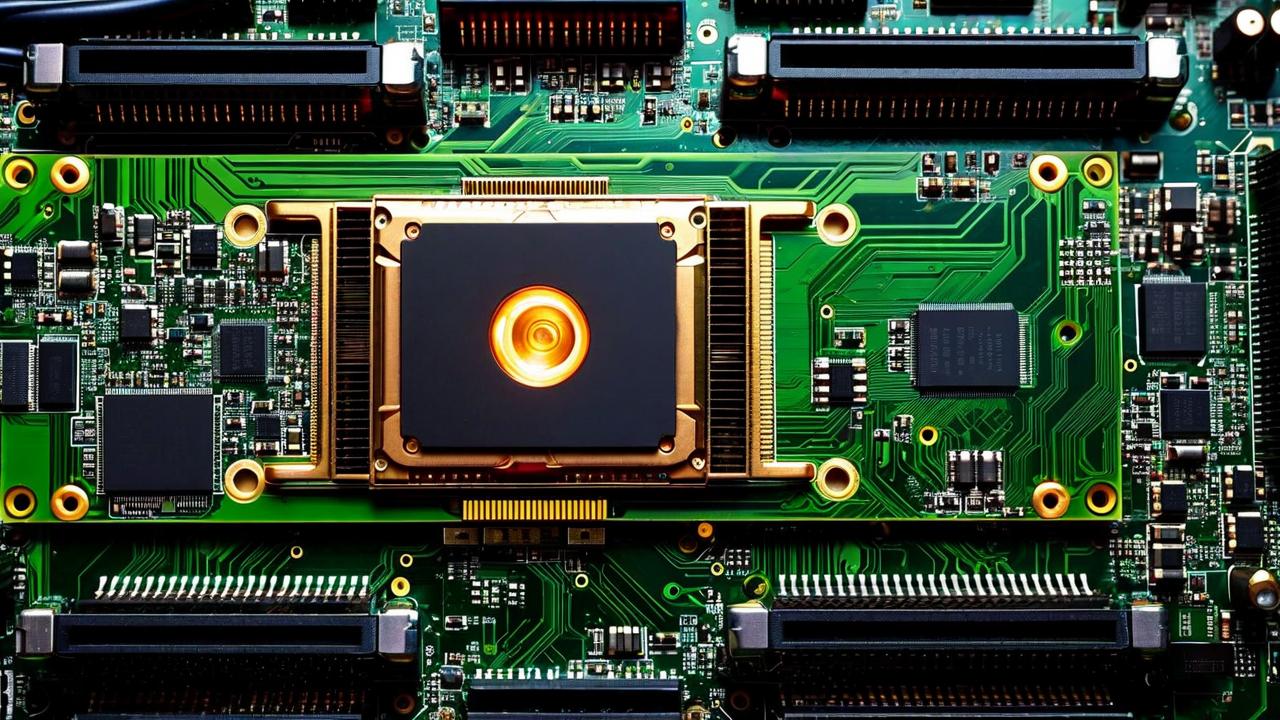
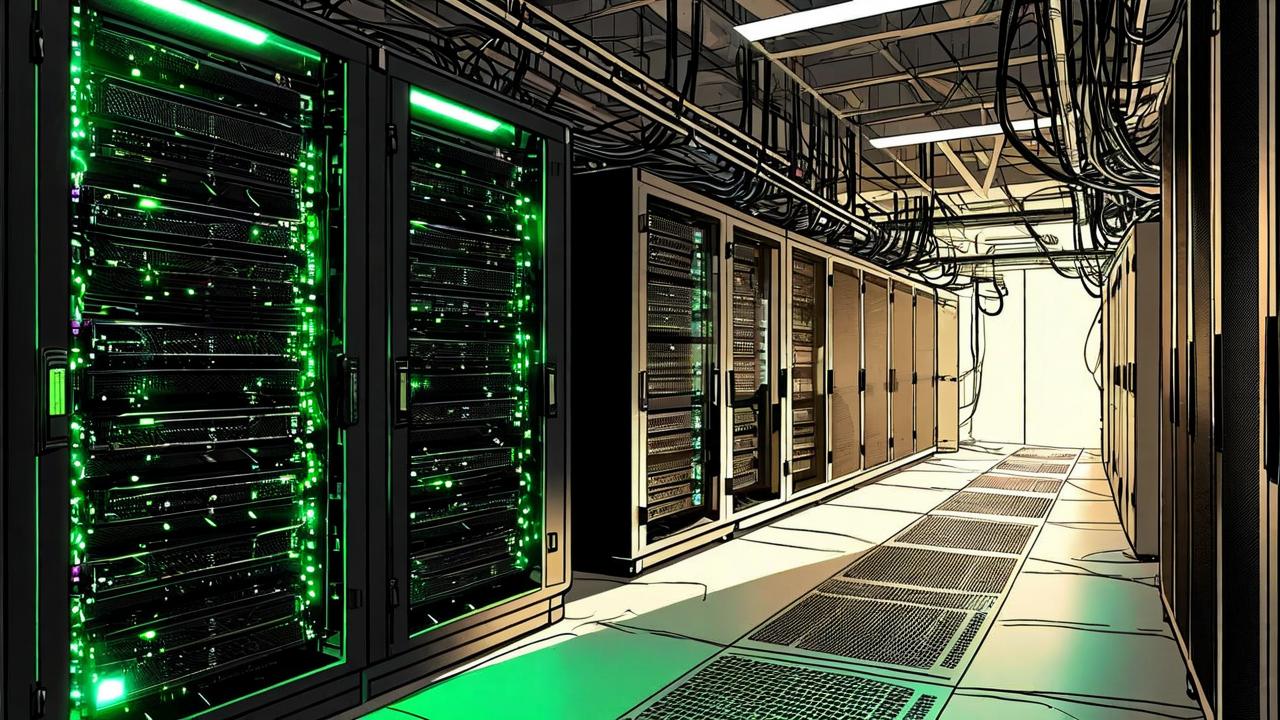
*this image is generated using AI for illustrative purposes only.
Hyperscalers are aggressively expanding custom silicon capabilities to optimize AI inference costs, even as Nvidia Corp (NASDAQ: NVDA) maintains its dominant position in the AI chip market. This strategic shift signals a move toward greater infrastructure control by major technology firms.
According to BNP Paribas Equity Research senior analyst Karl Ackerman, presentations from Meta Platforms Inc (NASDAQ: META) and Alphabet Inc’s Google at the Hot Chips conference underscore a growing industry focus on efficiency. The firms are building proprietary hardware not to replace Nvidia overnight, but to lower the cost of inference as demand scales.
Custom Silicon Roadmaps
The announcements highlight how quickly the largest cloud companies are broadening their AI hardware strategies:
- Meta: Detailed the next phase of its Meta Training and Inference Accelerator (MTIA) roadmap. The upcoming MTIA 400 chip supports recommendation systems and generative AI models. It delivers 3 PFLOPS of FP16 compute—roughly five times the performance of its predecessor—and expands high-bandwidth memory capacity by 33% to 288 GB.
- Google: Focused on networking infrastructure for its latest TPU platform. Its Virgo Network can connect 134,000 TPU 8t chips with up to 47 petabits per second of non-blocking bandwidth. This enables more than 1.6 exaFLOPS of compute while maintaining near-linear scaling, with architecture designed to eventually support up to one million TPU chips.
- Amazon: Continues investing in proprietary AI processors through its Trainium and Inferentia families, reflecting a broader industry push toward custom silicon alongside merchant GPUs.
What the Numbers Show
The data reveals a divergence between training and inference strategies. While Nvidia dominates cutting-edge AI training, hyperscalers are optimizing for inference economics. Meta’s MTIA 400 delivers five times the performance of its predecessor with only a 33% increase in memory capacity, indicating a focus on compute density rather than raw memory expansion. Similarly, Google’s ability to scale to 1.6 exaFLOPS across 134,000 chips highlights the importance of networking bandwidth in achieving linear scaling for large models.
Investment Implications
For investors, this distinction matters. Nvidia remains the primary supplier for training workloads, but the economics of running AI services are encouraging tech giants to own more of the underlying hardware stack. Custom silicon should be viewed less as an immediate threat to Nvidia and more as a measure of how hyperscalers plan to balance dependence on the AI leader with greater control over their own infrastructure costs.

How might the increasing efficiency of custom inference chips impact Nvidia's revenue growth trajectory in the mid-to-long term?
What are the potential supply chain risks for hyperscalers as they diversify away from a single dominant GPU supplier like Nvidia?
Could the success of proprietary silicon like Meta's MTIA and Google's TPU encourage smaller cloud providers to develop their own hardware, or will this remain exclusive to tech giants?
 20
20







 Create Custom Screeners
  Access 200+ Pre-built Filters
  Use 50+ Readymade Screener





