

How Sundararaman Ramamurthy rebuilt BSE into a 14x wealth-creation machine in 3 years


BSE has achieved a remarkable 14x return under CEO Sundararaman Ramamurthy's leadership since January 2023, driven by strategic cost optimization of ₹100 crore, comprehensive technology infrastructure upgrades, and the successful launch of Sensex weekly options in May 2023. The exchange's market share in index options premium turnover surged from 13.1% to 28.4%, while revenue is projected to grow from ₹1,371 crore in FY24 to ₹4,368 crore by FY26, with EBITDA margins expanding from 28% to 62%.


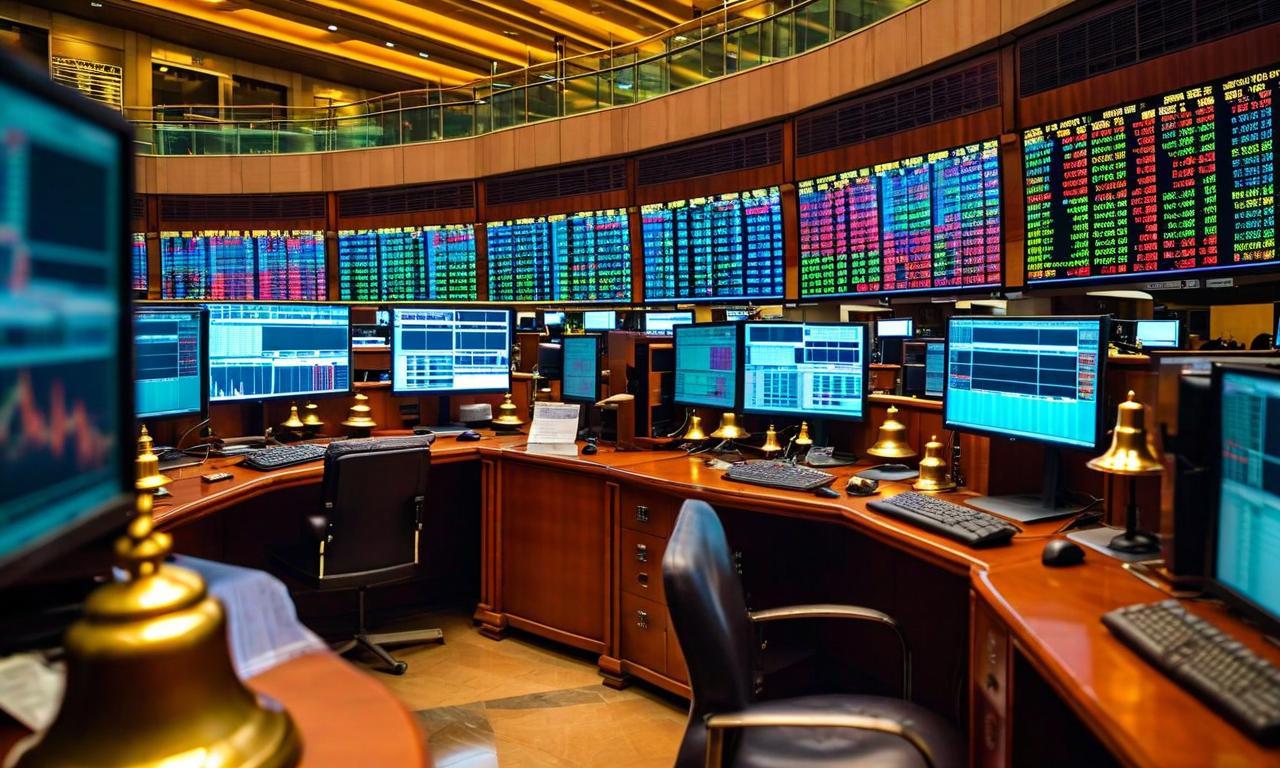
*this image is generated using AI for illustrative purposes only.
Three years ago, few would have wagered on Asia's oldest stock exchange pulling off one of the most dramatic turnarounds in India's capital markets. Yet since Sundararaman Ramamurthy took charge as managing director and chief executive officer of BSE in January 2023, the exchange's shares have delivered over 14 times return, minting extraordinary wealth for shareholders.
Strategic Foundation: Cost Optimization and Organizational Restructuring
When Ramamurthy assumed charge, revenue growth was challenging and operational inefficiencies had accumulated over time. Rather than chasing topline expansion immediately, his first focus was on fixing the foundation. "When you come in, you are typically looking to boost your revenue and bottom line," Ramamurthy explained. "Topline increase was looking very difficult and so I did a cost-cutting exercise of ₹100 crore."
The comprehensive clean-up targeted revenue leakages, including barter schemes, and freed up capital to rebuild the organization. The restructuring involved filling vacancies, rationalizing pay scales, restoring appraisal cycles, and re-energizing senior leadership.
Technology Infrastructure and Customer Engagement
Equally critical was a sharp pivot towards customer engagement. In his first three months, Ramamurthy met nearly 350 brokers, asking what he described as a single question posed "with folded hands": what would make them trade more on BSE.
The feedback shaped BSE's operational and technology roadmap comprehensively:
| Infrastructure Upgrade: | Details |
|---|---|
| Order Processing Capacity: | Scaled from 10 crore to 1,800 crore gross orders per second |
| Trading Capacity: | Up to 67,500 trades per second with one-second delay |
| Systems Overhaul: | Peripheral systems revamped, servers replaced |
| Infrastructure: | New data centre created |
The objective was to remove technology latency as a competitive handicap and rebuild broker confidence in the platform.
The Derivatives Revolution: Sensex Weekly Options
The real inflection came in May 2023 with the relaunch of equity derivative contracts. Until then, BSE was non-existent in index options while NSE dominated the space. The relaunch marked a deliberate push to reposition options trading as the exchange's primary growth engine.
Sensex weekly options emerged as the flagship product, supported by new contracts such as Bankex, frequent recalibration of expiry days, and a focus on deepening liquidity beyond expiry sessions. The results have been remarkable:
| Market Share Metrics: | November 2023 | November 2024 |
|---|---|---|
| Premium Turnover Share: | 13.10% | 28.40% |
| Notional Turnover Share: | 24.50% | 44.00% |
| Active Brokers: | 28 | 550+ |
| Foreign Portfolio Investors: | - | 435 |
Financial Performance and Projections
The financial operating leverage has been significant. According to Jefferies projections, BSE's transformation is reflected in impressive growth metrics:
| Financial Metrics: | FY24 | FY26 (Projected) | Growth |
|---|---|---|---|
| Revenue: | ₹1,371.00 crore | ₹4,368.00 crore | 218% |
| Profit After Tax: | - | ₹2,229.00 crore | 189% increase |
| EBITDA Margins: | 28.00% | 62.00% | 34 percentage points |
Jefferies projects a 28% compound annual growth rate in operating revenue over FY26–28, driven by rising option market share and expanded co-location capacity. Transaction charges now account for nearly 60% of operating revenue, after growing eightfold between FY23 and FY25.
Institutional Interest and Infrastructure Expansion
Institutional ownership has followed performance trajectory closely:
| Ownership Category: | FY23 | Current |
|---|---|---|
| Mutual Fund Shareholding: | 0.30% | 10.40% |
| Foreign Institutional Investors: | 8.40% | 16.70% |
Technology investments have accompanied capacity expansion. BSE has more than doubled its co-location racks over the past year and plans to add another 70–90 by the end of FY26, taking total capacity to around 500 racks. Increased utilization of these racks is expected to be a key earnings driver.
Leadership Perspective and Future Outlook
For Ramamurthy, the success of Sensex derivatives extends beyond headline market share to ecosystem depth. "For me, the tracking element is not market share," he explained. "The more important parameters are how many brokers, foreign institutional investors and clients are trading with me."
Ramamurthy credited regulatory support as crucial to the turnaround. "Support from regulators has been immense," he said, calling it one of the key enablers of the exchange's revival.
Brokerages see further growth levers opening up, with expectations of incremental contributions from the co-location business, the clearing corporation, and the Star MF platform to support earnings beyond derivatives. However, sustainability considerations remain as Sensex weekly options scale toward sizes comparable with Nifty contracts.
With transaction-led revenues accelerating, margins expanding, and new growth engines emerging, BSE's resurgence under Ramamurthy stands out as one of India's most compelling market turnarounds, rewarding investors who backed the transformation story.
Historical Stock Returns for BSE
| 1 Day | 5 Days | 1 Month | 6 Months | 1 Year | 5 Years |
|---|---|---|---|---|---|
| -1.43% | +7.92% | -3.15% | +3.91% | +46.48% | +2,110.48% |







 Access 50+ Readymade Screeners
  Use 200+ Custom Filters
  Get Full Market Insights





