NSE, BSE Announce 2026 Trading Holiday Calendar with 15 Scheduled Market Closures

2 min read     Updated on 24 Dec 2025, 08:43 PM
scanx
Reviewed by
Ashish TScanX News Team
Overview

The National Stock Exchange (NSE) and BSE have released their trading holiday calendar for 2026, listing 15 scheduled market closures. These include major national and religious holidays. An additional closure may be announced for the BMC elections. Special arrangements will be made for the Union Budget presentation and Muhurat Trading during Diwali. The calendar impacts the total number of trading days for the year.

28134781

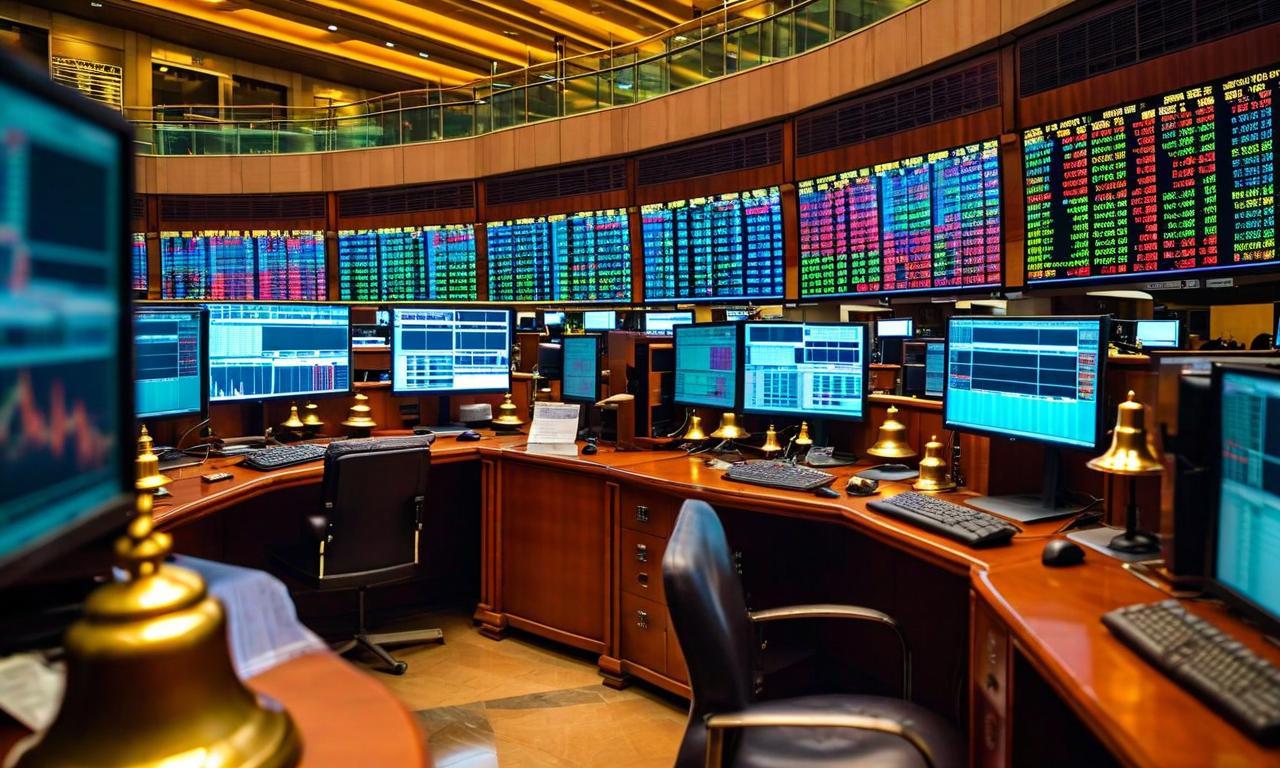
*this image is generated using AI for illustrative purposes only.

The National Stock Exchange (NSE) and BSE have released their comprehensive trading holiday calendar for 2026, announcing 15 scheduled market closures throughout the year. The exchanges will remain shut on various national and religious holidays, with the possibility of an additional closure depending on election scheduling.

2026 Trading Holiday Schedule

The confirmed trading holidays for 2026 are distributed across major festivals and national observances:

Date Day Holiday
January 26 Monday Republic Day
March 3 Tuesday Holi
March 26 Thursday Shri Ram Navami
March 31 Tuesday Shri Mahavir Jayanti
April 3 Friday Good Friday
April 14 Tuesday Dr. Baba Saheb Ambedkar Jayanti
May 1 Friday Maharashtra Day
May 28 Thursday Bakri Id
June 26 Friday Muharram
September 14 Monday Ganesh Chaturthi
October 2 Friday Mahatma Gandhi Jayanti
October 20 Tuesday Dussehra
November 10 Tuesday Diwali-Balipratipada
November 24 Tuesday Prakash Gurpurb Sri Guru Nanak Dev
December 25 Friday Christmas

Weekend Holiday Considerations

Several significant holidays fall on weekends in 2026, which will not impact regular trading schedules:

Date Day Holiday
February 15 Sunday Mahashivratri
March 21 Saturday Id-Ul-Fitr (Ramadan Eid)
August 15 Saturday Independence Day
November 8 Sunday Diwali Laxmi Pujan

Potential Additional Closure

The exchanges may announce an additional holiday on January 15 (Thursday) for the Brihanmumbai Municipal Corporation (BMC) elections. Historical precedent supports this possibility, as the exchanges remained closed during the last BMC elections held on February 21, 2017. This potential closure would bring the total number of trading holidays to 16 for the year.

Budget Day Trading Arrangements

Market participants are closely monitoring the Union Budget presentation schedule. The Budget typically occurs on February 1, which falls on a Saturday in 2026. If the government maintains its traditional schedule, the exchanges will conduct a special Budget Trading session. However, should the presentation move to January 31, normal market operations will continue without special arrangements.

Special Trading Sessions

Muhurat Trading will be conducted on November 8, 2026 (Sunday) during Diwali Laxmi Pujan. This auspicious one-hour trading session allows investors to make transactions during the festival period. The exchanges will announce specific timings and trading specifications for this special session closer to the date.

Market Impact

The 2026 holiday calendar results in fewer working days compared to the previous year. With 15 confirmed holidays falling on weekdays and four additional holidays occurring on weekends, the total reaches 19 holiday observances. This schedule provides market participants with advance notice for planning trading strategies and settlement activities around these closure periods.

Historical Stock Returns for BSE

1 Day5 Days1 Month6 Months1 Year5 Years
-2.43%+1.54%-4.69%-4.12%+47.03%+3,801.40%

Sensex Completes 40 Years with Spectacular 15,594% Return Journey from 549 to 86,159 Points

3 min read     Updated on 24 Dec 2025, 08:07 PM
scanx
Reviewed by
Radhika SScanX News Team
Overview

BSE Sensex completes 40 years with an extraordinary 15,594% return, rising from 549 points in January 1986 to 86,159 this month. The index delivered positive returns in 75% of all years with an annualized growth of 13.40%, closely tracking India's nominal GDP growth of 12.97%. Index composition has evolved significantly, with financial services weightage increasing from 22.25% to 39.50% while IT declined from 19.90% to 12.95%, reflecting India's structural economic transformation from agrarian to services-driven economy.

28132658

*this image is generated using AI for illustrative purposes only.

The BSE Sensex has delivered one of the most spectacular wealth creation stories in modern financial history, completing 40 years with an extraordinary 15,594% return. The benchmark index has surged from 549 points at its launch in January 1986 to a lifetime high of 86,159 this month, transforming from a broker-dominated trading floor into a democratized wealth engine for millions of Indians.

Remarkable Wealth Creation Journey

The numbers tell a compelling story of long-term wealth creation. An investor with the foresight to invest ₹1 lakh in the index on January 1, 1986, would be sitting on ₹1.57 crore today. Even a modest ₹10,000 investment would have grown to ₹15.70 lakh, showcasing the extraordinary compounding power of India's economic transformation.

Investment Period: Returns
Initial Investment (1986): ₹1,00,000
Current Value (2025): ₹1.57 crore
Total Return: 15,594%
Annualized Growth: 13.40%

"If you ask someone, how is the market today? He'll say, it's up 400-500 points. Which index is he referring to? It's Sensex. It's inside him. He understands, accepts and relates to Sensex as himself, as market, as economy. That is what Sensex has achieved in the last 4 decades," says BSE MD and CEO Sundararaman Ramamurthy.

Tracking India's Economic Growth

The annualized growth of 13.40% over 40 years has tracked India's nominal GDP growth of 12.97% almost perfectly, cementing Sensex's reputation as the true barometer of the world's fourth-largest economy, now valued at $4.13 trillion. Born into an economy constrained by pre-liberalization policies in 1986, the Sensex witnessed India's transformation from a largely agrarian nation into a global growth engine.

The index became the chronicler of economic reforms, surging through liberalization waves starting 1991, surviving the Asian crisis, riding the IT revolution, and demonstrating remarkable resilience through the 2008 global financial crisis and the pandemic shock.

Historic Milestones and Performance Track Record

The meteoric rise has been marked by significant milestones: crossing 1,000 in 1990, breaching 10,000 in 2006, hitting 50,000 in 2021, and touching 85,000 in 2024. In the decade from 2014 to 2024 alone, the Sensex more than tripled from 25,000 to 85,000 levels.

Performance Metrics: Statistics
Positive Return Years: 75% of all years
Total Return Index Positive Years: 79% of all years
Negative Years (Last 14 Years): Only 1 year
Launch Value (January 1986): 549.43 points
Lifetime High (2025): 86,159 points

The five best performing years were 1988, 1991, 1999, 2003, and 2009, each coinciding with major economic reforms or recovery periods. The five worst years—1995, 1998, 2000, 2008, and 2011—reflected global crises and domestic adjustments.

Structural Transformation in Index Composition

The index composition reflects India's structural economic transformation over four decades. Financial services' weightage has nearly doubled from 22.25% in 2005 to 39.50% in 2025, while IT sector representation declined from 19.90% to 12.95%. Consumer discretionary surged from 4.93% to 12.95%, and commodities shrank from 8.97% to 2.98%. Energy stocks declined from 16.11% to 9.72%.

Sector Weightage Changes: 2005 2025 Change
Financial Services: 22.25% 39.50% +17.25%
Information Technology: 19.90% 12.95% -6.95%
Consumer Discretionary: 4.93% 12.95% +8.02%
Energy: 16.11% 9.72% -6.39%
Commodities: 8.97% 2.98% -5.99%

"The representation in the index is reflective of what the market economy is, and that is probably why it's called as a true barometer of not just the market, but also the economy," explains Ramamurthy. "Sensex has seen the transformation of India from being an agrarian economy, slight shift to manufacturing and then services. It reflects a growing country."

Enduring Market Leaders

Four stalwarts have remained in the Sensex consistently since its 1986 inception: HUL, Larsen & Toubro, ITC, and Reliance Industries. These companies represent enduring business models that have successfully weathered four decades of economic change and transformation.

Launched with a base value of 100 back-tested to 1978-79, the Sensex opened at 549.43 on January 2, 1986. Forty years later, it stands as both a compass for investors and a symbol of India's progress toward economic development. "Returns are good but to capture the attention of the public isn't that easy. To retain it for 40 years and grow along with it is not easy," Ramamurthy reflects, capturing the index's evolution from a narrow, broker-dominated market to the cornerstone of India's financial democratization.

Historical Stock Returns for BSE

1 Day5 Days1 Month6 Months1 Year5 Years
-2.43%+1.54%-4.69%-4.12%+47.03%+3,801.40%
More News on BSE
Explore Other Articles
2,670.90
-66.60
(-2.43%)