
 NewsSensex Completes 40 Years with Spectacular 15,594% Return Journey from 549 to 86,159 Points
Sensex Completes 40 Years with Spectacular 15,594% Return Journey from 549 to 86,159 Points


BSE Sensex completes 40 years with an extraordinary 15,594% return, rising from 549 points in January 1986 to 86,159 this month. The index delivered positive returns in 75% of all years with an annualized growth of 13.40%, closely tracking India's nominal GDP growth of 12.97%. Index composition has evolved significantly, with financial services weightage increasing from 22.25% to 39.50% while IT declined from 19.90% to 12.95%, reflecting India's structural economic transformation from agrarian to services-driven economy.

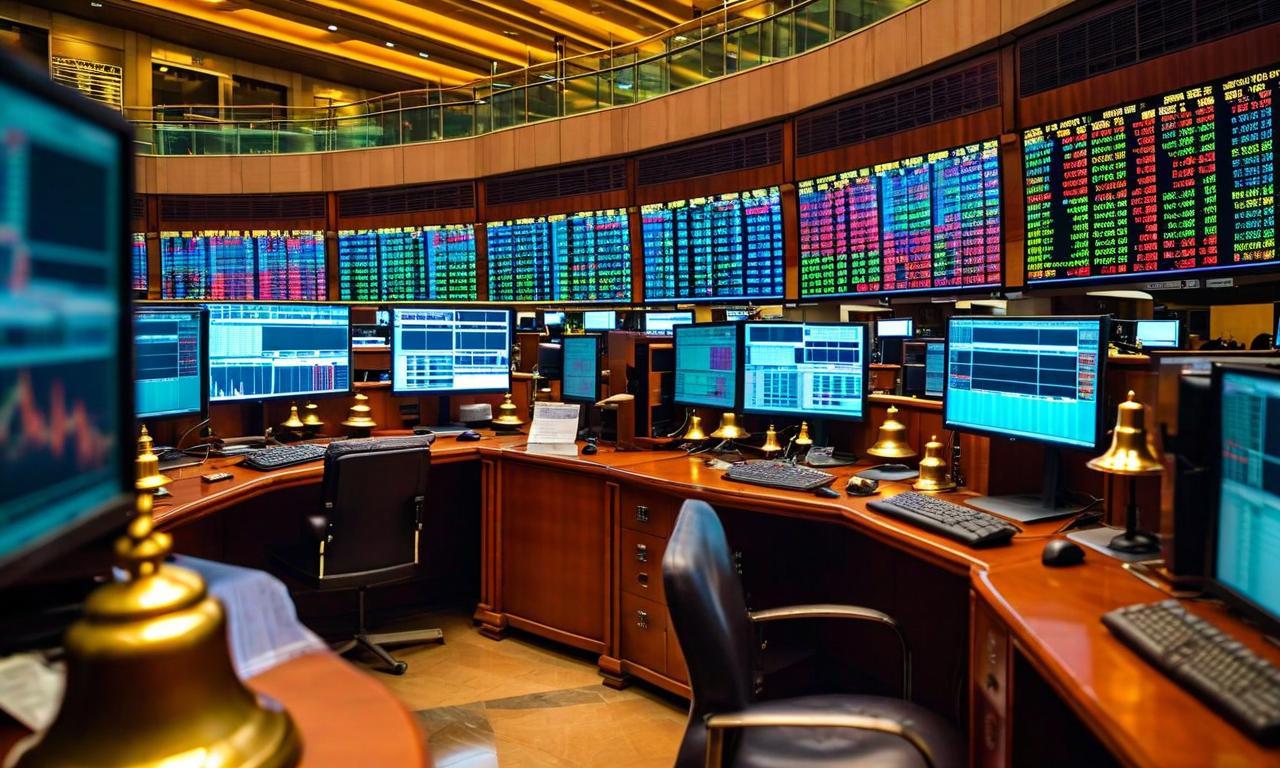

*this image is generated using AI for illustrative purposes only.
The BSE Sensex has delivered one of the most spectacular wealth creation stories in modern financial history, completing 40 years with an extraordinary 15,594% return. The benchmark index has surged from 549 points at its launch in January 1986 to a lifetime high of 86,159 this month, transforming from a broker-dominated trading floor into a democratized wealth engine for millions of Indians.
Remarkable Wealth Creation Journey
The numbers tell a compelling story of long-term wealth creation. An investor with the foresight to invest ₹1 lakh in the index on January 1, 1986, would be sitting on ₹1.57 crore today. Even a modest ₹10,000 investment would have grown to ₹15.70 lakh, showcasing the extraordinary compounding power of India's economic transformation.
| Investment Period: | Returns |
|---|---|
| Initial Investment (1986): | ₹1,00,000 |
| Current Value (2025): | ₹1.57 crore |
| Total Return: | 15,594% |
| Annualized Growth: | 13.40% |
"If you ask someone, how is the market today? He'll say, it's up 400-500 points. Which index is he referring to? It's Sensex. It's inside him. He understands, accepts and relates to Sensex as himself, as market, as economy. That is what Sensex has achieved in the last 4 decades," says BSE MD and CEO Sundararaman Ramamurthy.
Tracking India's Economic Growth
The annualized growth of 13.40% over 40 years has tracked India's nominal GDP growth of 12.97% almost perfectly, cementing Sensex's reputation as the true barometer of the world's fourth-largest economy, now valued at $4.13 trillion. Born into an economy constrained by pre-liberalization policies in 1986, the Sensex witnessed India's transformation from a largely agrarian nation into a global growth engine.
The index became the chronicler of economic reforms, surging through liberalization waves starting 1991, surviving the Asian crisis, riding the IT revolution, and demonstrating remarkable resilience through the 2008 global financial crisis and the pandemic shock.
Historic Milestones and Performance Track Record
The meteoric rise has been marked by significant milestones: crossing 1,000 in 1990, breaching 10,000 in 2006, hitting 50,000 in 2021, and touching 85,000 in 2024. In the decade from 2014 to 2024 alone, the Sensex more than tripled from 25,000 to 85,000 levels.
| Performance Metrics: | Statistics |
|---|---|
| Positive Return Years: | 75% of all years |
| Total Return Index Positive Years: | 79% of all years |
| Negative Years (Last 14 Years): | Only 1 year |
| Launch Value (January 1986): | 549.43 points |
| Lifetime High (2025): | 86,159 points |
The five best performing years were 1988, 1991, 1999, 2003, and 2009, each coinciding with major economic reforms or recovery periods. The five worst years—1995, 1998, 2000, 2008, and 2011—reflected global crises and domestic adjustments.
Structural Transformation in Index Composition
The index composition reflects India's structural economic transformation over four decades. Financial services' weightage has nearly doubled from 22.25% in 2005 to 39.50% in 2025, while IT sector representation declined from 19.90% to 12.95%. Consumer discretionary surged from 4.93% to 12.95%, and commodities shrank from 8.97% to 2.98%. Energy stocks declined from 16.11% to 9.72%.
| Sector Weightage Changes: | 2005 | 2025 | Change |
|---|---|---|---|
| Financial Services: | 22.25% | 39.50% | +17.25% |
| Information Technology: | 19.90% | 12.95% | -6.95% |
| Consumer Discretionary: | 4.93% | 12.95% | +8.02% |
| Energy: | 16.11% | 9.72% | -6.39% |
| Commodities: | 8.97% | 2.98% | -5.99% |
"The representation in the index is reflective of what the market economy is, and that is probably why it's called as a true barometer of not just the market, but also the economy," explains Ramamurthy. "Sensex has seen the transformation of India from being an agrarian economy, slight shift to manufacturing and then services. It reflects a growing country."
Enduring Market Leaders
Four stalwarts have remained in the Sensex consistently since its 1986 inception: HUL, Larsen & Toubro, ITC, and Reliance Industries. These companies represent enduring business models that have successfully weathered four decades of economic change and transformation.
Launched with a base value of 100 back-tested to 1978-79, the Sensex opened at 549.43 on January 2, 1986. Forty years later, it stands as both a compass for investors and a symbol of India's progress toward economic development. "Returns are good but to capture the attention of the public isn't that easy. To retain it for 40 years and grow along with it is not easy," Ramamurthy reflects, capturing the index's evolution from a narrow, broker-dominated market to the cornerstone of India's financial democratization.
Historical Stock Returns for BSE
| 1 Day | 5 Days | 1 Month | 6 Months | 1 Year | 5 Years |
|---|---|---|---|---|---|
| -1.43% | +7.92% | -3.15% | +3.91% | +46.48% | +2,110.48% |










 Create Custom Screeners
  Access 200+ Pre-built Filters
  Use 50+ Readymade Screener





