

Tesla Q3FY27 Results: Deliveries beat estimates at 486,532 units


- Tesla delivered 486,532 vehicles in Q3FY27, beating the consensus estimate of 456,896
- Energy storage deployments fell 13.8% below consensus at 13.7 GWh, marking a third straight miss
- Former President Jon McNeill stated car sales cash flow is needed to fund robotaxi and AI development
- Prediction markets estimated 480,000 deliveries, closer to the final figure than Wall Street analysts

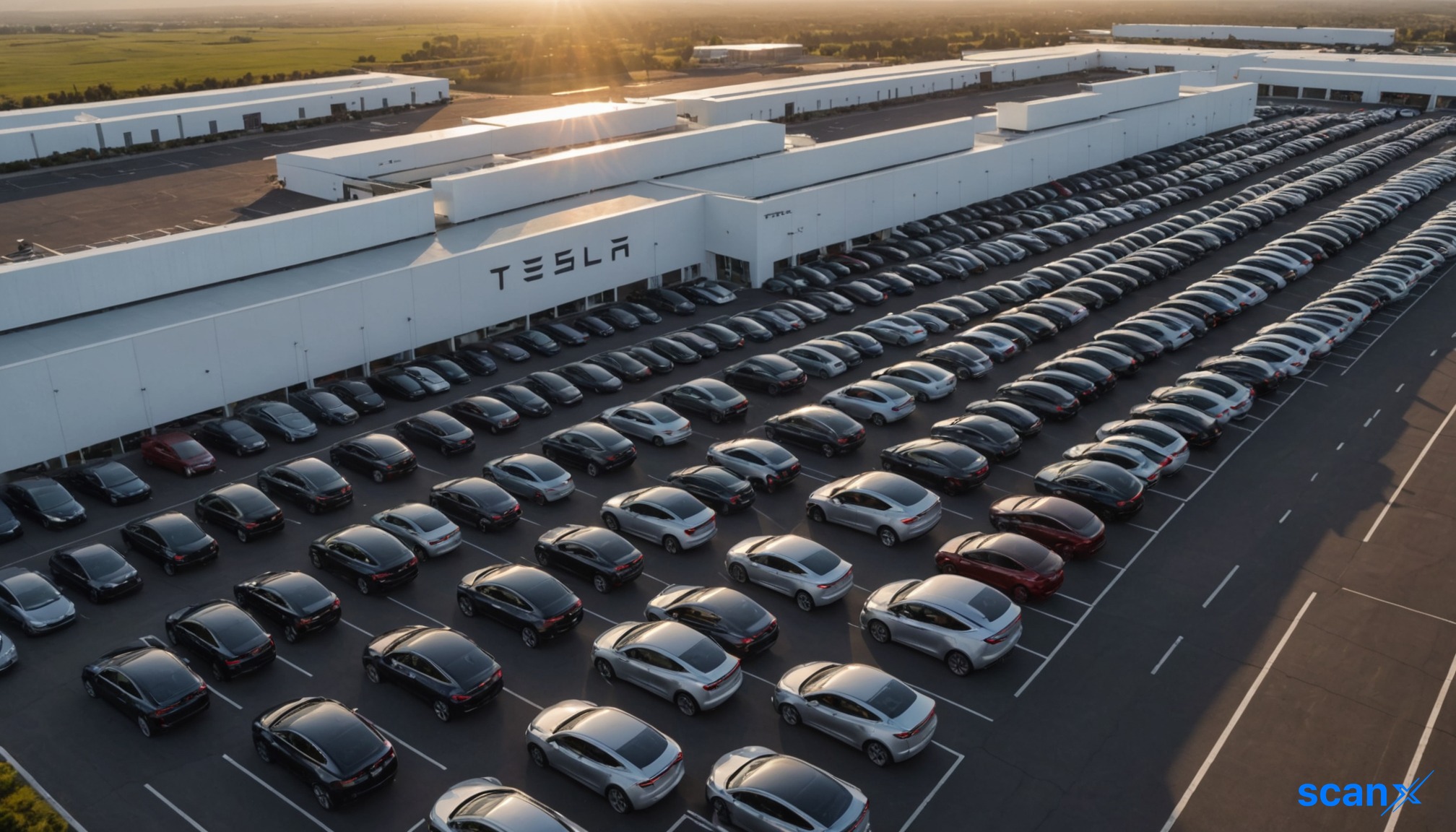

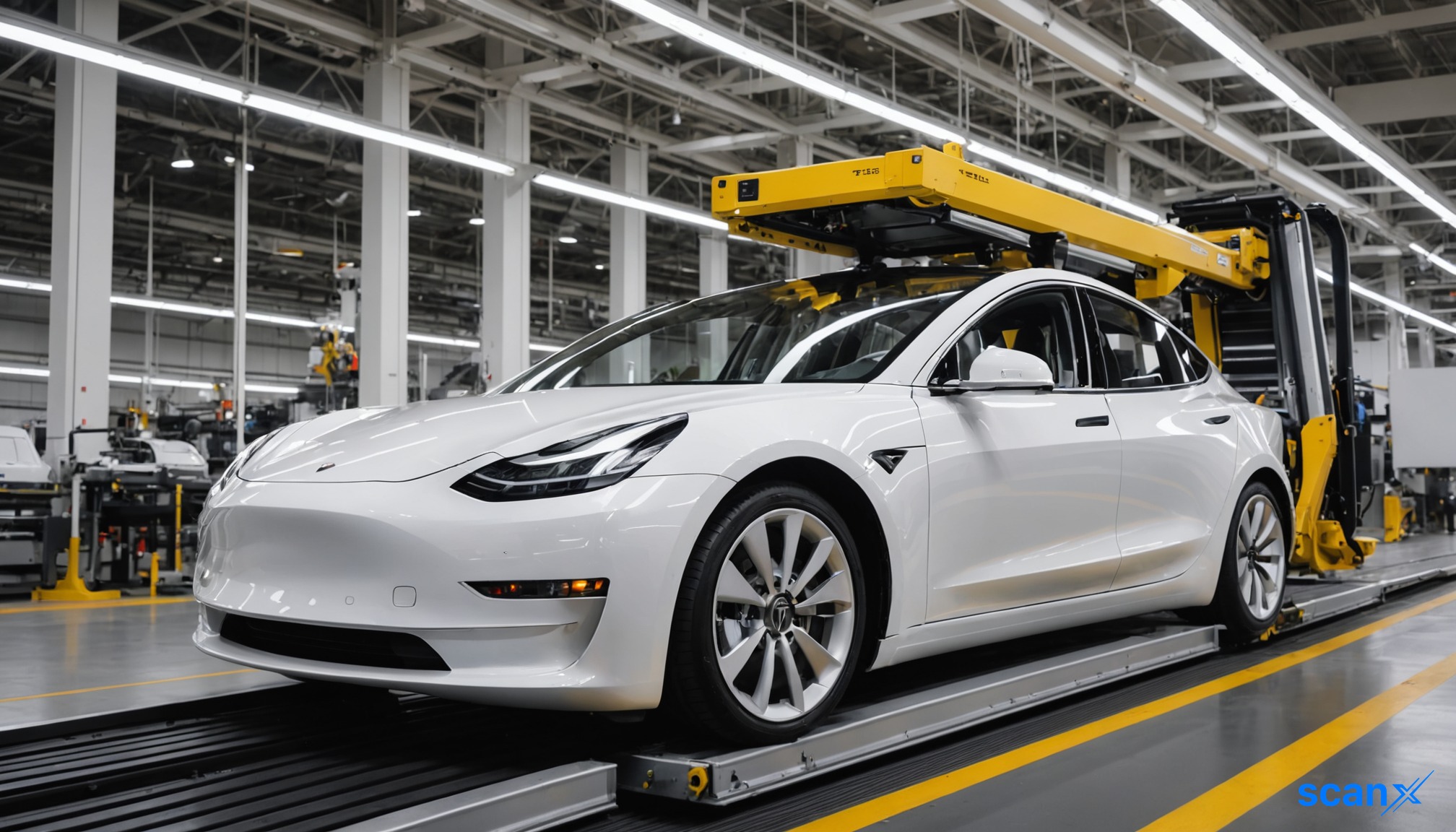
*this image is generated using AI for illustrative purposes only.
Tesla Inc. reported third-quarter deliveries of 486,532 units, exceeding the Visible Alpha consensus estimate of 456,896. The stock rose nearly 5% on Friday as investors reacted to the figures, which showed a rebound in European demand offsetting lost US tax incentives and increased competition in China.
Total production for the quarter came in at 464,391 units, falling short of the estimated 486,761. This delivery figure contrasts with earlier company-compiled analyst consensus projections of 461,974, which anticipated a decline from 497,099 in the year-earlier quarter. The actual result suggests stronger-than-expected demand resilience compared to traditional sell-side models.
Delivery and production breakdown
The Model 3 and Model Y accounted for the majority of activity, with production at 457,387 units and deliveries at 478,237. Other models saw production of 7,004 units and deliveries of 8,295. Additionally, Tesla deployed 13.7 GWh of energy storage products during the period, up from 12.5 GWh in the third quarter of 2025.
| Metric | Actual | Estimate | Source |
|---|---|---|---|
| Total Deliveries | 486,532 | 456,896 | Visible Alpha |
| Total Production | 464,391 | 486,761 | Visible Alpha |
| Model 3/Y Deliveries | 478,237 | N/A | Tesla |
| Energy Storage Deployed | 13.7 GWh | 15.9 GWh | Tesla/Consensus |
Energy storage misses consensus
Energy storage was the weaker part of the update. Tesla deployed 13.7 GWh during the quarter, which is 13.8% below the 15.9 GWh consensus. This marks the company's third consecutive miss in this segment, contrasting with the positive surprise in vehicle deliveries.
Former president highlights funding needs for AI transition
Jon McNeill, former Tesla president and current CEO of DVx Ventures, stated that the automaker still needs its traditional car business to fund its transition to autonomous technologies. "They need the cash flow from the cars to fund what is looking like a longer road to robots and a longer road to cybercabs," McNeill told CNBC.
McNeill described Tesla's renewed focus on its core automotive business as a "back to the future" moment, citing updates to the Model 3 and the upcoming Roadster. He argued that investors may be underestimating the role of Full Self-Driving (FSD) software in driving vehicle demand, comparing the shift to the move from flip phones to smartphones. "I think you're seeing this in the Tesla numbers and it's really driving their sales," he said.
Prediction markets outperformed Wall Street consensus
Prediction market traders were closer to Tesla's final delivery number than traditional sell-side analysts. Ahead of the report, traders priced in roughly 480,000 deliveries, compared with Tesla's sell-side consensus of 461,974. Tesla ultimately delivered 486,532 vehicles.
Historical production and delivery trends
Tesla's quarterly data dating back to 2019 illustrates significant volume expansion followed by recent stabilization. Production grew from 77,138 units in Q1 2019 to a peak of 503,321 in Q4 2023 before moderating. Deliveries similarly expanded from 63,019 units in early 2019 to 495,570 in Q4 2024.
The following table summarizes key quarterly milestones for production and deliveries from 2019 through Q3 2026:
| Period | Production (Units) | Deliveries (Units) |
|---|---|---|
| Q1 2019 | 77,138 | 63,019 |
| Q4 2019 | 104,891 | 112,095 |
| Q4 2020 | 179,757 | 180,667 |
| Q4 2021 | 305,840 | 308,600 |
| Q4 2022 | 439,701 | 405,278 |
| Q4 2023 | 494,989 | 484,507 |
| Q4 2024 | 459,445 | 495,570 |
| Q4 2025 | 434,358 | 418,227 |
| Q3 2026 | 464,391 | 486,532 |
In 2023, Tesla delivered 1,808,581 vehicles, marking a 38% YoY increase. However, 2024 saw annual deliveries fall to 1.79 million, representing the company's first annual delivery decline. Recent quarters show production recovering from the Q1 2025 low of 362,615 units to 464,391 in Q3 2026.
Upcoming financial results
Tesla will post its financial results for the third quarter of 2026 after market close on Wednesday, October 21, 2026. Management will hold a live question and answer webcast that day at 4:30 pm Central Time (5:30 pm Eastern Time) to discuss the company’s financial and business results and outlook.
The company noted that vehicle deliveries and storage deployments represent only two measures of its financial performance and should not be relied on as an indicator of quarterly financial results. These results depend on various factors, including average selling price, cost of sales, and foreign exchange movements.
Analyst sentiment shifts toward hold
Sell ratings on Tesla have fallen to 13.1% of total analyst recommendations, marking the lowest share since April 2023. This decline reflects growing reluctance among Wall Street to recommend selling the stock, even as shares remain down about 19% year-to-date and the core auto business faces continued pressure.
The reduction in sell ratings does not necessarily indicate a bullish turn. Hold-equivalent ratings now represent their highest share in more than two years. The mechanical removal of one bearish view also contributed to the statistical shift: longtime bear Colin Langan left Wells Fargo, prompting the bank to suspend coverage rather than upgrade the stock.
Ivan Feinseth, partner and chief investment officer at Tigress Financial Partners, stated that analysts are increasingly valuing Tesla based on potential future value from autonomy, robotics, and AI businesses rather than judging it solely as an automaker. Feinseth added that this higher valuation framework places greater emphasis on proving revenue and profitability in those segments.
Technical outlook and key levels
From a longer-term trend view, the stock remains below its bigger trend gauges, trading 1.5% below the 100-day SMA ($376.27) and 5.7% below the 200-day SMA ($393.18). That overhead supply matters because rallies often stall as longer-term holders use those moving averages to reduce exposure.
Nearer term, price is improving: Tesla is trading 1.6% above the 20-day SMA ($364.82) and 6.7% above the 50-day SMA ($347.57), and the 20-day SMA is above the 50-day SMA (a constructive short-term crossover). The catch is the "death cross" from April (50-day below the 200-day), which keeps the bigger-picture trend in "prove it" mode until the stock can reclaim and hold above the 200-day area.
Key resistance sits at $384.00, a nearby round-number zone near the moving-average overhang. Key support is at $354.00, a pivot area just above the 50-day SMA where dip-buyers may try to defend the recent uptrend.
What the numbers show
The actual delivery count of 486,532 significantly outperformed both the company-compiled consensus of 461,974 and the Visible Alpha estimate of 456,896. This divergence highlights a gap between speculative market expectations and traditional equity analyst models, which had anticipated a 7% YoY drop. The beat suggests that demand assumptions in sell-side models were overly conservative regarding inventory destocking timelines or near-term order strength.
Furthermore, while total deliveries declined slightly from 497,099 in the prior-year quarter, the beat against estimates was driven by specific regional dynamics. The data indicates that a rebound in European demand was sufficient to offset headwinds from the loss of US tax incentives and increased competition in China, allowing the company to exceed consensus despite a broader YoY volume contraction. With federal tax credits expired, international demand remains critical for sustaining volume growth.
A notable divergence exists between the strong vehicle delivery performance and the weak energy storage results. While deliveries beat consensus by 6.5%, energy storage deployments missed consensus by 13.8%. This suggests that while consumer demand for vehicles remains resilient, the utility-scale storage segment may be facing slower-than-expected deployment or inventory challenges.

How will the third consecutive energy storage deployment miss impact Tesla's guidance for the Megapack business in the upcoming earnings call?
Can Tesla sustain the recent European demand rebound through Q4 without relying on temporary incentives or pricing adjustments?
What specific revenue metrics from the autonomous driving and robotics segments will analysts require to justify the current valuation shift away from pure automotive multiples?
 20
20










 Create Custom Screeners
  Access 200+ Pre-built Filters
  Use 50+ Readymade Screener





