

Cramer warns Nvidia could tumble on China, HBM risks despite AI demand


- Jim Cramer warns Nvidia stock could tumble if China export restrictions and HBM shortages overshadow earnings
- Wall Street expects Q2 EPS of $2.07 on revenue of $92.03 billion; Daniel Newman sees potential for $94-95 billion
- Options market prices in 5.27% swing, representing $275 billion in value at stake
- Nvidia tests key technical support near $208 after seven-day losing streak, its longest since 2022
- Dan Ives cites 15-to-1 chip demand-supply gap, dismissing circular financing concerns


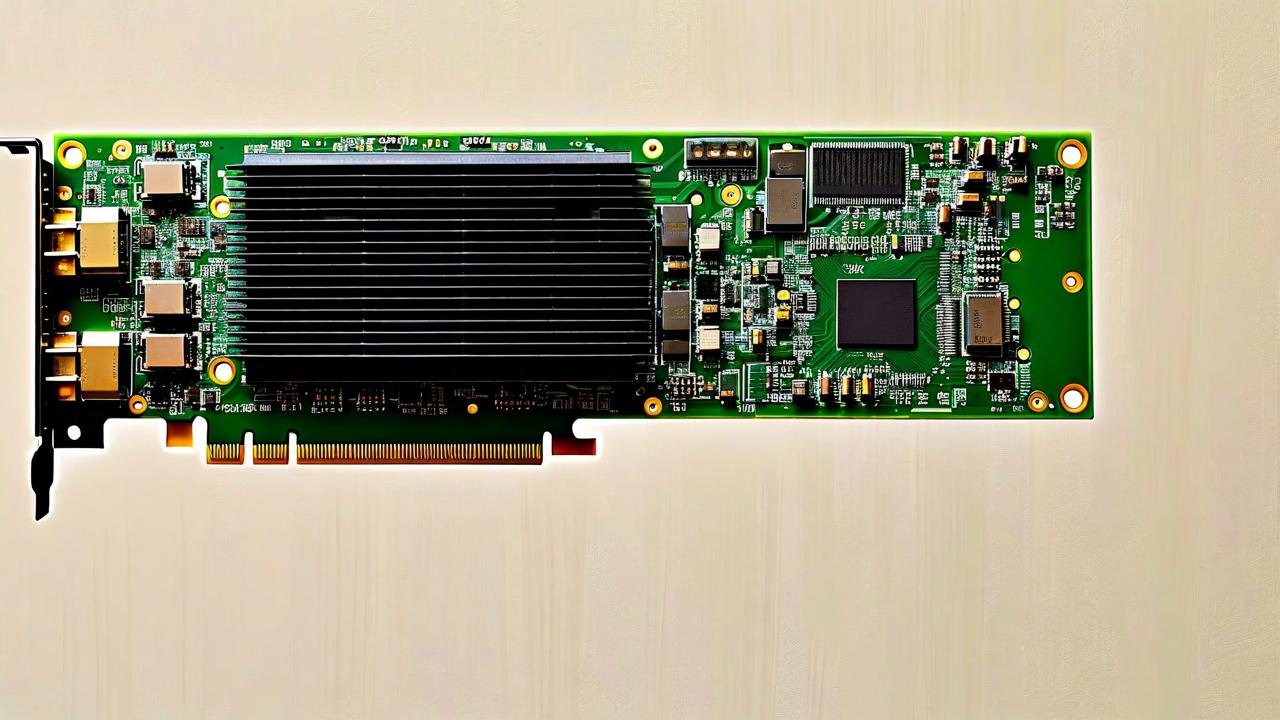
*this image is generated using AI for illustrative purposes only.
Nvidia Corp. (NASDAQ: NVDA) reports fiscal second-quarter earnings on Wednesday, with CNBC’s Jim Cramer warning the stock could tumble if broader AI risks outweigh results.
The chipmaker faces scrutiny over potential headwinds including U.S. government restrictions on advanced chip sales to China, high-bandwidth memory (HBM) shortages, and political opposition to data center construction. Cramer stated that these factors could overshadow even a strong quarter, noting, "If the bears are right, this stock will tumble regardless of what it reports tomorrow."
Market Expectations and Volatility
Wall Street estimates Nvidia will report second-quarter earnings of $2.07 per share on revenue of $92.03 billion. Analyst Daniel Newman sees revenue potentially reaching $94 billion–$95 billion, with quarterly sales possibly rising above $110 billion eventually. He said sustained revenue growth and mid-70% gross margins would signal that AI compute demand remains strong.
The options market is pricing in a 5.27% implied swing for the stock, representing approximately $275 billion in market value contingent on the outcome.
| Metric | Estimate / Data Point |
|---|---|
| EPS Estimate | $2.07 |
| Revenue Estimate | $92.03 billion |
| Implied Stock Swing | 5.27% |
| Value at Stake | $275 billion |
Technical Setup and Momentum
Nvidia enters earnings following a seven-day losing streak, its longest since 2022. The stock is testing a key technical support level near $208, trading almost exactly at its 200-day moving average. After failing to hold above both its 20-day and 50-day moving averages, the long-term trendline serves as a gauge of broader market sentiment.
The Relative Strength Index (RSI) has eased to around 48, placing it in neutral territory. Meanwhile, the Moving Average Convergence Divergence (MACD) indicator has turned bearish, with both the signal line and histogram pointing to weakening short-term momentum. Nvidia’s decline has not been accompanied by unusually heavy trading volumes, reflecting a gradual loss of buying momentum rather than panic selling.
On Tuesday, Nvidia closed 2.19% higher at $213.05. Shares have risen 12.81% year-to-date, according to Benzinga Pro.
Demand Dynamics and Pricing Power
Analyst Dan Ives described the current AI infrastructure buildout as a "Vegas Strip 1955 type moment," asserting that fundamental demand for chips continues to outstrip supply by "15 to one." Ives dismissed concerns regarding circular financing, noting that corporate adoption remains robust. He maintained that high prices will not deter major customers such as Microsoft Corp. (NASDAQ: MSFT), Alphabet Inc. (NASDAQ: GOOG), and Oracle Corp. (NASDAQ: ORCL), even as rising memory costs push AI server prices up by more than 15%.
Cramer defended Nvidia’s strategy of investing across the AI ecosystem, saying its investments strengthen the broader ecosystem while reinforcing its market leadership. Despite the development of OpenAI’s Jalapeño AI chip, which is expected to reduce AI running costs, Cramer remains skeptical of any significant threat to Nvidia’s dominance.
Recent Operational Moves
The earnings report follows significant operational activity by Nvidia, including a $6 billion deal to license startup Poolside’s technology to advance open-weight AI models. This move underscores the company’s continued investment in expanding its AI ecosystem beyond hardware sales.
What the Numbers Show
The divergence between the 5.27% implied volatility and the $275 billion value at stake highlights the market's acute sensitivity to any deviation from consensus estimates. While analyst estimates project revenue of $92.03 billion, the options market suggests traders are hedging against significant downside risk despite the bullish narrative surrounding the 15-to-1 demand-supply ratio. The technical breakdown to the 200-day moving average without a volume spike suggests a gradual loss of momentum rather than panic selling, making the upcoming earnings report a critical test for whether this long-term support level can hold.

How might the $6 billion Poolside acquisition impact Nvidia's gross margins and competitive positioning against hyperscalers developing in-house chips like OpenAI's Jalapeño?
If Nvidia fails to hold the 200-day moving average support, what specific technical levels could trigger a broader sell-off in the semiconductor sector?
To what extent will U.S. export restrictions on advanced chips to China force Nvidia to pivot its revenue mix toward domestic or allied markets in the next fiscal year?
 20
20












 Access Market Heat-map & Insights
  Create, Save & Share your Screener
  Use 200+ Screening Filters





