Nvidia Q2FY26 Results: Earnings preview shows 97% beat odds

scanx
Reviewed by
Riya DScanX News Team
Key Highlights
  • Nvidia reports Q2 earnings with expected EPS of $2.09 and revenue near $92 billion
  • Polymarket gives 97% chance of beating earnings; Kalshi bets heavily on 'Hyperscaler' mention (99%)
  • Physical AI terms like 'Cosmos' (74%) and 'Self Driving' (64%) favored over geopolitical risks
  • 'TSMC' (41%) more likely to be mentioned than 'Taiwan' (18%) or 'Tariff' (18%)
  • Options imply 5.6% post-earnings move, worth roughly $286 billion in market value
powered bylight_fuzz_icon
49300309

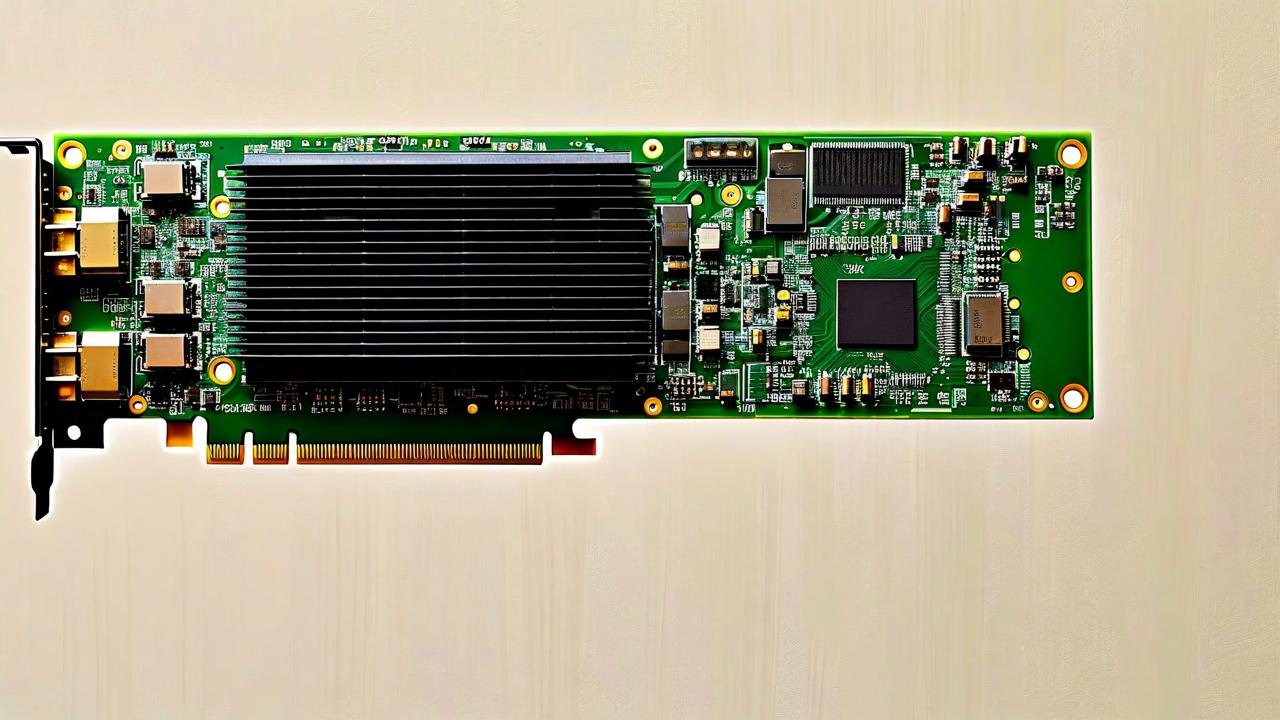
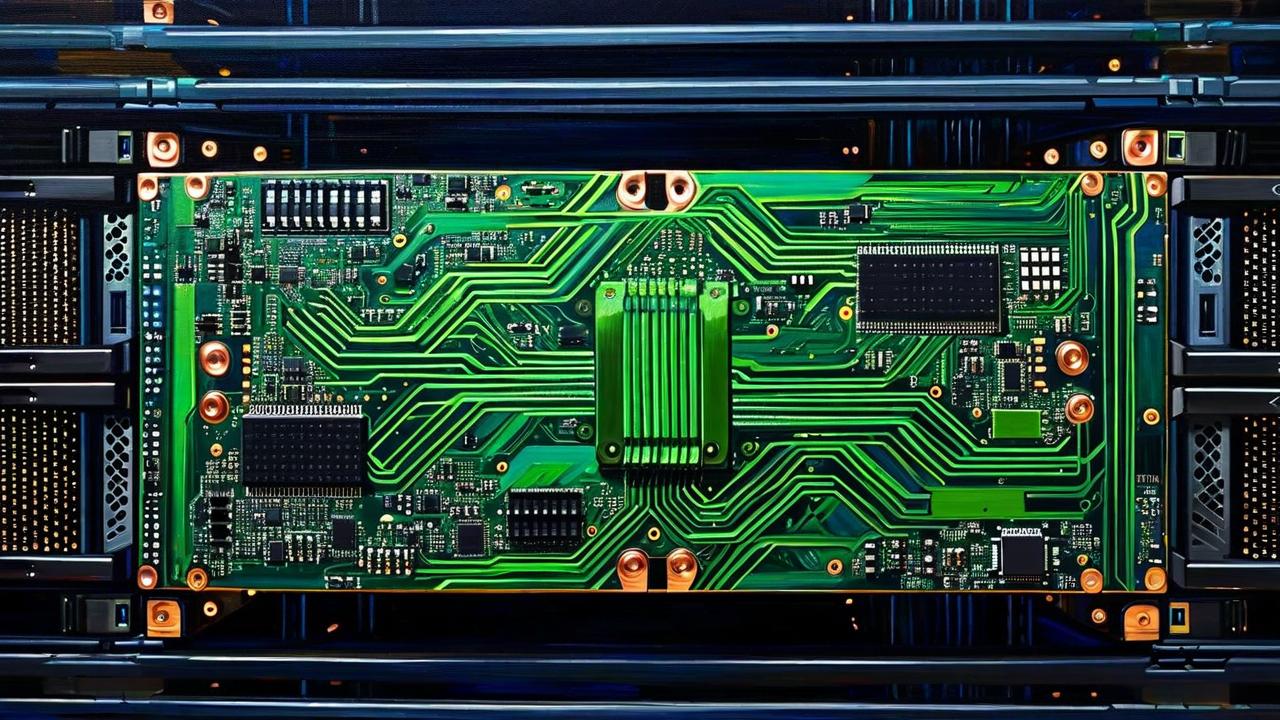
*this image is generated using AI for illustrative purposes only.

Nvidia Corp. (NASDAQ: NVDA) reports second-quarter earnings after market close today, with the conference call scheduled for 5 p.m. ET. Analysts project earnings per share of approximately $2.09 on revenue near $92 billion, roughly double the year-ago quarter.

Prediction markets indicate high confidence in a positive outcome. Polymarket assigns a 97% probability to Nvidia beating earnings estimates. However, the stock has fallen the day after each of its last four reports, according to Bespoke, despite being up about 12% this year.

What Traders Expect Nvidia to Say

Kalshi prediction markets reveal which topics CEO Jensen Huang is likely to emphasize. "Hyperscaler" leads the board at 99%. Nvidia recently created a new reporting category for public clouds and major consumer internet companies. Fund manager Dan Niles notes that capital spending for these entities surged 92% year over year.

Physical AI terms are also favored:

  • "Cosmos," the platform for training robots and self-driving systems, trades at 74%.
  • "Self Driving" trades at 64%.
  • "Humanoid" trades at 62%.
  • "Omniverse," for simulating digital replicas of factories, trades at 58%.
  • "Gaming" sits at 63%, though it now falls under Edge Computing, which generated less than 8% of total revenue last quarter.

What Traders Expect Nvidia to Skip

Traders anticipate minimal discussion of geopolitical risks or specific partnerships. "TSMC" trades at 41%, compared with just 18% for "Taiwan." As Rubin chips begin shipping this autumn, traders expect Huang to name manufacturer Taiwan Semiconductor Manufacturing Co. (NYSE: TSM) rather than discuss regional risks.

Other low-probability mentions include:

  • "Tariff" at 18%
  • "Trump" at 8%
  • "H20," the chip built for the China market, at 11%. Nvidia’s outlook assumes zero China data center compute revenue.
  • "GM" at 4%, despite a partnership struck at last year’s GTC conference.

What the Numbers Show

The divergence between consensus guidance and analyst models creates a higher unofficial hurdle for Nvidia. While Wall Street expects third-quarter revenue guidance of roughly $104 billion, Jefferies models $108 billion and UBS suggests it could exceed $110 billion. Morgan Stanley estimates Rubin could contribute nearly $9 billion during the quarter. Consequently, guidance near the $104 billion consensus could be viewed as disappointing even if it meets expectations, given the potential contribution from new products.

Market Reaction Risks

Nvidia options imply a 5.6% post-earnings move in either direction, equivalent to roughly $286 billion in market value, according to Benzinga Pro. Siebert CIO Mark Malek argues that Nvidia could deliver "the greatest quarter in the history of the semiconductor industry" and still see no stock appreciation without a new narrative catalyst.

How might the divergence between Wall Street's $104 billion consensus and higher analyst models of $108-$110 billion impact Nvidia's stock valuation if guidance falls short of the unofficial hurdle?

What specific narrative catalysts beyond record-breaking financials will Jensen Huang need to introduce to counter the historical trend of post-earnings stock declines?

How significant is the potential $9 billion revenue contribution from Rubin chips in Q3, and could any delays in their shipment materially affect investor sentiment?

like19
dislike

NVIDIA shares rise 0.4% as options price muted earnings reaction

scanx
Reviewed by
Shriram SScanX News Team
Key Highlights
  • NVIDIA shares rose 0.37% to $213.84 in premarket trading ahead of Q2 FY27 earnings
  • Analysts expect EPS of $2.09 and revenue of $92.03 billion, up ~97% YoY
  • Options market prices smallest earnings-related move in eight quarters, signaling muted expectations
  • SpaceX emerging as key customer, potentially reaching 10% of revenue by 2027
  • Stock trades at 32.6x earnings with consensus Buy rating and $328.79 average price target
powered bylight_fuzz_icon
49200338

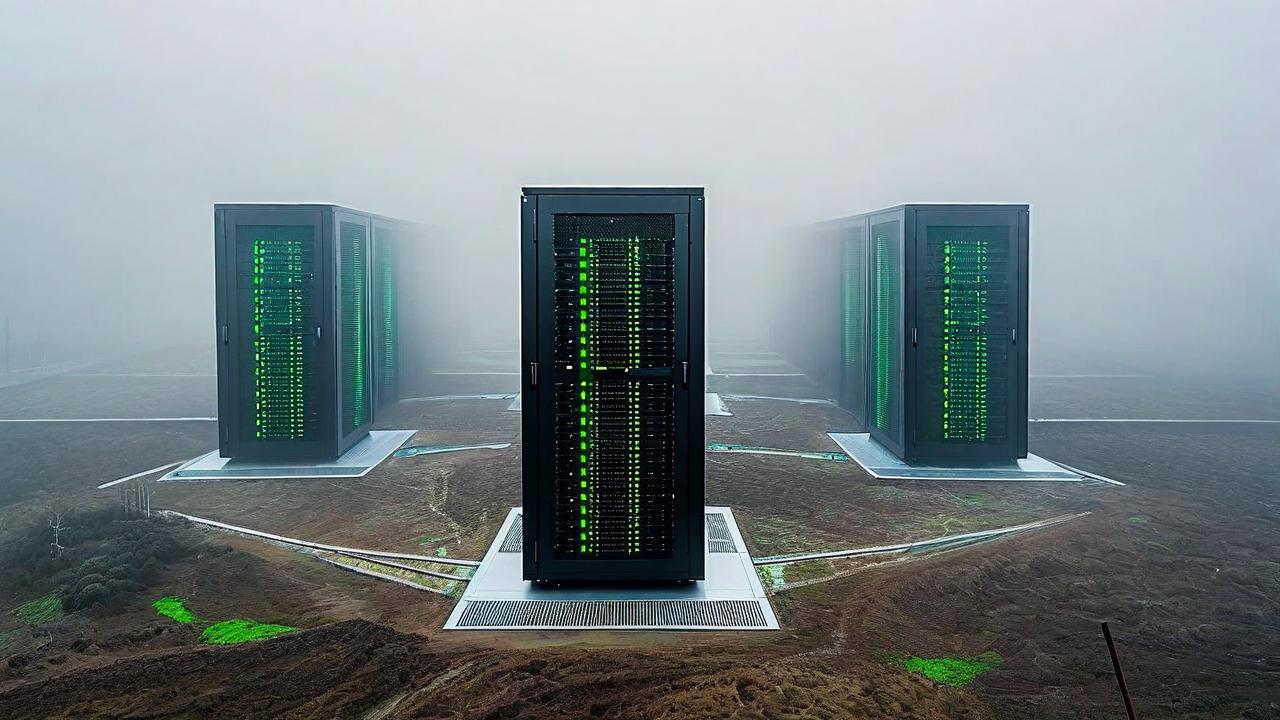
*this image is generated using AI for illustrative purposes only.

NVIDIA Corporation (NASDAQ: NVDA) shares rose 0.37% to $213.84 in Wednesday’s premarket trading as investors prepared for its fiscal second-quarter 2027 earnings report after market close. The stock is up 12.6% year-to-date in 2026.

Wall Street attention centers on the company’s financial performance, strategic updates regarding customer concentration, and the upcoming Rubin product cycle. Deepwater Management managing partner Gene Munster highlighted the emerging role of SpaceX, which represented around 4% of revenue in the quarter and has the potential to become a 10% customer by the end of calendar 2027. Munster described SpaceX as becoming the "fifth horseman" alongside Amazon, Google, Meta, and Microsoft, which collectively make up around 80% of NVIDIA’s data center revenue.

Earnings Expectations And Valuation

Analysts project NVIDIA will report second-quarter earnings per share of $2.09, up from $1.04 a year earlier. Revenue is forecast to reach $92.03 billion, compared with $46.74 billion in the prior year period. The company has beaten analyst estimates for revenue in 15 straight quarters and for earnings per share in 14 straight quarters.

Metric Current Estimate Prior Year Change
EPS $2.09 $1.04 +101.0%
Revenue $92.03 billion $46.74 billion +96.9%

Munster expects NVIDIA to beat estimates by 4% and raise revenue guidance for October by 3%. He noted that investors will want to see hyperscaler growth of 8% year-over-year and ACIE (data centers) growth of 150% year-over-year. Munster emphasized that ACIE has higher growth potential for long-term expansion.

Bernstein analyst Stacy Rasgon told CNBC on Saturday that he expects NVIDIA to report strong quarterly results but will closely watch management's comments on the Rubin ramp. NVIDIA's three-year outlook points to roughly $500 billion in data center revenue next year, Rasgon said. Still, Rubin build plans suggest revenue could exceed that level. Therefore, he wants to know whether management will raise its expectations.

Rasgon will also watch whether NVIDIA can keep gross margins in the mid-70% range as memory and wafer prices rise. Management previously indicated that margins could remain near current levels. In addition, he wants more details about NVIDIA's financial support for major data center projects. Rasgon sees the company's balance sheet as a strategic advantage, noting that using excess cash to support customers could expand the AI ecosystem and strengthen long-term demand for NVIDIA's products.

The stock trades at 32.6 times earnings, reflecting a premium valuation. NVIDIA carries a Buy consensus rating. Its average price forecast is $328.79. Raymond James raised its price forecast to $352 from a previous level Tuesday and maintained a Strong Buy rating. Rosenblatt maintained a Buy rating and a $325 price forecast Monday. KeyBanc also maintained an Overweight rating and a $330 price forecast Monday.

Market Sentiment And Options Activity

Ahead of the report, UBS Private Wealth Management Managing Director Alli McCartney told CNBC that enthusiasm surrounding NVIDIA likely helped fuel the broader market rebound. However, traders appear to expect a more muted reaction this quarter. NVIDIA’s options market is pricing in its smallest earnings-related move in eight quarters. McCartney said that aligns with UBS’ expectations for less dramatic changes in the company’s results, growth and forward estimates than in previous quarters.

The broader market offered little support before the open. Nasdaq futures slipped 0.06%, while S&P 500 futures fell 0.02%.

Strategic Customer Diversification

The Data Center segment split reported last quarter underscores that NVIDIA’s business is becoming less dependent on hyperscalers, which Munster views as a positive development. While the "four horsemen" dominate current revenue, the rise of SpaceX suggests a broadening customer base. Munster stated he does not expect any new material commentary on potential revenue from China, though he noted the topic is almost guaranteed to come up given China represents about a quarter of global GPU spending.

Technical Position And Market Context

NVIDIA shares trade within a 52-week range of $164.07 to $236.54. The stock remains in a long-term uptrend. It trades about 9.3% above its 200-day simple moving average of roughly $195.43. Its 50-day average also remains above the 200-day average, which is a bullish signal.

Shares are holding above their 50-day and 100-day averages. The stock traded 0.4% below its 20-day simple moving average of $214.58. A move above that level could strengthen the near-term trend. Failure to reclaim it could keep the stock range-bound. The relative strength index stood at 49.58. That neutral reading suggests neither buyers nor sellers hold a clear advantage.

Short-term momentum has weakened. The moving average convergence divergence indicator is below its signal line, while its histogram is negative. That indicates the recent rally is losing momentum. The Benzinga Edge scorecard gives NVIDIA a momentum score of 56.33, pointing to consolidation rather than strong acceleration.

Resistance sits near $214, close to the stock's short-term moving-average zone. A sustained move above that level could open a path toward the 52-week high of $236.54. Support stands near $190, where buyers previously stepped in. A break below that level could signal a deeper pullback.

Rasgon cautioned that strong earnings may not produce an immediate stock gain. Other semiconductor companies have recently reported solid results without receiving a positive market reaction. However, he believes NVIDIA remains essential to the global AI infrastructure buildout. The stock trailed several semiconductor peers for much of the past year but has recently started to outperform the group. Rasgon sees the Rubin cycle as a potential catalyst for further gains. Historically, NVIDIA's new product cycles have created favorable conditions for the stock.

ETF Exposure

NVIDIA represents 9.79% of the First Trust Innovation Leaders ETF (NYSE: ILDR). It also accounts for 9.73% of the Franklin Focused Dynamic Growth ETF (NASDAQ: FFOG) and 9.60% of the Sapient Quality Select ETF (NASDAQ: SQS). Heavy exposure means fund inflows or outflows could drive additional buying or selling in NVIDIA shares.

What The Numbers Show

The projected revenue growth of nearly 97% YoY aligns closely with the EPS growth of 101%, indicating stable net margin expansion. The emergence of SpaceX as a significant customer, potentially reaching 10% of revenue by 2027, signals a structural shift in NVIDIA’s data center mix. This diversification reduces reliance on the top four hyperscalers, who currently account for 80% of data center revenue, thereby mitigating concentration risk while maintaining high growth rates in the ACIE segment. Additionally, the focus on gross margins in the mid-70% range amidst rising input costs highlights the company's pricing power and operational efficiency as key drivers of profitability. The options market pricing in the smallest earnings-related move in eight quarters contrasts with the high valuation multiple of 32.6x earnings, suggesting investor caution despite strong fundamental expectations.

How might NVIDIA's strategic financial support for major data center projects impact its balance sheet health and long-term competitive moat against emerging rivals?

What specific supply chain or manufacturing hurdles could prevent the Rubin product cycle from exceeding the projected $500 billion data center revenue outlook?

If SpaceX accelerates to 10% of NVIDIA's revenue by 2027, how will this shift in customer concentration affect the company's pricing power relative to the dominant 'four horsemen' hyperscalers?

like15
dislike

More News on NVIDIA Corp

Must Read Next

Earnings

Man Infraconstruction targets 25% PAT growth in FY27, ₹35,000 crore GDV by 2031 2 hrs ago
KSB CMD targets 10-15% volume, 15-17% value growth 2 hrs ago

Stocks

Oswal Greentech achieves ISO 9001:2015 quality management certification 18 mins ago
no imag found
HDFC Bank chair informs RBI governor of new MD and CEO appointment 2 hrs ago