

OpenAI's Jalapeño chip cuts latency vs Nvidia; Cramer skeptical


- OpenAI's Jalapeño chip shows 1.5x to 1.9x higher performance per watt vs Nvidia GB200/GB300
- End-to-end latency was 1.7x to 3.6x lower across tested AI models including DeepSeek R1
- Deployment planned for late 2026 with production ramp in 2027
- Jim Cramer remains skeptical of any real competitors to Nvidia's market position
- Nvidia shares rose 2.19% to $213.05 on Tuesday


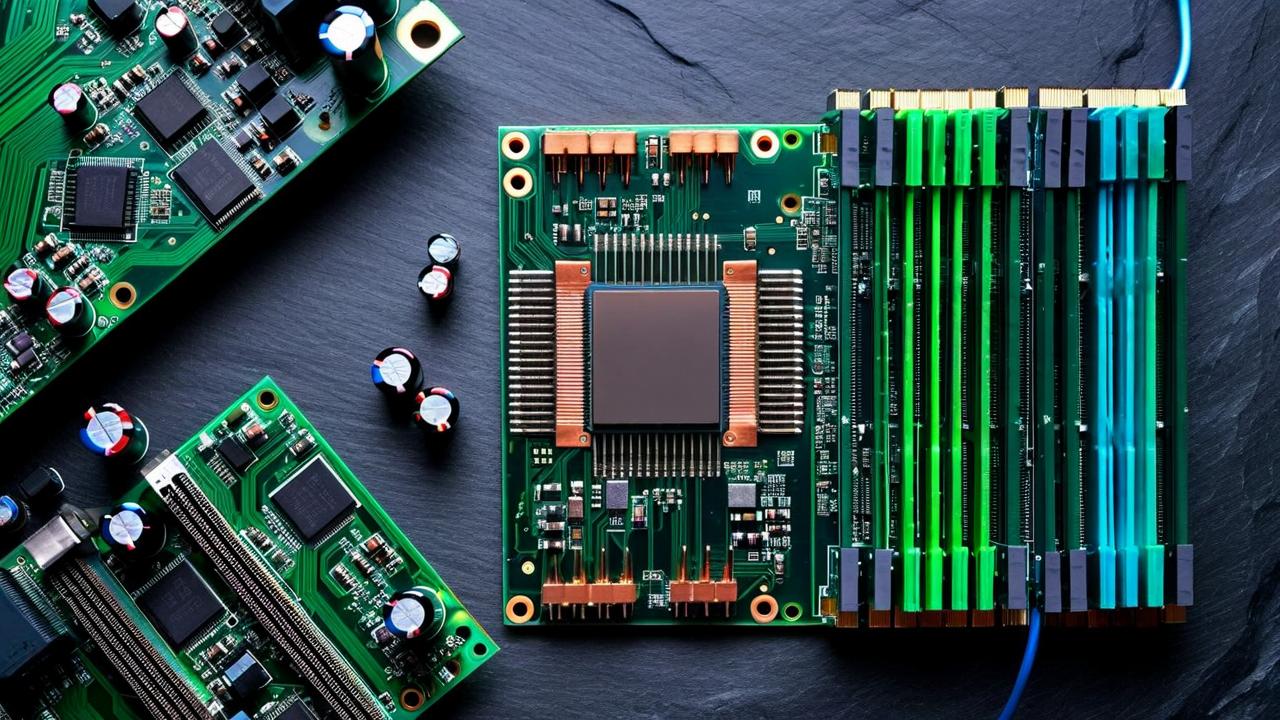
*this image is generated using AI for illustrative purposes only.
OpenAI’s custom inference chip, Jalapeño, delivered up to 3.6x lower latency and 1.9x higher performance per watt compared to Nvidia’s GB200 and GB300 chips in internal benchmarks.
Benchmark Performance
OpenAI stated that Jalapeño, developed with Broadcom Inc., achieves higher throughput and lower latency simultaneously across three AI models: GPT-OSS 120B, DeepSeek R1 670B, and Kimi K2.5 1T. The company plans to deploy the chip within its infrastructure by the end of 2026, with production ramping further in 2027.
| AI Model | NVIDIA Comparison | Peak Performance Per Watt | End-to-End Latency | Minimum TBT |
|---|---|---|---|---|
| GPT-OSS 120B | GB200 | 1.9x higher | 1.7x lower | 2.7x lower |
| DeepSeek R1 670B | GB300 | 1.7x higher | 3.6x lower | 4.1x lower |
| Kimi K2.5 1T | GB300 | 1.5x higher | 3.4x lower | 3.8x lower |
Richard Ho, OpenAI hardware vice president, told Bloomberg TV that performance per watt could be 1.8x to 4x better than existing chips. He noted this efficiency could allow the company to lower customer token prices as Jalapeño scales into production.
Market Reaction
Jim Cramer dismissed the potential competitive threat to Nvidia Corp. In a post on X, Cramer stated, "Every day I read about some chip that is superior to Nvidia. And every year I see no real competitors."
Nvidia shares closed at $213.05, up 2.19% on Tuesday. The stock rose another 0.31% to $213.70 in after-hours trading. According to Benzinga Edge Rankings, Nvidia ranks in the 99th percentile for growth.
What the Numbers Show
OpenAI explicitly stated it does not view Jalapeño as an outright Nvidia replacement. The company plans to continue deploying accelerators from Nvidia and other partners for both training and inference tasks. This suggests the custom chip is intended to optimize specific inference workloads rather than displace Nvidia’s broader ecosystem dominance.

How might OpenAI's ability to lower token prices impact the competitive landscape for other cloud providers relying on Nvidia hardware?
What specific technical or ecosystem barriers prevent custom inference chips like Jalapeño from displacing Nvidia's dominance in AI training workloads?
Will Broadcom's partnership with OpenAI encourage other major tech firms to develop similar custom silicon, potentially fragmenting the GPU market?
 16
16









 Access 50+ Readymade Screeners
  Use 200+ Custom Filters
  Get Full Market Insights





