Nvidia Earnings: Yorkville CEO cites memory, labor bottlenecks

scanx
Reviewed by
Suketu GScanX News Team
Key Highlights
  • Wall Street expects Nvidia revenue of about $92.2 billion, nearly double last year
  • Yorkville CEO cites memory costs, critical minerals, and labor as key bottlenecks
  • AI server prices may rise more than 15% due to soaring memory costs
  • U.S. had 4,313 data centers as of June 1, 2026, with growth expected through 2026
powered bylight_fuzz_icon
49211950

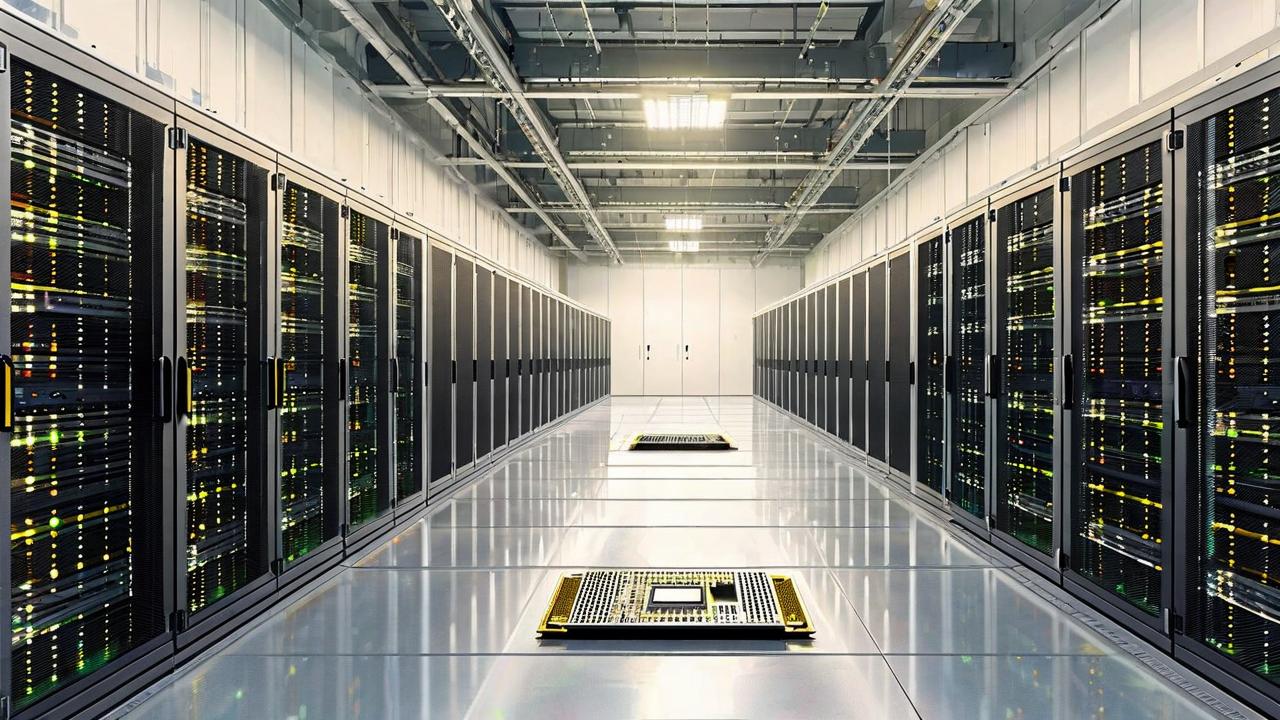
*this image is generated using AI for illustrative purposes only.

Yorkville America CEO Steve Neamtz highlights physical constraints in the AI supply chain ahead of Nvidia Corp. (NASDAQ: NVDA) earnings. Investors will watch for signs that demand still outpaces capacity.

Neamtz argues the primary challenge is no longer capital availability but physical execution limits. He points to three specific bottlenecks emerging beyond chip production itself.

Physical Constraints on AI Buildout

The most immediate constraint involves memory, storage, and power infrastructure. Neamtz notes that compute scaling has outpaced these supporting layers. This dynamic is already impacting pricing, with reports indicating AI server prices may rise more than 15% due to soaring memory costs.

Critical minerals represent a second bottleneck. Estimates cited by Sprott suggest AI data centers could require the equivalent of about 3% of today's global rare-earth demand by 2030.

Labor shortages form the third constraint. The Associated Builders and Contractors estimates the construction industry needs 349,000 additional U.S. workers in 2026. This figure covers the entire industry rather than data centers alone.

Market Expectations and Data Center Growth

Wall Street expects Nvidia to report revenue of about $92.2 billion, nearly double last year's figure. Reuters describes the results as a test of the AI spending boom's sustainability.

Prediction market traders anticipate continued expansion in physical infrastructure. Kalshi traders assign a 66% chance the U.S. ends 2026 with at least 5,300 data centers. This compares with 4,313 U.S. data centers as of June 1, 2026.

What the Numbers Show

The divergence between massive capital expenditure and physical constraints suggests a shift in investment logic. With Big Tech set to spend more than $700 billion on capex this year, the focus moves from funding availability to execution efficiency. Neamtz indicates that if supply begins catching up with demand, the opportunity shifts from infrastructure scarcity to operational efficiency.

How might the projected 15% increase in AI server prices impact Big Tech's return on investment timelines and subsequent capital expenditure decisions?

Which specific critical minerals are most at risk of supply shortages by 2030, and how could this drive consolidation or vertical integration among data center operators?

Could the severe labor shortage in construction lead to a geographic shift in data center development toward regions with more available workforce pools?

like17
dislike

Nvidia manager named key figure in alleged B300 GPU smuggling to China

scanx
Reviewed by
Ashish TScanX News Team
Key Highlights
  • Nine individuals, including an Nvidia manager, indicted for smuggling B300 GPUs to China
  • 74 servers successfully exported via Indonesia, direct routes, and Japan/Hong Kong
  • Nvidia manager Zhang labeled 'key figure' for authorizing release of banned chips
  • Chinese buyers paid ~$1 million per server, double the US price
  • Prosecutors seek maximum five-year sentences for four defendants
powered bylight_fuzz_icon
49130248

*this image is generated using AI for illustrative purposes only.

Taiwanese authorities have indicted nine individuals, including a manager at Nvidia Corp. (NASDAQ: NVDA), for allegedly smuggling high-end AI servers to mainland China.

The indictment identifies the Nvidia employee, identified only by his family name Zhang, as a "key figure" who authorized the release of prohibited B300 graphics processing units. Prosecutors are seeking maximum five-year sentences for four of the nine defendants.

Details of the Smuggling Scheme

The probe centers on the illicit export of 74 servers containing B300 GPUs, which are banned for sale to China. According to prosecutors, 50 servers were routed through Indonesia, 16 were delivered directly, and eight were sent via Japan and Hong Kong before reaching mainland China.

A separate attempt involving 56 servers failed, with those units remaining in Taiwan. The investigation also involves employees from Super Micro Computer Inc. (NASDAQ: SMCI). Prosecutors noted that Zhang demonstrated a "clearly poor attitude following the offense."

Regulatory Context

The case underscores strict enforcement of export controls by Taiwan’s Keelung District Prosecutors’ office. A document from the office states that any sale of high-end AI servers by Nvidia requires a thorough review process. Purchases of more than eight such servers mandate on-site inspections by company staff.

This incident follows earlier actions in July when Taiwanese prosecutors detained an Nvidia employee after searching his Taipei office and home. That detention was part of a wider investigation into forgery and breach-of-trust allegations linked to US charges against a Super Micro co-founder regarding billions of dollars in restricted chip sales.

Market Impact and Pricing

Chinese tech firms reportedly paid roughly $1 million each for Nvidia’s B300 servers, nearly double the price paid by US buyers. This premium reflects Washington’s export curbs and the resulting scarcity in the Chinese market.

The US initiated restrictions on Nvidia’s sophisticated chip exports to China in 2022, progressively tightening them. In 2025, licenses were required for exports of Nvidia’s H20 chips to China, though some sales were later permitted to recommence.

What the Numbers Show

The disparity in pricing highlights the effectiveness of export controls in creating arbitrage opportunities. With Chinese buyers paying $1 million per server versus significantly lower US prices, the incentive for smuggling remains high despite severe legal penalties. The failure of one shipment (56 servers) alongside the success of another (74 servers) indicates that enforcement is active but not yet impenetrable.

How might this indictment influence Nvidia's internal compliance protocols and supply chain oversight for future exports to restricted regions?

Will the high price premium for smuggled B300 servers in China encourage other semiconductor manufacturers to develop alternative smuggling networks or localized production?

Could the involvement of Super Micro Computer Inc. employees lead to broader regulatory scrutiny or stock volatility for SMCI beyond the current US charges?

like15
dislike

More News on NVIDIA Corp

Must Read Next

Earnings

Man Infraconstruction targets 25% PAT growth in FY27, ₹35,000 crore GDV by 2031 2 hrs ago
KSB CMD targets 10-15% volume, 15-17% value growth 2 hrs ago

Stocks

Oswal Greentech achieves ISO 9001:2015 quality management certification 18 mins ago
no imag found
HDFC Bank chair informs RBI governor of new MD and CEO appointment 2 hrs ago