

Morgan Stanley cites shared AI infrastructure as Tesla, SpaceX merger catalyst


- Morgan Stanley analysts see a potential merger between Tesla and SpaceX due to shared AI infrastructure
- SpaceX bought $506 million in Tesla Megapacks and $131 million in Cybertrucks in 2025
- The firms are jointly building a $119 billion chip factory with Intel in Texas
- SpaceX valuation stands at $2.06 trillion, compared to Tesla's $1.48 trillion

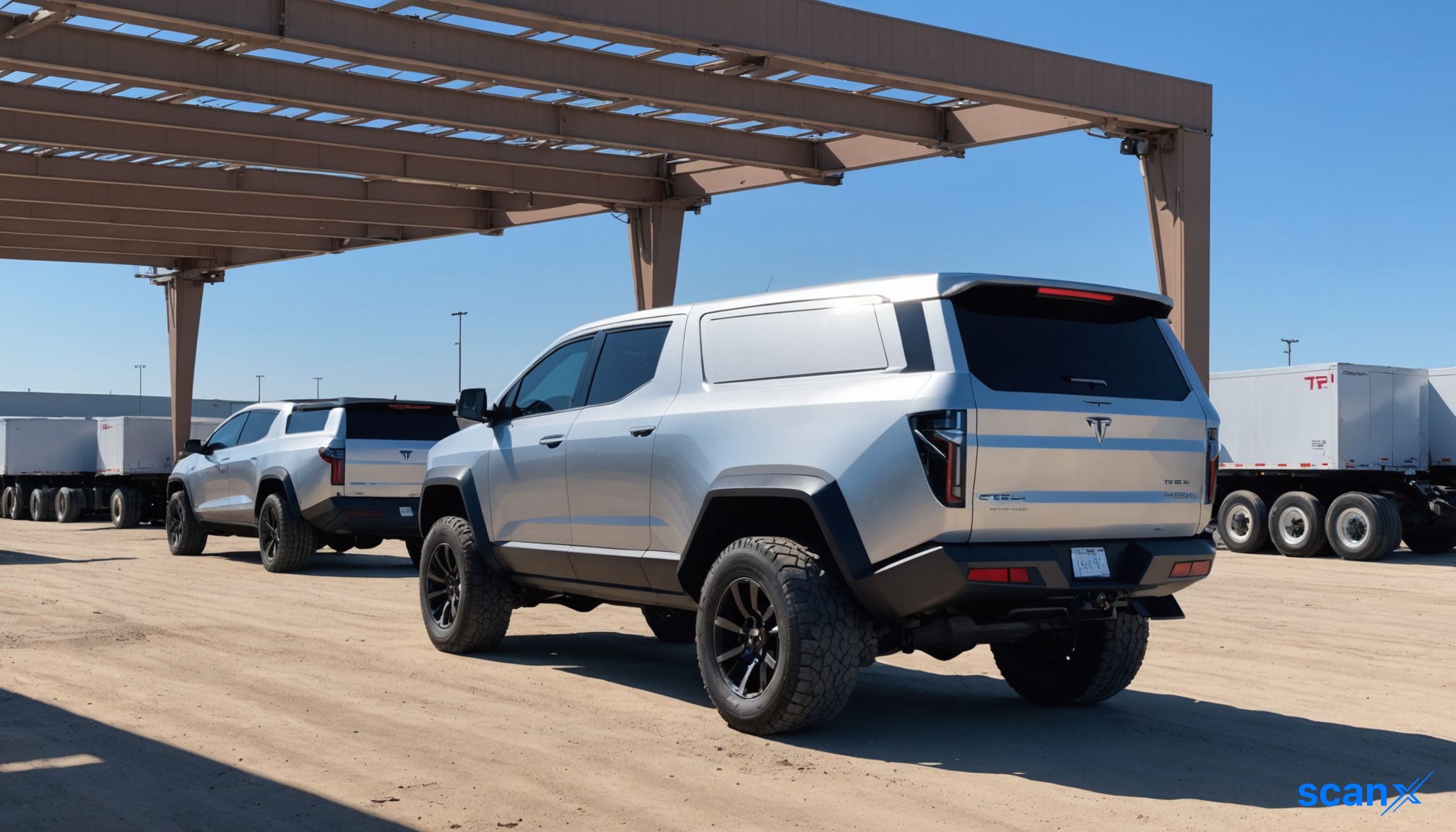

*this image is generated using AI for illustrative purposes only.
Morgan Stanley analysts argue that deepening technological and infrastructural ties between Tesla Inc. (NASDAQ: TSLA) and Space Exploration Technologies Corp. (NASDAQ: SPCX) could lead to a merger. The bank views the companies' joint push into physical AI as a "shared mission" to convert energy into intelligence.
Deepening Web Of Shared Infrastructure
Analysts led by Adam Jonas noted that the two firms share technology, talent, and infrastructure. As large language models approach performance limits, investor attention is shifting toward physical AI, an opportunity Morgan Stanley believes the companies are uniquely capable of addressing, potentially jointly.
The analysts identified 71 mentions of Tesla in SpaceX's S-1 filing. Of these references, 34% cited direct collaboration, while 41% related to governance and related-party transactions.
Compute And Connectivity Flow Both Ways
The companies are jointly building Terafab, a Texas chip factory with Intel Corp. (NASDAQ: INTC), at a cost exceeding $119 billion. They are also co-developing an AI platform called Macrohard.
SpaceX purchased $506 million worth of Tesla Megapacks and $131 million worth of Cybertrucks in 2025 for its Colossus compute cluster. Quarterly filings showed Megapack purchases totaled $329 million in the first half of the year.
SpaceX supplies Tesla with compute capacity set to reach 4.9 gigawatts by 2027, along with Starlink connectivity for the Cybercab. In return, Tesla provides SpaceX with data-collecting robots, energy storage technology, and manufacturing expertise from a workforce more than six times larger than SpaceX's.
Musk Has Fueled Merger Talk
Elon Musk recently suggested that the extensive collaboration between the firms warrants consideration of a merger. Speaking on the All In Podcast with SpaceX President Gwynne Shotwell, Musk asked listeners to imagine what action might be taken given the close collaboration across multiple areas.
Investor Ross Gerber stated that a merger could become a "must-have" investment for global investors. However, he warned it would be dilutive for SpaceX shareholders and unfavorable for Tesla investors based on current valuations.
SpaceX holds a valuation of $2.06 trillion, compared to Tesla's $1.48 trillion, according to TradingView.
What the Numbers Show
The valuation gap between the two entities is significant. SpaceX is valued at $2.06 trillion, which is approximately 39% higher than Tesla's $1.48 trillion valuation. This disparity underscores Gerber's warning regarding potential dilution for SpaceX shareholders in any combined entity.
Market Reaction
SpaceX shares closed 0.56% lower on Monday at $151.85 before climbing 0.58% in extended trading. Tesla shares rose 3.03% to close at $375.30, then fell 0.01% in after-hours trading. Benzinga edge rankings indicate SpaceX stock has a positive price trend across short, medium, and long-term horizons.

How might the proposed merger impact the competitive landscape for other major tech firms investing in physical AI and autonomous robotics?
What regulatory hurdles could arise from combining Tesla's automotive data dominance with SpaceX's satellite infrastructure, particularly regarding antitrust concerns?
Could the significant valuation gap between SpaceX and Tesla lead to a hostile takeover scenario or force a restructuring of shareholder equity in a potential deal?
 20




 Access 50+ Readymade Screeners
 Use 200+ Custom Filters
 Get Full Market Insights





