HCL Technologies recognized as Leader in Everest Group PLM assessment

scanx
Reviewed by
Suketu GScanX News Team
Key Highlights
  • HCL Technologies recognized as Leader in Everest Group's inaugural PLM Services PEAK Matrix Assessment 2026
  • Firm cited for expertise in cloud PLM, AI-enabled lifecycle services, and digital twin enablement
  • Consolidated revenues for the 12 months ending June 2026 totaled $14.8 billion
  • HCLTech employs more than 223,000 people across 60 countries
powered bylight_fuzz_icon
51524778

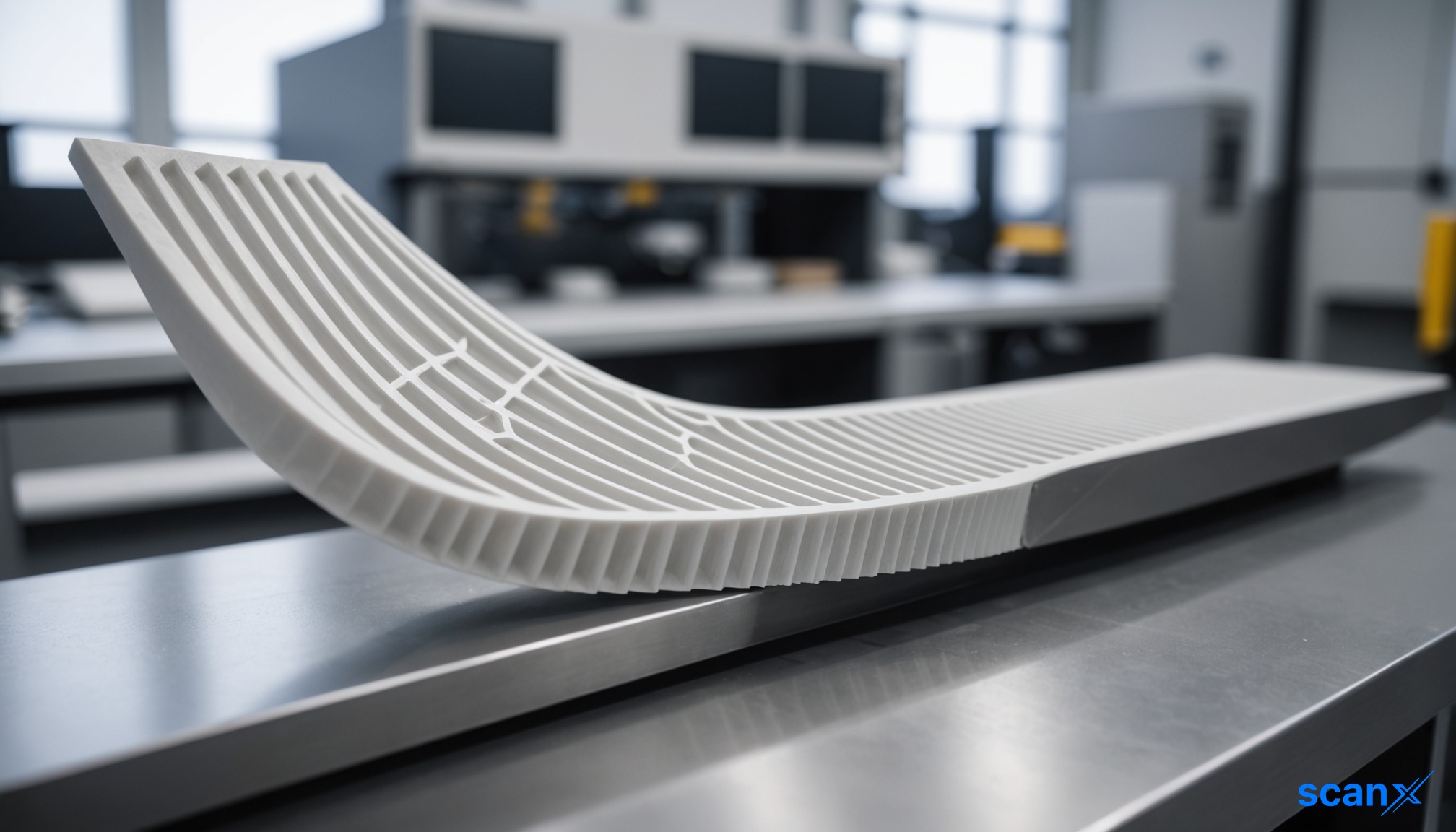
*this image is generated using AI for illustrative purposes only.

HCL Technologies Limited has been recognized as a Leader in Everest Group's inaugural Product Lifecycle Management (PLM) Services PEAK Matrix® Assessment 2026. The recognition highlights the company's ability to help manufacturers modernize product development and manage complex PLM transformation programs.

Recognition Details

Everest Group placed HCL Technologies in the Leader quadrant for its expertise in delivering lifecycle transformation initiatives that improve visibility, traceability, and collaboration across the product ecosystem. The assessment noted strong traction across emerging PLM themes, including cloud PLM, supply chain traceability, model-based systems engineering (MBSE), multi-enterprise integration, AI-enabled lifecycle services, and digital thread and digital twin enablement.

Nishant Udupa, Vice President at Everest Group, stated that HCLTech's portfolio of reusable assets across AI-led lifecycle transformation, test automation, MBSE, and platform migration differentiates its proposition. He added that clients appreciate the firm's deep PLM expertise, responsive support, and ability to align PLM capabilities with business processes.

Strategic Context

Hari Sadarahalli, Corporate Vice President and Head of Engineering and R&D Services at HCLTech, emphasized that engineering organizations need a unified digital foundation to enable faster decisions and seamless collaboration as products become increasingly software-defined and AI-driven.

He noted that HCLTech combines five decades of engineering leadership with deep domain expertise and AI-led innovation to help clients build intelligent engineering enterprises. This approach aims to accelerate growth, strengthen resilience, and create lasting business value.

Company Profile

HCLTech is a global technology company with more than 223,000 people across 60 countries. It delivers industry-leading capabilities centered around AI, digital, engineering, cloud, and software. The firm provides industry solutions for Financial Services, Manufacturing, Life Sciences and Healthcare, Technology & Services, Semiconductor, Telecom and Media, Retail and CPG, Mobility, and Public Services.

Consolidated revenues for the 12 months ending June 2026 totaled $14.8 billion.

Historical Stock Returns for HCL Technologies

1 Day5 Days1 Month6 Months1 Year5 Years
+2.70%+6.38%-1.16%-5.47%-14.11%0.0%

How might HCLTech's leadership in AI-enabled PLM services influence its competitive positioning against other major IT service providers in the manufacturing sector?

What specific revenue growth opportunities could emerge for HCLTech from the increasing demand for model-based systems engineering and digital twin solutions?

How is HCLTech planning to scale its reusable asset portfolio to maintain its 'Leader' status in subsequent Everest Group assessments?

HCLTech research finds integration overtakes supply as top semiconductor challenge

scanx
Reviewed by
Ritika DScanX News Team
Key Highlights
  • Integration cited as primary semiconductor challenge, surpassing supply issues
  • 98% of enterprises report higher semiconductor dependency than three years ago
  • 71% say AI is elevating semiconductor architecture to a strategic decision
  • 66% expect to move away from off-the-shelf silicon within five years
  • 59% plan to use external engineering partners for future semiconductor needs
powered bylight_fuzz_icon
51280340

*this image is generated using AI for illustrative purposes only.

Integration has surpassed supply chain constraints to become the primary challenge for enterprises relying on semiconductors, according to new research from HCL Technologies . The survey of 300 senior leaders highlights a shift in focus from silicon performance to engineering partnerships.

The report, titled The Silicon Shift: When Every Industry Becomes a Chip Industry, covers automotive, medical devices, network equipment, and industrial automation sectors. Respondents were based in the United States, Europe, and Asia.

Rising Dependency and AI Influence

Dependency on semiconductors has intensified across industries. 98% of surveyed enterprises report being more dependent on semiconductors than three years ago. Nearly all respondents, 99%, expect this dependency to increase over the next five years.

Artificial intelligence is reshaping strategic priorities. 71% of respondents state that AI is increasing the importance of semiconductor architecture as a strategic business decision. Industrial automation shows the strongest acceleration in dependency, with 75% reporting significantly higher reliance compared to three years ago.

Metric Percentage
Enterprises more dependent than 3 years ago 98%
Expecting increased dependency in 5 years 99%
Citing AI as increasing strategic importance 71%
Industrial automation: Much more dependent 75%

Integration as the Primary Hurdle

While supply chain issues remain relevant, integration emerged as the leading concern. It was cited as the primary reason current solutions fall short, outpacing both supply constraints and performance limitations. Integration was the top concern in medical devices and industrial automation and featured in the top two challenges across all four sectors studied.

To address these gaps, enterprises are prioritizing specific capabilities in their engineering partners:

  • Hardware and software integration (67%)
  • Supply chain and lifecycle support (61%)
  • Deeper industry expertise (59%)

Shift Away from Off-the-Shelf Silicon

Current reliance on commercial silicon is high but expected to decline. 79% of enterprises currently rely entirely or mostly on off-the-shelf silicon with limited customization. However, 66% expect to move to a different model within five years.

Most companies are turning to external collaboration rather than internal development. 59% of respondents expect their future approach to involve external engineering partners, hybrid models, co-development, or engineering services. In contrast, only 3% plan to increase internal investment in custom silicon, and 4% expect greater reliance on off-the-shelf components.

What the Numbers Show

The data reveals a clear divergence between current procurement habits and future strategic intent. While 79% of firms currently depend on off-the-shelf solutions, only 4% plan to maintain or increase that reliance. This suggests a massive upcoming shift toward partner-led development models, driven by the complexity of integration rather than just chip availability.

Historical Stock Returns for HCL Technologies

1 Day5 Days1 Month6 Months1 Year5 Years
+2.70%+6.38%-1.16%-5.47%-14.11%0.0%

How will the shift toward external engineering partnerships impact the competitive moats of traditional semiconductor foundries versus system integrators?

What specific regulatory or intellectual property challenges might arise as companies move from off-the-shelf silicon to co-development models with external partners?

Which engineering service providers are best positioned to capture the growing demand for hardware-software integration capabilities in industrial automation and medical devices?

More News on HCL Technologies

1 Year Returns:-14.11%