Eternal receives GST demand order of ₹9.63 crore from Andhra Pradesh

1 min read     Updated on 11 Jun 2026, 02:00 AM
scanx
Reviewed by
Suketu GScanX News Team
AI Summary

Eternal Limited received a GST demand order from the Deputy Commissioner (ST), Andhra Pradesh, confirming a demand of ₹6.49 crore plus interest and penalty, totaling ₹9.63 crore for the period April 2023 to March 2024. The order, passed under Section 73 of the CGST and APGST Acts, cites alleged short payment of output tax. The company stated it has a strong case on merits and will file an appeal, expecting no financial impact.


powered bylight_fuzz_icon
42634414

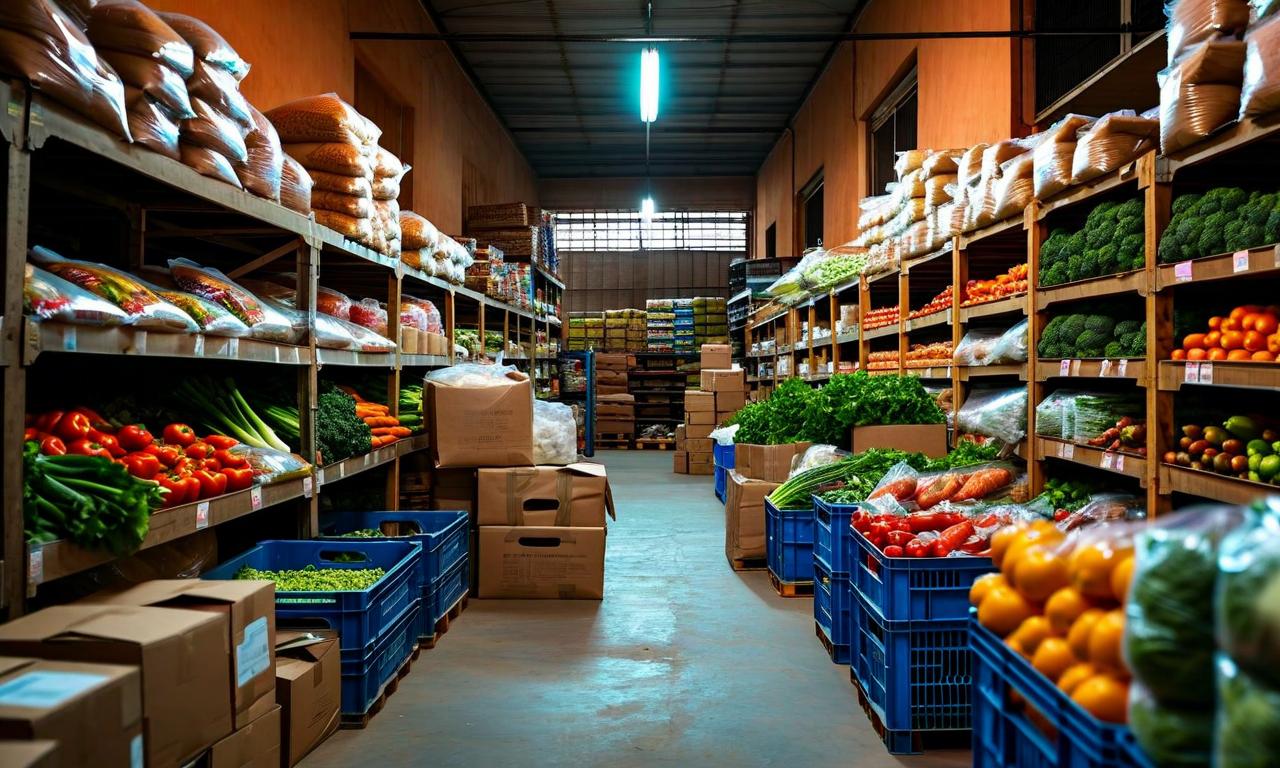
*this image is generated using AI for illustrative purposes only.

Eternal Limited has received a GST demand order from the Deputy Commissioner (ST), State Special Circle-I, Andhra Pradesh, for the period April 2023 to March 2024. The order, received on June 09, 2026, confirms a demand of ₹6,48,72,000 along with interest and penalty, amounting to a total financial implication of ₹9,63,12,704. The company stated that it believes it has a strong case on the merits and intends to file an appeal against the order before the appropriate authority.

The Adjudication Order was passed under Section 73 of the Central Goods and Services Tax Act, 2017 and the Andhra Pradesh Goods and Services Tax Act, 2017. The demand arises from alleged short payment of output tax. Despite the significant quantum of the demand, the company has indicated that it does not expect any financial impact as it challenges the order.

Breakdown of Demand

The following table details the components of the demand issued by the tax authority:

Component Amount (₹)
GST Demand 6,48,72,000
Interest 2,49,53,504
Penalty 64,87,200
Total 9,63,12,704

The order was received on June 9, 2026, at 5:19 PM. The disclosure was made pursuant to Regulation 30 of the SEBI (Listing Obligations and Disclosure Requirements) Regulations, 2015. Sandhya Sethia, Company Secretary & Compliance Officer, signed the disclosure on June 10, 2026.

Historical Stock Returns for Eternal

1 Day5 Days1 Month6 Months1 Year5 Years
-1.40%-4.27%-7.78%-16.52%-7.52%+87.66%

What is the expected timeline for the appeal process and when can a resolution be anticipated?

How might this GST demand impact Eternal Limited's cash flow management during the appeal period?

Could this tax order set a precedent for similar demands from other state tax authorities?

Eternal Limited Maintains FY29 EBITDA Guidance Amidst Quick Commerce Expansion

4 min read     Updated on 06 May 2026, 02:23 PM
scanx
Reviewed by
Jubin VScanX News Team
AI Summary

Eternal Limited has sustained its $1 billion EBITDA target for FY29, driven by a 60% CAGR in quick commerce and consistent food delivery growth. The company is on track to reach 3,000 dark stores by March, though FY27 growth is expected to moderate to 70-80%. Management emphasized a strategy of healthy growth over aggressive market share capture, maintaining high marketing spends to leverage low customer acquisition costs. The company is also focusing on targeted discounting in food delivery and disciplined capital expenditure in warehouse automation.

powered bylight_fuzz_icon
39603230

*this image is generated using AI for illustrative purposes only.

Eternal Limited (formerly known as Zomato Limited) conducted its Q4FY26 earnings conference call on April 28, 2026, reiterating its financial targets and strategic outlook. The management, led by Chief Executive Officer Albinder Singh Dhindsa and Chief Financial Officer Akshant Goyal, addressed analyst queries regarding growth trajectories, profitability, and competitive dynamics across its business verticals.

Financial Guidance and Growth Outlook

The company confirmed its overall EBITDA guidance of $1 billion by FY29. This target is underpinned by the expectation of a 60% CAGR in quick commerce Net Order Value (NOV) and steady growth in the food delivery business, which is currently expanding at a rate of 19-20%. Analysts noted that the implied margin for quick commerce under this guidance is approximately 3-3.5% over the next three to four years, a figure the management acknowledged as broadly in line with their internal calculations.

Regarding near-term expansion, the company is on track to achieve its guidance of 3,000 dark stores by March. However, the management clarified that the general growth rate for FY27 is unlikely to be 100% as previously indicated, potentially settling in the 70-80% range. The company emphasized the need for flexibility to respond to market dynamics in the short and medium term.

Operational Metrics and Competitive Strategy

Management highlighted that fixed costs in quick commerce remained flattish during the quarter while Monthly Transacting Users (MTU) additions stayed strong. This trend is attributed to continued high marketing spends for new customer acquisition, which the company views as valuable given the current low cost of acquisition due to competitors pulling back.

In response to questions about competition, the management stated that competitive intensity remains high across various markets. However, they affirmed that the company is growing as fast as possible while adhering to principles of healthy, sustainable growth. They are not engaging in "unhealthy" growth purely for market share gains. The focus remains on customer retention and frequency, which have not been meaningfully impacted by competitive activities.

Business Segment Updates

Quick Commerce and Blinkit

The quick commerce business is seeing a shift in its customer mix, with a significant acceleration in new customer additions affecting the average frequency of orders per customer. The management noted that the number of orders per customer has dipped slightly from around 3.6 to 3.35, largely due to the influx of new users with lower initial ordering frequency. The company continues to invest in marketing to capitalize on low acquisition costs.

Food Delivery and District

On the food delivery side, the company is implementing a strategy of increasing platform fees across the board to boost revenue per order. This incremental revenue is then channeled into targeted discounts for price-sensitive cohorts in specific geographies to drive growth. The management also addressed the rollout of 'Toing' by a competitor, stating that Eternal has no immediate plans to replicate that model and will continue to focus on its core offerings, including the 'Bistro' experiment, which remains a small, early-stage initiative.

Regarding the District business, the management downplayed concerns about macro challenges, such as event cancellations, impacting the overall growth path, noting that events are just one part of a diverse category mix.

Metric Status/Outlook
Overall EBITDA Guidance $1 billion by FY29
Quick Commerce NOV CAGR 60%
Food Delivery Growth 19-20%
Dark Store Target 3,000 by March
FY27 Growth Estimate 70-80%

Capital Allocation and Future Investments

The management discussed capital expenditure, particularly regarding automation in warehouses. They indicated that while automation is expected to increase over the next few years, investments will be guided by a Return on Capital Employed (ROCE) framework rather than a pursuit of automation for its own sake. The company is also testing various ad monetization strategies using AI, though it does not operate with specific caps on ad revenue as a percentage of GMV.

Regarding the impact of external factors like fuel prices, the management stated that unless there is a drastic increase, they do not expect fuel price hikes to have a meaningful impact on margins, as past experiences suggest costs can be passed on to consumers without significantly affecting demand.

Historical Stock Returns for Eternal

1 Day5 Days1 Month6 Months1 Year5 Years
-1.40%-4.27%-7.78%-16.52%-7.52%+87.66%

How will Eternal's quick commerce margins evolve if competitors reignite marketing spend and force a reduction in minimum order values to retain customers?

With pin code coverage already at 80-90% in top eight cities, what unit economics can Eternal realistically achieve in non-metro markets where demand density is structurally lower?

Given that the $1 billion EBITDA target by FY29 includes all verticals, how dependent is the overall profitability roadmap on Blinkit hitting its 60% NOV CAGR, and what is the fallback if growth slows?

More News on Eternal

1 Year Returns:-7.52%