

Chanos challenges Nvidia on AI chip rental economics


- Jim Chanos challenged Jensen Huang's claim that Nvidia's AI chips are highly rentable, asking why the company does not lease them directly.
- Huang cited a 22% monthly increase in rental prices for three-year-old H100 chips to $3.28 per hour as evidence of durability.
- Chanos and Michael Burry warn that data center operators may understate depreciation risks by using six-year schedules for hardware with shorter economic lives.
- Nvidia partnered with BlackRock, Blackstone, and Apollo to mobilize over $500 billion in financing for data centers.
- Nvidia stock closed at $225.73, up 21.03% year-to-date and 34.12% over the last year.


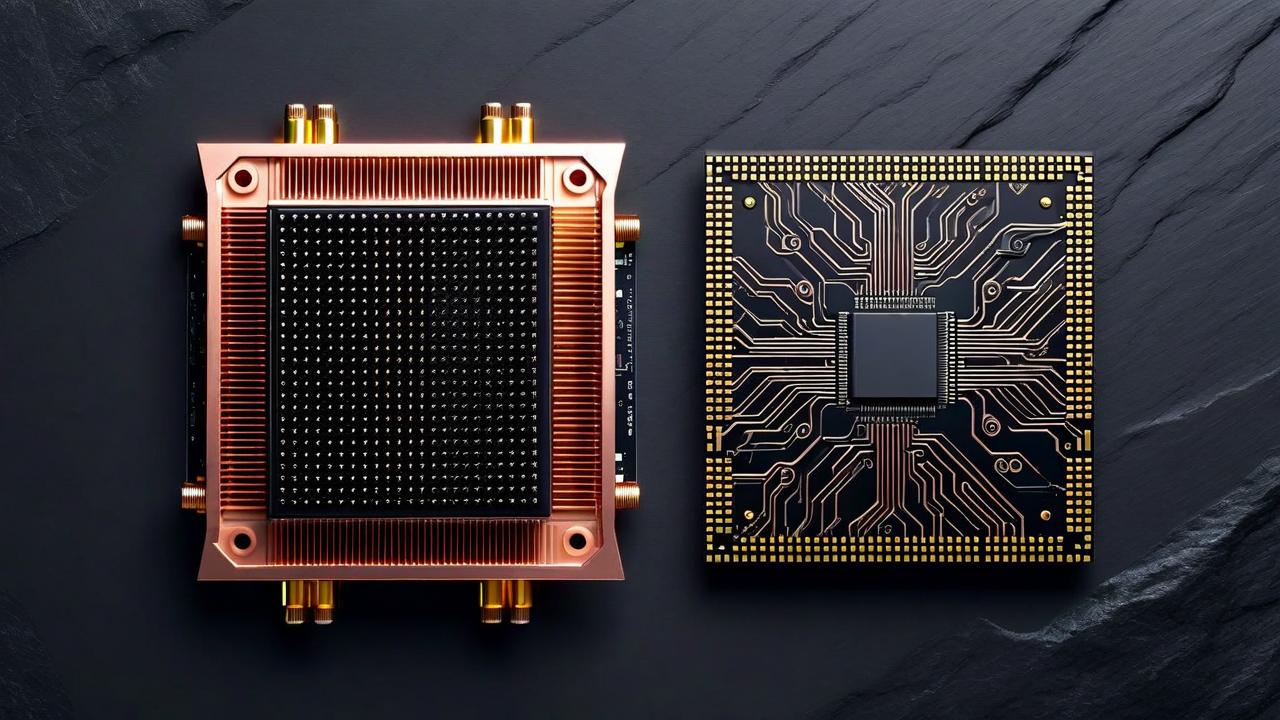
*this image is generated using AI for illustrative purposes only.
Short seller Jim Chanos challenged Nvidia Corp. (NASDAQ: NVDA) CEO Jensen Huang over the rental economics of artificial intelligence chips, questioning why the company does not lease its own hardware.
Huang described Nvidia’s computing hardware as a "durable and highly rentable" asset, calling it a productive, revenue-generating resource. Chanos responded by asking why Nvidia does not rent the chips directly to customers or simply continue raising prices.
The Rental Debate
The exchange occurred after Huang responded to market data showing price increases for older AI hardware. Huang stated that Nvidia compute is fungible and durable.
Chanos directly challenged this premise in a reply to Huang. "Then why not rent them out yourself? Or simply keep raising prices? $NVDA," Chanos wrote.
Huang’s comments were prompted by a post from Ornn Exchange noting that the rental price for Nvidia’s three-year-old H100 training chip had increased 22% in a month to $3.28 an hour. This increase challenges assumptions that older AI hardware necessarily loses economic value at a steady pace.
Depreciation and Accounting Risks
Chanos has previously criticized the accounting methods used by data center operators. He argued that buyers like Oracle Corp. (NYSE: ORCL) and CoreWeave Inc. (NASDAQ: CRWV) rely on unrealistic six-year depreciation schedules for their hardware.
Chanos argues that the chips can become economically obsolete within three to four years. Adjusting depreciation schedules to reflect a shorter lifespan would drastically increase annual expenses and impact reported earnings, a situation Chanos characterized as a "massive financial risk."
Hedge fund manager Michael Burry echoed these concerns. Burry estimated that major cloud providers could understate depreciation by approximately $176 billion between 2026 and 2028 by extending the useful economic lives of their computing equipment.
Residual Value and Financing Strategy
Despite skepticism from short sellers, market data indicates that older hardware currently retains value. Silicon Data estimates the residual value of six-year-old Nvidia A100 chips remains near $5,000, as customers repurpose them for lower-cost workloads.
Nvidia continues its push to establish AI computing as an investable infrastructure class. The company recently partnered with financial institutions including BlackRock, Blackstone, and Apollo Global Management to mobilize over $500 billion in financing for data centers, a strategy heavily dependent on the sustained rental economics of its hardware.
Stock Performance
At the last check, the NVDA stock was trading 0.17% higher overnight. It was up 21.03% year-to-date, advancing by 34.12% over the last year, and rose 26.94% over the last six months. It closed 2.01% higher at $225.73 per share on Friday.
Benzinga’s Edge Stock Rankings indicate that NVDA maintains a strong price trend in the long, short, and medium terms, with a solid growth score.

How might the partnership with BlackRock and Apollo influence Nvidia's shift from a pure hardware vendor to an infrastructure financing model?
If regulators or auditors force data centers to shorten AI chip depreciation schedules to three years, what is the projected impact on cloud providers' earnings per share?
Could rising rental prices for older H100 chips indicate a supply bottleneck that validates Nvidia's pricing power despite short seller skepticism?
 19
19






 Create Custom Screeners
  Access 200+ Pre-built Filters
  Use 50+ Readymade Screener





