NVIDIA invests $3.5 billion in MediaTek to expand custom AI chip reach

scanx
Reviewed by
Suketu GScanX News Team
Key Highlights
  • NVIDIA invested $3.5 billion in MediaTek convertible bonds to deepen partnership
  • MediaTek will offer NVIDIA NVLink Fusion tech for custom AI chip development
  • Custom AI chip market seen as $80 billion opportunity by 2027 vs $2 billion current revenue
  • Partnership expands to PCs and vehicles alongside data center focus
  • Move increases competition with Broadcom in custom chip space
powered bylight_fuzz_icon
49806087

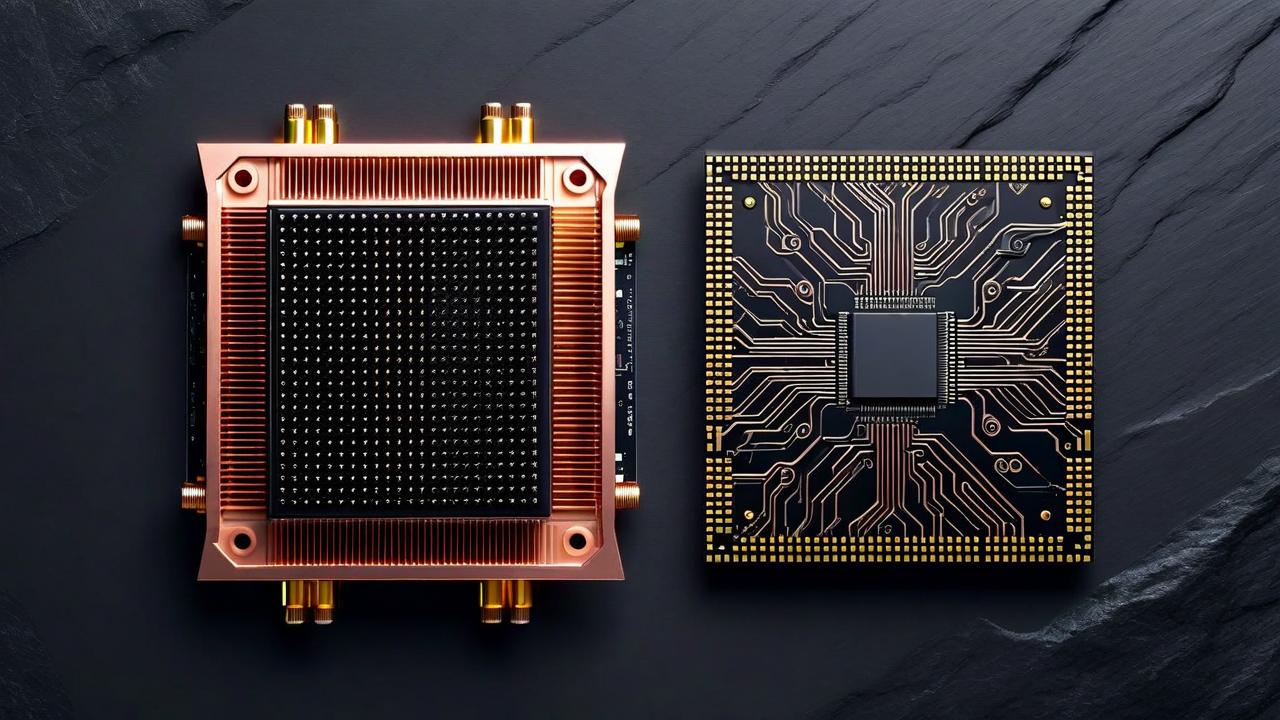
*this image is generated using AI for illustrative purposes only.

NVIDIA Corp (NASDAQ: NVDA) has invested $3.5 billion in convertible bonds issued by MediaTek, deepening a strategic partnership that spans data centers, PCs, and vehicles. The move strengthens NVIDIA’s position in the growing custom AI chip market.

Expanding Into Custom AI Chips

MediaTek will offer NVIDIA’s NVLink Fusion technology to customers developing their own AI processors. This allows those chips to connect with NVIDIA’s broader AI infrastructure without requiring customers to build every surrounding component.

Customers can design the computing portion that differentiates their chips while NVIDIA and MediaTek provide technology covering connectivity, memory, manufacturing, packaging, and large-scale system deployment. This approach keeps NVIDIA involved even when cloud companies choose internally designed processors instead of NVIDIA GPUs.

MediaTek is expanding beyond its core smartphone-chip business into custom chips for data centers. The company previously stated its custom AI chip business could generate $2 billion in revenue this year, with a market opportunity of up to $80 billion by 2027.

This expansion increases competition with Broadcom Inc (NASDAQ: AVGO), a major provider of custom chips to large technology companies.

What the Numbers Show

The potential market size for custom AI chips highlights the scale of the opportunity MediaTek and NVIDIA are targeting. With a projected $80 billion market by 2027 against an expected $2 billion revenue contribution from this segment this year, the custom chip business represents a significant growth vector for MediaTek beyond its traditional smartphone operations.

Partnership Extends To PCs And Cars

NVIDIA and MediaTek will continue developing chips for PCs and other local AI systems. Their existing work includes the chip powering NVIDIA DGX Spark, with plans for additional products for consumer PCs.

The partnership also extends to vehicles, where MediaTek combines its automotive chips with NVIDIA’s AI and graphics technology. NVIDIA CEO Jensen Huang said the companies are building platforms that bring NVIDIA computing into new markets while allowing customers to create differentiated AI systems at large scale.

Market Reaction

NVIDIA shares were down 1.15% at $218.24 during premarket trading on Tuesday.

Disclaimer: This article is AI-generated using data from ViewTrade. ScanX is not liable for any inaccuracies.

How might MediaTek's entry into the custom AI chip market intensify the competitive pressure on Broadcom's existing relationships with major cloud providers?

What specific technical advantages does NVLink Fusion offer that could persuade hyperscalers to adopt MediaTek's custom solutions over their current in-house or third-party alternatives?

Could NVIDIA's $3.5 billion convertible bond investment signal a strategic shift towards licensing its ecosystem rather than solely selling proprietary GPUs, and how might this impact its long-term revenue mix?

like18
dislike

NVIDIA pushes into custom AI chips with NVHBM, challenging Broadcom

scanx
Reviewed by
Ashish TScanX News Team
Key Highlights
  • NVIDIA stock fell 1.35% to $217.80 in premarket trading amid broader tech weakness
  • New NVHBM technology moves memory control to base die, challenging Broadcom's position
  • Amazon's Annapurna Labs and MediaTek are early adopters of the new architecture
  • Analysts note only 67% interface area reduction claim is verifiable with current data
  • Stock trades 4.5% above 50-day SMA but below 20-day SMA, indicating consolidation
powered bylight_fuzz_icon
49801858

*this image is generated using AI for illustrative purposes only.

NVIDIA Corp. (NASDAQ: NVDA) stock fell 1.35% to $217.80 in Tuesday’s premarket trading as investors assessed its expansion into the custom artificial intelligence chip market. The move signals a strategic shift toward infrastructure control beyond traditional GPUs.

NVIDIA’s NVHBM Push

According to Counterpoint Research analyst Neil Shah, NVIDIA is expanding deeper into the custom AI chip market with NVHBM. This technology moves the memory controller from the accelerator chip into the base die of a high-bandwidth memory stack. It also replaces the standard JEDEC memory bus with NVIDIA’s proprietary die-to-die connection.

Shah noted that this approach gives NVIDIA control over the memory controller, interface, and link protocol. Memory suppliers would manufacture the base die based on NVIDIA’s design. This strategy allows NVIDIA to sell its networking fabric, rack architecture, software, and memory subsystem to companies developing custom accelerators without designing the accelerator itself.

Customer Adoption

Amazon.com Inc.’s (NASDAQ: AMZN) Annapurna Labs is the first disclosed customer. It plans to use NVHBM with its Trainium4 AI chip. MediaTek also adopted NVIDIA’s NVLink Fusion platform, providing another channel for reaching custom chip customers.

However, Shah questioned some of NVIDIA’s performance claims. The company compared NVHBM with HBM4E, which is not yet shipping, and did not disclose its full testing baseline. Only the claimed 67% reduction in physical interface area can be checked using available pin-count data.

Competitive Landscape

NVHBM places NVIDIA directly in a market served by Broadcom Inc. (NASDAQ: AVGO) and Marvell Technology Inc. (NASDAQ: MRVL). Broadcom could benefit from wider adoption of custom AI chips but lacks a comparable base-die offering. Marvell outlined a similar architecture in December 2024 and has joined NVLink Fusion. This leaves Broadcom as the only major custom chip design company without a direct NVIDIA partnership.

Technical Analysis And Outlook

Despite the early decline, NVIDIA remains in a longer-term uptrend. The stock trades 4.5% above its 50-day simple moving average of $208.62 and 11.3% above its 200-day SMA of $195.96. However, it trades about 0.3% below its 20-day SMA of $218.75.

The relative strength index stands at 54.25, suggesting consolidation. Key resistance stands near $228, while support sits near the 200-day SMA. The stock trades at 27.9 times earnings. Citigroup and Mizuho raised their price forecasts to $315 on Aug. 27. JPMorgan increased its forecast to $320.

What the Numbers Show

The divergence between NVIDIA’s technical position and immediate price action highlights investor caution. While the stock remains significantly above its long-term moving averages (50-day and 200-day), trading below the shorter-term 20-day SMA indicates near-term pressure. This suggests that while the long-term structural trend remains bullish, the immediate market reaction to the NVHBM strategy and broader tech sector weakness is causing short-term consolidation.

Disclaimer: This article is AI-generated using data from ViewTrade. ScanX is not liable for any inaccuracies.

How might NVIDIA's shift toward controlling the memory interface via NVHBM impact the revenue models of traditional memory suppliers like Samsung or SK Hynix?

Could Broadcom's lack of a direct partnership with NVIDIA for its custom AI chip business become a significant competitive disadvantage against Marvell and MediaTek in the long term?

What are the potential risks to NVIDIA's ecosystem if the industry standardizes on JEDEC HBM4E instead of adopting NVIDIA's proprietary die-to-die connection?

like17
dislike

More News on NVIDIA Corp