

Bansal Wire Industries files FY26 BRSR report with sustainability metrics


- Bansal Wire Industries filed its FY26 BRSR report on August 21, 2026
- Renewable energy share reached 12.66% with 5.5 MW solar capacity operational
- Total GHG emissions rose to 131,976 MT CO2e from 101,387 MT in FY25
- Zero Liquid Discharge achieved at Dadri plant, recycling 100% of wastewater
- Worker LTIFR improved to 3.64 from 4.2 in the previous fiscal year


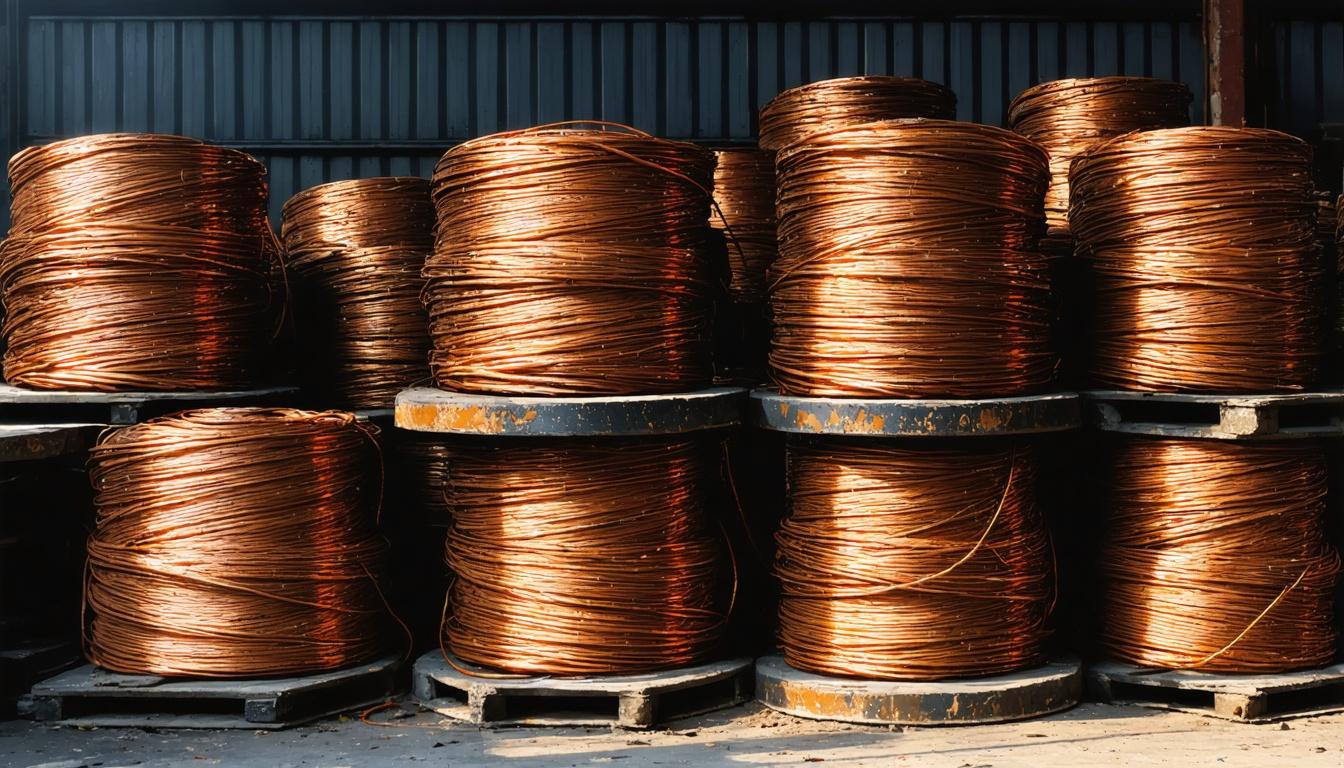
*this image is generated using AI for illustrative purposes only.
Bansal Wire Industries Limited submitted its Business Responsibility and Sustainability Report (BRSR) for FY26 on August 21, 2026, detailing its environmental, social, and governance performance. The standalone report covers operations across four national plants and highlights progress in renewable energy adoption and water management.
Environmental Performance
The company achieved a 12.66% share of renewable energy in total consumption during the reporting period. This was driven by the operationalization of 5.5 MW of rooftop solar capacity out of a planned 7.5 MW. The remaining 2.0 MW is expected to become operational in subsequent years.
Water stewardship remains a key focus, with the Dadri facility operating as a Zero Liquid Discharge (ZLD) plant. This facility accounts for approximately 90% of the company’s total water usage. The report states that approximately 100% of wastewater was recycled during FY26. Total freshwater consumption stood at 170,083 kilolitres, sourced entirely from groundwater.
Greenhouse gas emissions increased year-on-year. Total Scope 1 and Scope 2 emissions rose to 131,976 metric tons of CO2 equivalent from 101,387 metric tons in FY25. Scope 1 emissions specifically jumped to 51,684 metric tons from 31,334 metric tons. The company attributes air emissions primarily to fossil fuel consumption in manufacturing processes and generator sets.
| Metric | FY26 | FY25 |
|---|---|---|
| Total GHG Emissions (Scope 1+2) | 131,976 MT CO2e | 101,387 MT CO2e |
| Renewable Energy Share | 12.66% | Data not provided |
| Freshwater Consumption | 170,083 KL | 141,720 KL |
Social Metrics and Governance
The workforce comprises 638 permanent employees and 3,431 workers. Female representation stands at 6.11% among employees and 2.59% among workers. The board includes two women directors, representing 29% of the total board strength.
Safety metrics show a decline in lost-time injuries. The Lost Time Injury Frequency Rate (LTIFR) for workers fell to 3.64 per million person-hours worked from 4.2 in the previous year. No fatalities or high-consequence injuries were reported for either employees or workers during the period.
The company reported no material monetary fines or penalties related to NGRBC principles. However, it recorded 614 customer complaints, with seven pending resolution at year-end due to lack of information. In contrast, 427 complaints were filed in FY25, all of which were resolved.
What the Numbers Show
The divergence between rising greenhouse gas emissions and stable water intensity suggests that production volume or energy intensity increased without proportional gains in energy efficiency. While Scope 1 emissions surged by over 60%, water intensity per crore of turnover decreased slightly from 44.24 KL to 42.41 KL. This indicates that while the company is managing water resources effectively through ZLD systems, its carbon footprint is expanding, likely driven by higher fuel consumption in manufacturing processes.
Historical Stock Returns for Bansal Wire Industries
| 1 Day | 5 Days | 1 Month | 6 Months | 1 Year | 5 Years |
|---|---|---|---|---|---|
| -0.12% | +2.26% | +1.59% | +43.61% | -4.55% | -7.79% |

How does Bansal Wire Industries plan to offset the 60% surge in Scope 1 emissions given that only 2.0 MW of planned solar capacity remains to be operationalized?
What are the long-term sustainability risks associated with sourcing 100% of freshwater from groundwater, especially if local aquifer levels decline?
Could the significant increase in customer complaints (from 427 to 614) indicate emerging quality control issues or supply chain disruptions that may impact future revenue?
 15
15









 Create Custom Screeners
  Access 200+ Pre-built Filters
  Use 50+ Readymade Screener





