

Bansal Wire Q1 FY27 profit falls 48%; raises FCF guidance to ₹800 crore


Bansal Wire Industries Ltd saw Q1 FY27 net profit fall 48% to ₹204.61 million amid rising gas costs, though revenue grew 24.4% to ₹11,678.91 million. The company raised its two-year free cash flow guidance to ₹800 crore and highlighted progress in specialty wires and B2C segments.

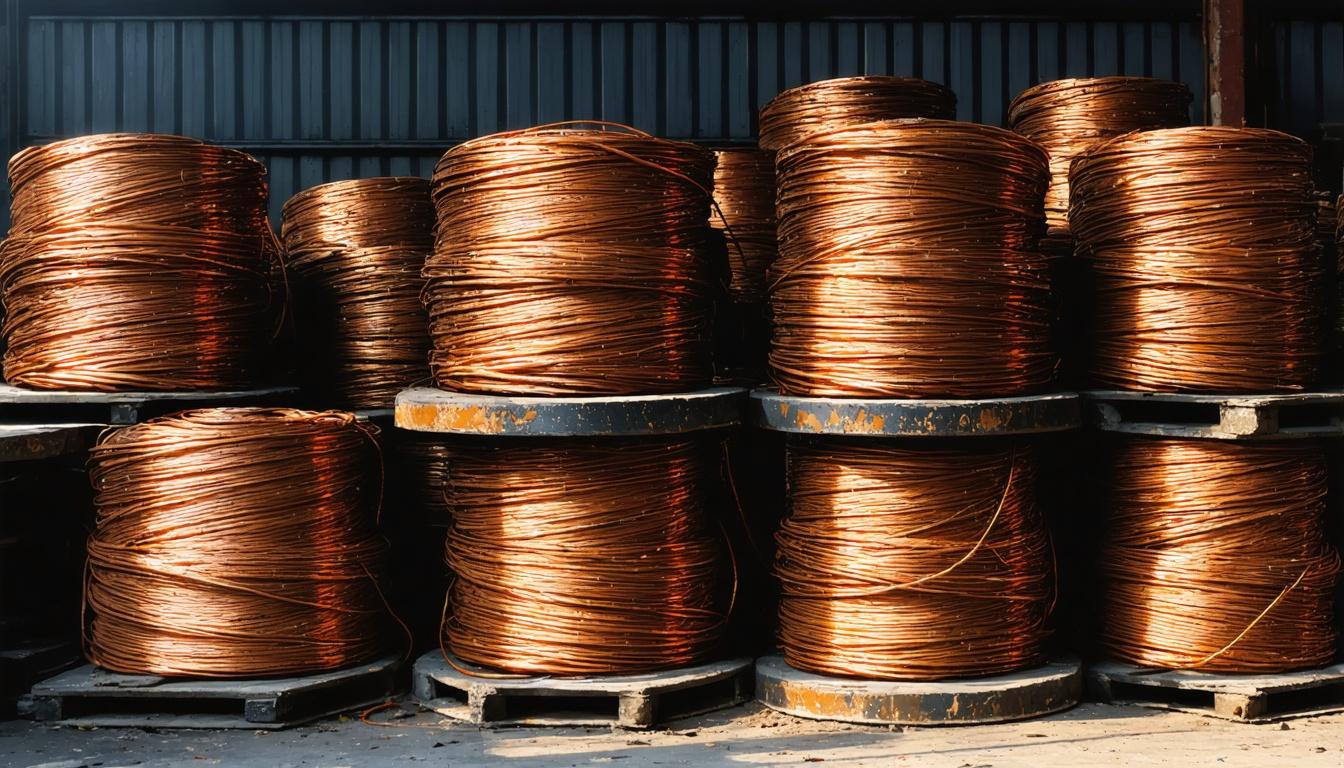

*this image is generated using AI for illustrative purposes only.
Bansal Wire Industries Limited reported a 48% decline in consolidated net profit to ₹204.61 million for the quarter ended June 30, 2026, compared to ₹392.79 million in the corresponding period of the previous year. The steel wire manufacturer saw revenue from operations increase 24.4% to ₹11,678.91 million from ₹9,390.07 million in Q1 FY26. Despite the profit contraction caused by rising input costs and operational disruptions from geopolitical tensions in West Asia, management raised its combined free cash flow guidance for operating activities to ₹800 crore for FY27 and FY28, up from the previous ₹600 crore target. This signals strong underlying cash generation capabilities despite short-term margin pressures.
Q1 FY27 Financial Performance
The company’s standalone net profit for the quarter stood at ₹164.81 million, down from ₹302.79 million in the same period last year. Total income for the standalone entity rose to ₹11,358.17 million, while consolidated total income reached ₹11,682.40 million. Profit before exceptional items and tax for the consolidated entity was ₹260.37 million, down from ₹500.04 million in Q1 FY26. EBITDA, which includes other income, declined to ₹567.07 million from ₹744.55 million. The following table summarises the key consolidated financial metrics:
| Metric | Q1 FY27 (Consolidated) | Q1 FY26 (Consolidated) |
|---|---|---|
| Revenue from Operations | ₹11,678.91 million | ₹9,390.07 million |
| Total Income | ₹11,682.40 million | ₹9,416.29 million |
| EBITDA* | ₹567.07 million | ₹744.55 million |
| Net Profit | ₹204.61 million | ₹392.79 million |
| EPS (Basic & Diluted) | ₹1.31 | ₹2.51 |
*EBITDA Includes Other Income
Operational Disruptions and Cost Management
The profit decline was primarily driven by a temporary spike in industrial gas prices due to geopolitical tensions in West Asia, which impacted the first half of the quarter. Managing Director Pranav Bansal explained that consumable costs increased by approximately ₹5,000 per tonne on a blended basis. To support long-term customer relationships, the company chose not to renegotiate existing firm-rate orders covering a 30–40 day inventory cycle, absorbing the cost hit. This decision compressed EBITDA margins to ₹2 per kg during the first 45 days, compared to the normal ₹7–8 per kg.
However, new orders booked after the price hike were priced accordingly, restoring margins to ₹7–8 per kg in the latter half of the quarter. Sales volume reached 112,000 metric tonnes, up from 104,000 metric tonnes in Q1 FY26. Operating capacity currently stands at 680,000 tonnes, with operations returning to normal levels as gas availability stabilised.
Strategic Expansion and Specialty Wires
Bansal Wire continues to advance its specialty wire portfolio, aiming for a 200,000-tonne capacity with an investment of ₹2,000–2,500 crore. The company targets ₹600–800 crore in EBITDA from this segment, maintaining a 25% ROCE across both specialty and current operations. Key developments include:
- Steel Cord: Secured first trial order from a leading Indian tyre manufacturer, skipping field trials due to positive sample approvals. Commercialisation is expected within 6–8 months.
- IHT/OHT Wires: IHT capacity stands at 9,000 tonnes, expanding to 15,000 tonnes with OHT commissioning by year-end. Targeting 50% utilisation next month and 60–80% by year-end.
- B2C Segment: New products in farming, fencing, and poultry contributed ~10% of sales in Q1. The segment aims to reach 25% of total sales (50% of low-carbon volume), offering 20–30% higher EBITDA per tonne than B2B low-carbon wires.
Cash Flow and Balance Sheet Strength
Despite margin pressures, the company generated ₹1,211 million in operating cash flow for Q1 FY27, compared to ₹975 million in Q1 FY26. The operating cash flow to EBITDA ratio stood at 214%. Management attributed this to disciplined working capital management, including reduced inventory days and renegotiated receivable terms. The net debt to EBITDA ratio improved to 1.68 in FY26 from 4.53 in FY24, while debt to equity reduced to 0.39 from 1.48. ROCE for Q1 FY27 was 10.15%, moderating from 15.37% in Q4 FY26 due to temporary disruptions.
Outlook and Guidance
Management maintains its target of 20% volume growth for the remainder of FY27, supported by market share gains and specialty portfolio contributions. EBITDA is expected to grow by at least 20%. Capex for FY27 is capped at ₹200–250 crore, focusing on incremental capacity rather than large-scale expansions outside the specialty segment. The company plans to sustain ₹200–250 crore annual capex to support 20–25% volume growth, leveraging backward integration in machinery manufacturing for flexibility.
Historical Stock Returns for Bansal Wire Industries
| 1 Day | 5 Days | 1 Month | 6 Months | 1 Year | 5 Years |
|---|---|---|---|---|---|
| -1.18% | +2.25% | -0.17% | +29.77% | -11.38% | -9.35% |

How might prolonged geopolitical instability in West Asia impact the long-term pricing stability of industrial gases and Bansal Wire's future margin resilience?
What are the specific risks associated with the 6–8 month commercialization timeline for steel cords, and how could delays affect the projected ₹600–800 crore EBITDA from the specialty segment?
Can Bansal Wire sustain its aggressive working capital management strategies, such as reduced inventory days, as it scales its B2C segment to contribute 25% of total sales?
 17
17





 Create Custom Screeners
  Access 200+ Pre-built Filters
  Use 50+ Readymade Screener





