

Apple pitches Macs as zero-cost AI alternative to Nvidia cloud


- Apple hardware chief Johny Srouji claims new Macs offer "no cost per token" for AI, challenging Nvidia's cloud-based economic model.
- Nvidia CEO Jensen Huang counters that "compute is revenue," with Nvidia's Data Center revenue reaching $89 billion last quarter, up 117% YoY.
- Apple holds just 4.6% of the enterprise PC market compared to 91.3% for Windows, according to IDC data.
- Polymarket traders give Nvidia a 78% chance of being the world's largest company by end of 2026, versus 15% for Apple.
- The M5 Ultra Mac Studio starts at $5,499, with high-end configurations costing up to $18,299.

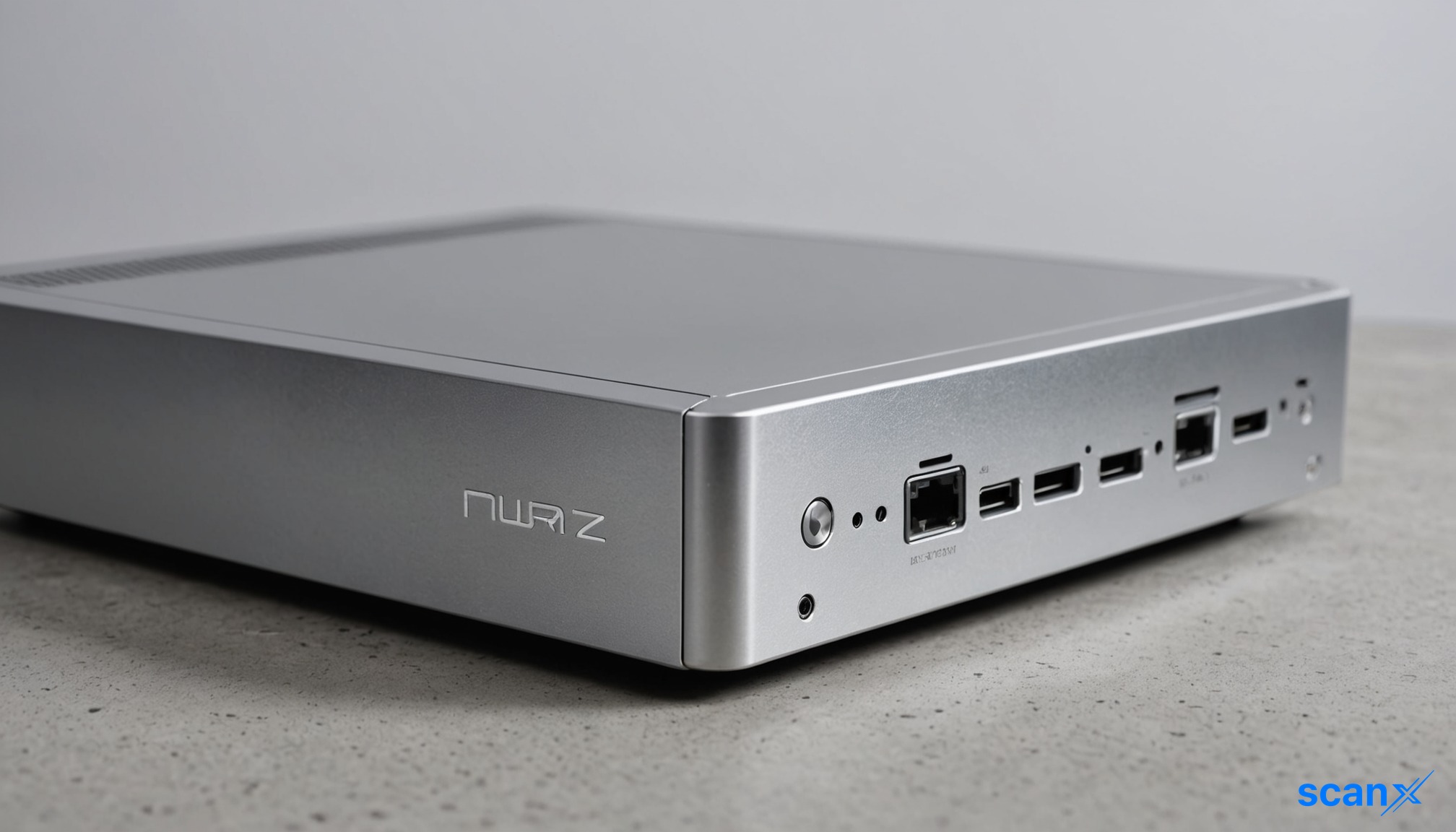

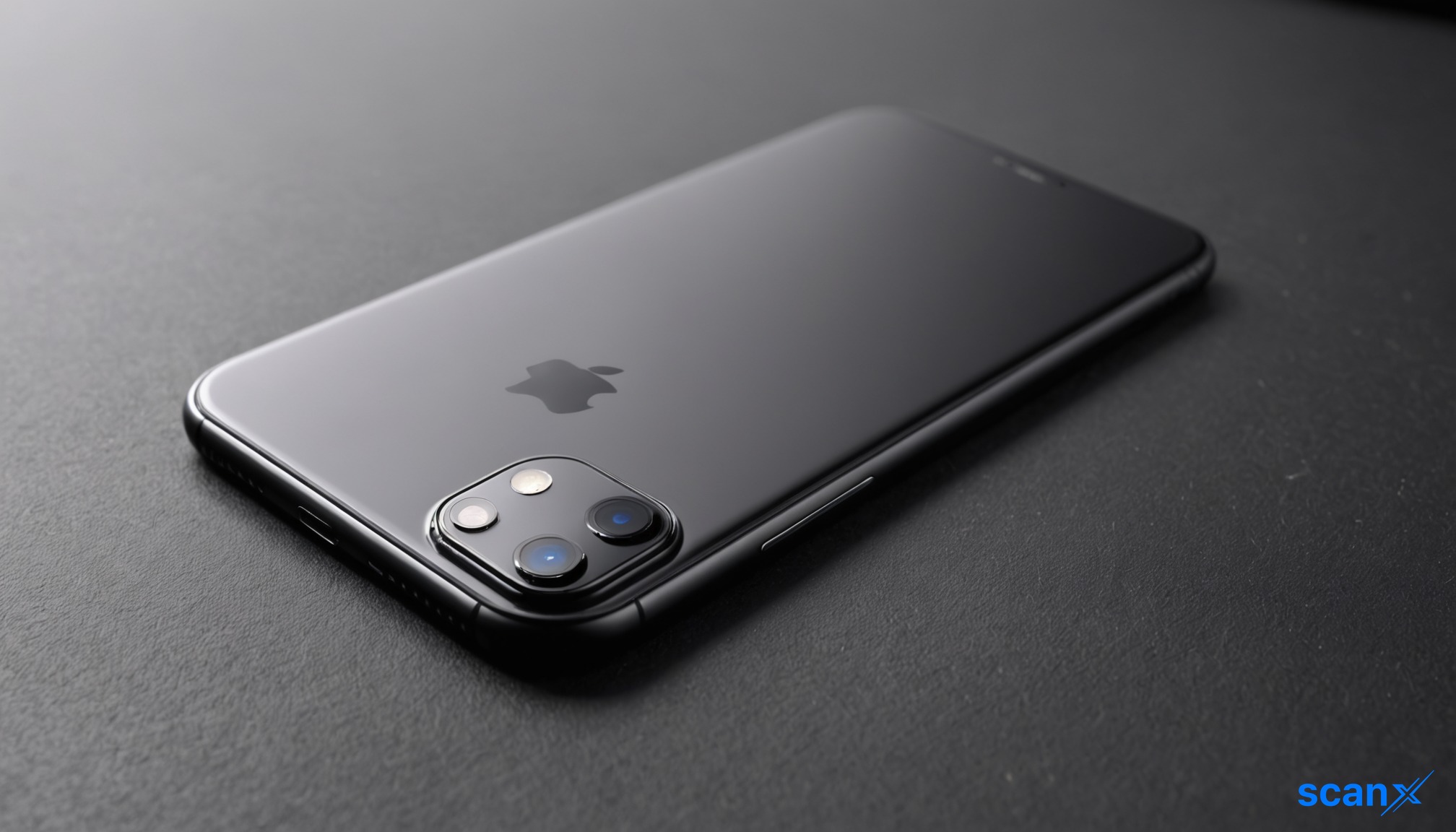
*this image is generated using AI for illustrative purposes only.
Apple Inc. (NASDAQ: AAPL) is positioning its new Macs as a cost-effective alternative to cloud-based AI, with hardware chief Johny Srouji stating there is "no cost per token" for local processing. This strategy directly challenges Nvidia Corp. (NASDAQ: NVDA), whose CEO Jensen Huang recently emphasized that "compute is revenue" amid surging demand for data center infrastructure.
Challenging Nvidia’s cloud economics
Apple’s pitch targets businesses seeking to run powerful AI models without recurring cloud charges. Srouji demonstrated four Mac Studios operating a trillion-parameter model from a single wall outlet, arguing that users pay upfront for hardware rather than per-use fees. However, the hardware costs are substantial. The M5 Ultra Mac Studio starts at $5,499, while a configuration with 256GB of memory and 16TB of storage costs $18,299. A 512GB version capable of handling larger models arrives in late October. Apple raised Mac prices in June citing increased component costs.
Nvidia maintains a dominant position in the AI infrastructure market. Its Data Center revenue reached $89 billion last quarter, up 117% YoY, driven by heavy spending from cloud providers and AI companies. Huang’s assertion that tokens are "productive and profitable" underscores the ongoing value of rented computing capacity. Nevertheless, Nvidia is also pursuing local inference through its DGX Spark and RTX Spark products, indicating that desktop AI has become a competitive battleground.
Enterprise market share and dependencies
Despite Apple’s aggressive hardware push, enterprise adoption remains a hurdle. IDC data cited by Reuters shows Apple held just 4.6% of the enterprise PC market, compared to 91.3% for Windows. Furthermore, Apple’s own most advanced cloud model reportedly runs on Nvidia GPUs via Google Cloud, highlighting a dependency on the very competitor it seeks to displace in local inference. Prediction-market traders on Polymarket assign Nvidia a 78% probability of ending 2026 as the world’s largest company, versus 15% for Apple.
New desktop hardware specifications
The refreshed lineup targets professional and consumer segments with significant performance upgrades. The M6 Mac mini delivers up to four times faster AI performance, twice the graphics performance, and 40% faster CPU performance compared to prior generations. The Mac Studio, designed for professional workloads, features M5 Max and M5 Ultra configurations, with the latter supporting up to 512GB of unified memory.
Both devices integrate Apple Intelligence and Siri AI within macOS 27 to enhance local processing capabilities.
| Model | Chip Configuration | Starting Price |
|---|---|---|
| Mac mini | M6 | $899 |
| Mac mini | M5 Pro | $1,699 |
| Mac Studio | M5 Max | $2,499 |
| Mac Studio | M5 Ultra | $5,499 |
Analyst views on valuation and product pipeline
Morgan Stanley analyst Erik Woodring noted that early demand for the iPhone 18 Pro and Pro Max "seems fine," with delivery lead times remaining broadly unchanged from the previous year despite approximately 18% higher production volumes. Woodring suggested some Chinese consumers may be delaying purchases in anticipation of Apple's Duo foldable, which is expected to become available in mid-October.
Woodring remains optimistic about the Duo, projecting Apple could sell nearly every unit produced over the next 12 months. However, he cautioned that Apple trades at a "relatively rich" valuation of about 33 times fiscal 2027 earnings, approaching its historical peak multiple of roughly 34 to 35 times. He indicated that further stock gains may require higher earnings estimates, particularly if Services growth reaccelerates after falling below 10% in the September quarter.
Market performance and technical indicators
Apple shares rose about 1% on Tuesday, outperforming the broader technology sector. The Nasdaq gained 0.43%, while the S&P 500 slipped 0.04%. The stock remains in a strong uptrend, trading above its 20-day, 50-day, 100-day, and 200-day simple moving averages. Technical momentum is positive, with the MACD indicator positioned above its signal line.
Traders are monitoring $344.50 as resistance and $300.50 as support. The average price forecast from analysts stands at $335.57, though recent calls include Evercore ISI's $380 target, Bank of America's $370 target, and TD Cowen's $400 target.
ETF exposure implications
Apple maintains a heavy weight in several prominent exchange-traded funds, meaning significant inflows or outflows for these funds will likely trigger automatic buying or selling of AAPL shares.
- Direxion Daily Technology Bull 3X ETF (NYSE: TECL): 9.68% weight
- Motley Fool 100 Index ETF (BATS: TMFC): 9.74% weight
- VistaShares Target 15 Berkshire Select Income ETF (NYSE: OMAH): 9.97% weight
What the numbers show
A divergence exists between Apple's strategic ambition and its current market reality. While Apple pitches local AI to avoid cloud costs, it holds only 4.6% of the enterprise PC market compared to Windows' 91.3%, limiting the immediate addressable base for this shift. Additionally, Apple's reliance on Nvidia GPUs for its own advanced cloud models suggests that even if local inference grows, Apple remains structurally tied to Nvidia's ecosystem. Meanwhile, Nvidia's Data Center revenue growth of 117% indicates that cloud demand continues to expand rapidly, potentially offsetting any migration to local hardware in the short term.

How might Apple's 4.6% enterprise market share constrain the scalability of its local AI strategy compared to Nvidia's entrenched cloud infrastructure?
Will Nvidia's introduction of DGX Spark and RTX Spark products effectively neutralize Apple's 'no cost per token' value proposition for professional users?
What impact could the anticipated launch of Apple's Duo foldable in mid-October have on iPhone 18 Pro demand and overall hardware revenue mix?
 17







 Access 50+ Readymade Screeners
 Use 200+ Custom Filters
 Get Full Market Insights





