

Gulf oil output halts hit 62.9% as Isaias nears landfall


- Producers shut in 1.3 million barrels per day, or 62.9% of Gulf oil output, by Thursday
- Hurricane Isaias strengthened to Category 3 with 120 mph winds ahead of Friday landfall
- Brent crude settled at $104.28 per barrel after rising 4% on supply threats
- Analysts cite refinery outages and tanker delays as primary risks to fuel markets

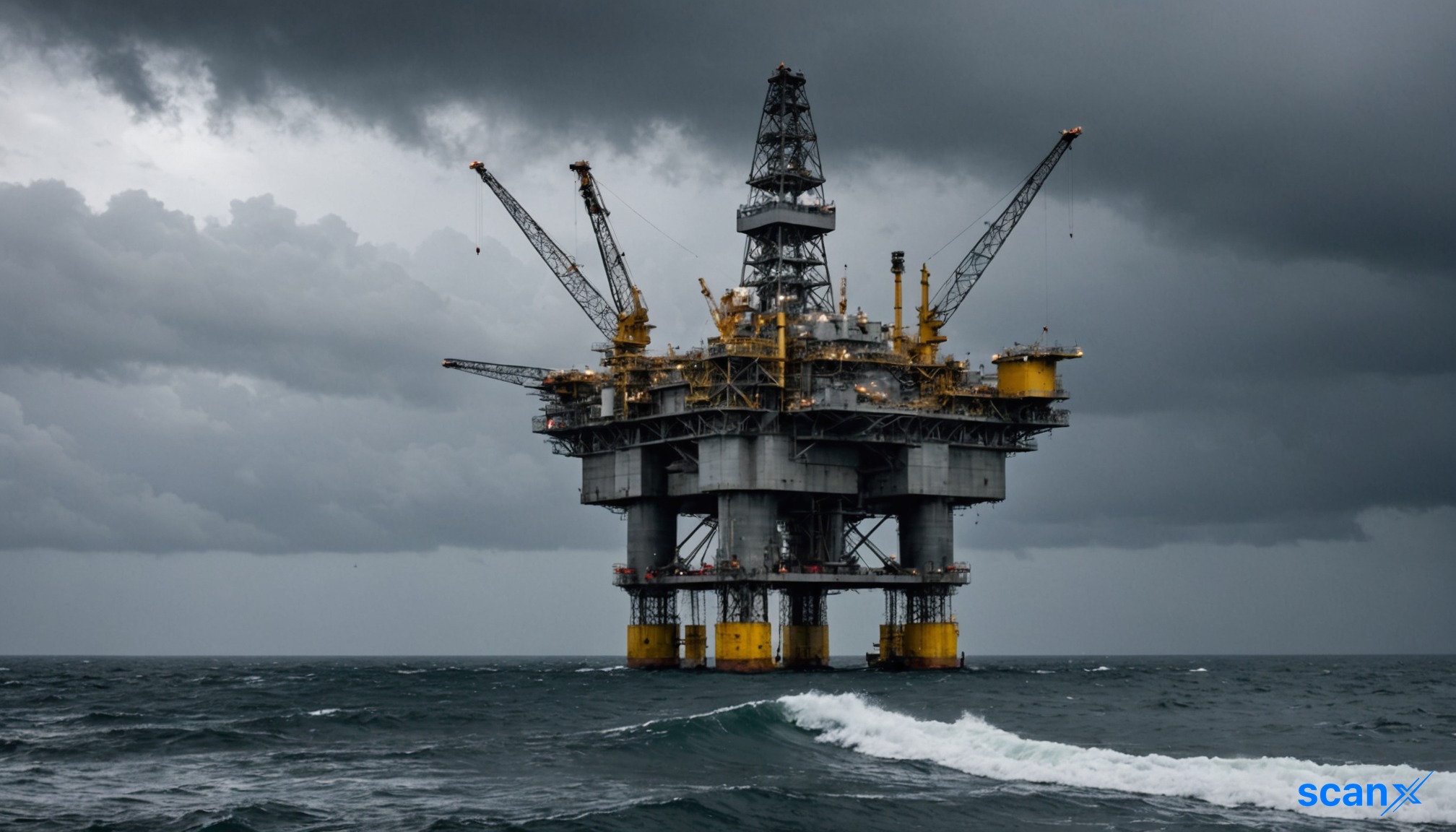

*this image is generated using AI for illustrative purposes only.
Shell plc (NYSE:SHEL), Chevron Corp. (NYSE:CVX), and BP plc (NYSE:BP) have evacuated personnel and halted production at Gulf of Mexico platforms as Hurricane Isaias approaches the northern Gulf Coast. The storm strengthened to a Category 3 hurricane with winds of 120 mph, with landfall expected Friday evening between Mobile Bay in Alabama and Choctawhatchee Bay in Florida.
Production halts accelerate
Producers had shut in approximately 1.3 million barrels per day by Thursday, representing 62.9% of current Gulf oil output, according to Marine Minerals Administration data. This marks a sharp increase from Wednesday, when about 25% of output, or 511,619 barrels a day, was offline. Natural gas production also saw significant disruptions, with 58.8% of daily output shut in. The Gulf region accounts for nearly 15% of total U.S. crude production annually.
| Company | Action Taken | Assets Affected |
|---|---|---|
| Shell plc | Evacuated all personnel; shut in production | Mars, Olympus, Ursa, Vito, Appomattox |
| Chevron Corp. | Started shutting in facilities | Four Gulf facilities (five remained operational) |
| BP plc | Shut platforms; evacuated all staff | Na Kika, Thunder Horse |
Other producers identified as highly exposed include Eni SpA (NYSE:E) and Murphy Oil Corp. (NYSE:MUR).
Refinery and logistics risks
While crude prices rose on the supply threat, analysts warn that refinery outages pose a more complex market risk. Jim Burkhard of S&P Global Energy noted that earlier storms caused more physical damage, but the primary concern now is whether Isaias strikes refineries directly. Kevin Book of ClearView Energy Partners explained that refinery shutdowns can cause divergent price movements: fuel prices may rise while crude prices fall, as plants stop purchasing crude and cease sending fuel to consumers.
Logistical bottlenecks are also expected. Andy Lipow of Lipow Oil Associates anticipates delays for tankers delivering crude to refineries and those loading gasoline, jet fuel, and diesel for distribution, particularly affecting Florida.
Market reaction
Brent crude jumped 4% to settle at $104.28 per barrel on Thursday, while West Texas Intermediate gained 3.6% to $91.49. The rally was partly supported by heightened geopolitical tensions in the Strait of Hormuz. Prices eased slightly in midday trading Friday after President Donald Trump stated the U.S. would not attack Iran before next month’s elections. Brent dipped 0.26% to $104.16, and WTI fell 0.1% to $91.40. Shares of the United States Oil Fund ETF (NYSE:USO) were up 0.43% at $148.21 at the time of publication Friday.
What the numbers show
The divergence between crude price increases and potential fuel price spikes highlights a structural vulnerability in the Gulf Coast energy hub. With 62.9% of offshore output already offline, the immediate impact is reduced crude supply. However, if refineries go offline, the dynamic reverses: crude demand from refiners drops while refined product supply tightens. This creates a scenario where upstream producers face lower realized prices due to oversupply at storage hubs, while downstream consumers face higher costs due to product scarcity.

How might prolonged offshore production outages impact the strategic petroleum reserve release schedule or U.S. energy security policies?
What specific logistical workarounds are refiners implementing to mitigate fuel distribution delays in Florida if pipeline and tanker routes remain disrupted?
Could the divergence between crude oversupply at storage hubs and refined product scarcity trigger regulatory interventions on domestic fuel pricing?
 20




 Create Custom Screeners
 Access 200+ Pre-built Filters
 Use 50+ Readymade Screener





