

SpaceX shakes up AI data center team amid reliability concerns


- SpaceX reshuffled data-center leadership after reliability issues at Tennessee and Mississippi facilities
- Company faces Sep. 30 deadline to deliver GPUs for Google's $920 million monthly compute deal
- Facilities operated without backup cooling; uptime fell below 99.9% target due to temporary systems
- SpaceX spent $15.8 billion on AI infrastructure in Q2, growing capacity from 0.4 GW to 1.4 GW
- Combined monthly commitments from Google and Anthropic total $2.17 billion


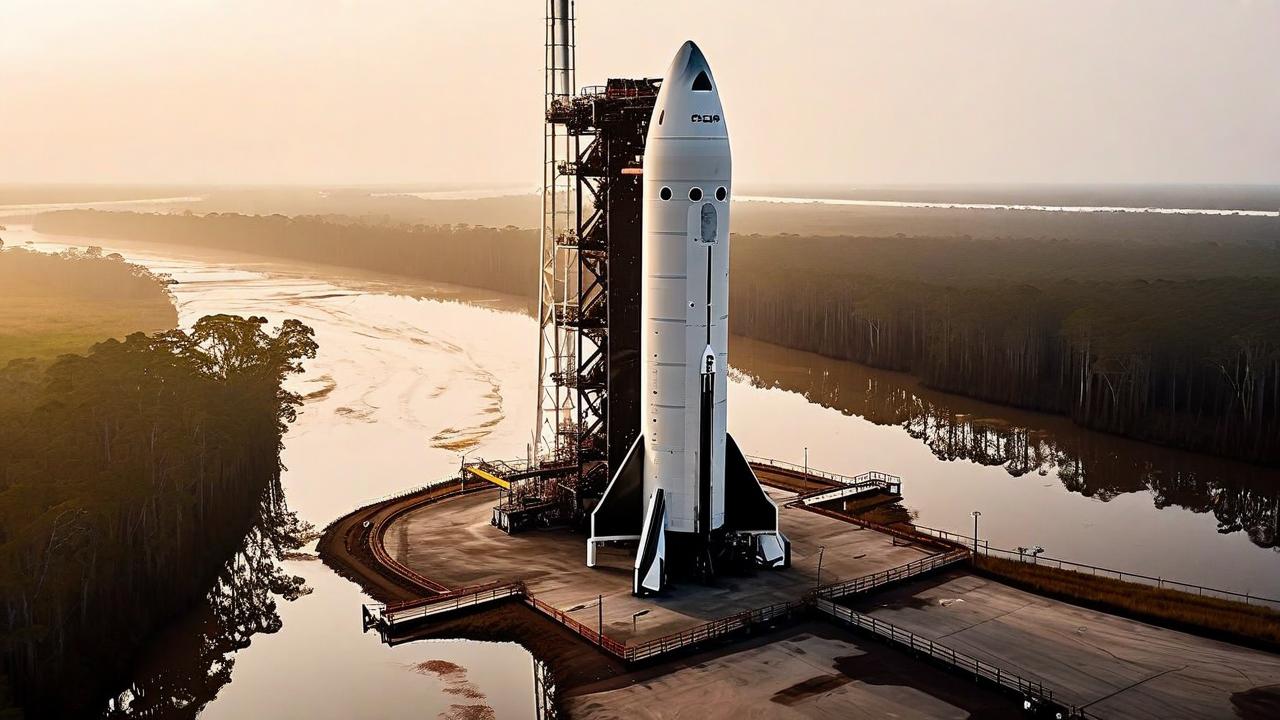
*this image is generated using AI for illustrative purposes only.
Space Exploration Technologies Corp. (NASDAQ: SPCX) has reshuffled its data-center leadership following engineering concerns and reliability problems at facilities in Tennessee and Mississippi, The Information reported Tuesday.
The leadership changes come as Elon Musk races to expand SpaceX’s AI infrastructure business ahead of a Sep. 30 capacity deadline tied to Google’s $920 million-a-month compute deal.
Leadership Changes and Operational Risks
Jake Palmer, who led physical infrastructure for SpaceXAI, left in late July alongside several other data-center executives. SpaceX veterans from its rocket and Starlink businesses have since taken larger roles in the operation.
Some facilities operated for months without backup cooling and power systems. The Macrohard facility relied on more than 100 mobile chillers and recorded uptime well below an internal target of 99.9%. Temporary power and cooling systems contributed to outages that interrupted AI model training.
Execution pressure has also surfaced elsewhere. Mississippi regulators allowed temporary gas turbines to operate longer than planned after supply-chain problems delayed 41 permanent units.
Regulatory Disclosures and Capacity
Weeks before the latest shake-up, SpaceX added a specific AI infrastructure risk factor to its Aug. 4 quarterly filing. The company said its cloud business depends on reliable data center operations and timely development, identifying construction delays, workforce turnover, power constraints and equipment shortages as risks that could delay capacity or disrupt service.
SpaceX had 1.4 gigawatts of compute capacity at the end of June, up from 0.4 GW a year earlier. The company spent about $15.8 billion on AI infrastructure during the second quarter.
Major Commercial Deals
This strategy has translated into significant revenue contracts for SpaceXAI:
| Client | Deal Value | Duration/Scale | Key Details |
|---|---|---|---|
| $920 million per month | Multiyear agreement | Signed in June; full scale access to ~110,000 Nvidia GPUs | |
| Anthropic | $1.25 billion per month | Through May 2029 | Expanded pact for computing capacity |
Alphabet Inc.’s Google agreed to pay SpaceX $920 million per month at full capacity for access to roughly 110,000 Nvidia Corp. GPUs. SpaceX must deliver the committed GPUs by Sep. 30. After a one-month grace period, Google can terminate the agreement or accept fewer GPUs and reduce payments proportionately if SpaceX falls short.
SpaceX is also developing a 1.2-gigawatt permanent power plant near its Greater Memphis supercomputer sites. The company plans to retire temporary mobile turbines as this permanent capacity comes online, though Musk noted temporary turbines will remain until 2027.
What the Numbers Show
The disclosed deal values highlight a shift from pure hardware sales to high-value service contracts. The combined monthly commitments from Google ($920 million) and Anthropic ($1.25 billion) total $2.17 billion per month. This recurring revenue model underscores the financial scale of SpaceX’s entry into the AI infrastructure market, driven directly by the scarcity of reliable power for competitors.
However, the operational challenges present a divergence between rapid capital expenditure and service reliability. With $15.8 billion spent in Q2 alone to grow capacity from 0.4 GW to 1.4 GW, the company is leveraging massive investment to meet tight contractual deadlines. The reliance on temporary mobile chillers and turbines suggests that while capacity is scaling quickly, the stability required for high-uptime AI training remains a work in progress.
Broader Industry Context
The electricity crunch extends beyond SpaceX’s operations. Lawrence Berkeley National Laboratory estimates that U.S. data centers could consume 11.8% of national electricity by 2030, with scenarios ranging from 9.5% to 15.3%.
Musk also criticized European Union technology rules during his address, stating that the regulatory approach "inhibits progress" in the sector.
Anthropic has overtaken SpaceX as prediction market traders’ favorite to have the largest IPO of 2026. Traders now put Anthropic at 59% versus SpaceX at 40%, with about $5.8 million traded.

How might SpaceX's reliance on temporary power and cooling infrastructure impact its ability to meet the September 30 deadline for Google's $920 million monthly contract?
What are the potential financial penalties or reputational risks for SpaceX if it fails to deliver the committed 110,000 Nvidia GPUs at full capacity by the agreed-upon date?
Could the integration of SpaceX veterans from rocket and Starlink divisions into data-center leadership improve operational reliability, or does this pose a risk due to differing technical expertise?
 16
16








 Access Market Heat-map & Insights
  Create, Save & Share your Screener
  Use 200+ Screening Filters





