SpaceX shares rise 2.7% as JPMorgan sets $240 target on AI progress

scanx
Reviewed by
Shriram SScanX News Team
Key Highlights
  • SpaceX shares rose 2.7% to $138.65 after JPMorgan reiterated an Overweight rating.
  • JPMorgan set a $240 price target based on a 34x multiple of projected 2028 EPS of $7.02.
  • The firm cited the $4 billion annualized revenue Cursor acquisition as key to AI growth.
  • Grok 4.6 gained five points on the Artificial Analysis Intelligence Index versus its predecessor.
  • SpaceX launched 29 Starlink satellites and announced a new launch facility in Louisiana.
powered bylight_fuzz_icon
49223498

*this image is generated using AI for illustrative purposes only.

SpaceX (NASDAQ: SPCX) shares rose 2.70% to $138.65 on Tuesday. The move followed JPMorgan’s reiterated Overweight rating and $240 price target, driven by the company’s expanding artificial intelligence roadmap.

JPMorgan Sees Cursor Deal and Grok Progress Building SpaceX's AI Case

JPMorgan analyst Doug Anmuth highlighted a clearer picture of SpaceX’s AI strategy following the August 14 acquisition of Cursor. The deal brings an annualized revenue base near $4 billion, with three-quarters derived from business clients. JPMorgan views this enterprise-heavy split as a dual asset for customer reach and training data for future Grok models.

Performance metrics support this thesis. Grok 4.6, launched earlier this month, gained five points on the Artificial Analysis Intelligence Index versus its predecessor. This places it just behind Anthropic’s two most advanced models. JPMorgan notes that pairing this performance with lower pricing should widen appeal among developers and enterprises.

The firm also pointed to new capabilities like Grok Bot, a beta product for autonomous agents within existing apps. Looking ahead, JPMorgan expects Grok 4.7 by early September and Grok 5 by December.

Valuation Logic

JPMorgan’s $240 target is based on a projected 2028 profit of $7.02 per share, applying a multiple near 34 times. The premium reflects leadership across launch vehicles, satellite broadband, and AI.

SpaceX Launch Momentum Continues

Operationally, SpaceX maintained its deployment cadence. On Tuesday at 5:33 am, a Falcon 9 rocket launched 29 Starlink broadband satellites from Florida.

Additionally, the company announced plans for Starbase Louisiana, a new high-cadence launch facility intended to support more frequent Starship missions.

What the Numbers Show

The valuation multiple implies significant weight on future AI monetization. With the $4 billion Cursor revenue base primarily from business clients, the shift suggests a strategic pivot toward high-margin enterprise software services alongside traditional hardware launches.

Disclaimer: This article is AI-generated using data from ViewTrade. ScanX is not liable for any inaccuracies.

How might the integration of Cursor's enterprise client base accelerate the adoption of Grok models in regulated industries like finance and healthcare?

What competitive risks does SpaceX face from Anthropic and other AI leaders as Grok 4.7 and 5 approach their release dates?

Could the high valuation multiple of 34x for 2028 profits be vulnerable to shifts in investor sentiment regarding AI monetization timelines?

like19
dislike

SpaceX targets Q4 2027 launch for Nvidia-powered orbital AI system

scanx
Reviewed by
Shriram SScanX News Team
Key Highlights
  • SpaceX targets Q4 2027 launch for Nvidia Vera Rubin AI system
  • Design described as lower cost, denser, and lighter than racks
  • Significant scale planned for 2028 following initial orbital deployment
  • Nvidia Q2 2026 revenue expected at $92.03 billion, up ~100% YoY
powered bylight_fuzz_icon
49177952

*this image is generated using AI for illustrative purposes only.

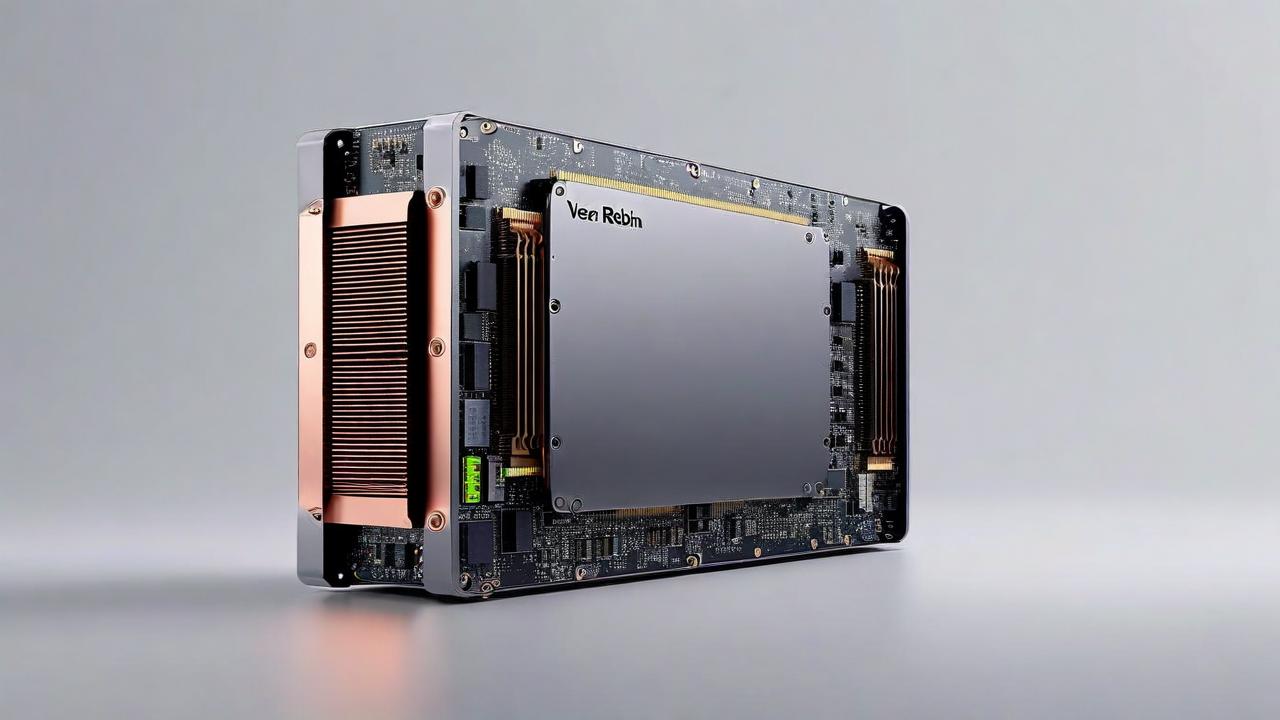
SpaceX plans to launch a space-optimized artificial intelligence system powered by Nvidia Corp. (NASDAQ: NVDA) Vera CPUs in the fourth quarter of 2027. The initiative marks a strategic expansion into orbital compute infrastructure.

Elon Musk, CEO of Space Exploration Technologies Corp. (NASDAQ: SPCX), announced the deployment on X on August 24, 2026. He described the design as significantly simpler, lower cost, denser, and lighter than traditional rack systems. The system utilizes the Vera Rubin architecture, which Musk termed the first CPU built for agents at scale.

System Specifications and Timeline

The partnership focuses on deploying the Vera Rubin NVL72 system to orbit. Musk outlined a phased rollout strategy with significant scale anticipated in 2028. The design prioritizes space optimization over standard terrestrial configurations.

Feature Detail
Chip Architecture Nvidia Vera Rubin NVL72
Launch Target Q4 2027
Scale Target 2028
Key Attributes Lower cost, denser, lighter

Broader Strategic Context

The announcement aligns with SpaceX’s broader production goals. Musk previously stated the company targets 10,000 Starship launches annually by the end of the decade. This volume exceeds the US government’s updated space policy target of 1,000 launches by 2030. Additionally, Musk indicated SpaceX could attempt the first-ever mid-air catch of an upper-stage rocket during Starship flight 14 in the coming months.

Market and Financial Implications

Nvidia is scheduled to report second-quarter 2026 earnings on Wednesday. Analysts expect revenue of $92.03 billion, representing nearly 100% growth from $46.14 billion in the same period last year. This surge reflects accelerating hyperscaler spending. Meanwhile, geopolitical tensions persist regarding Starlink usage, with Ukrainian President Volodymyr Zelenskyy urging Musk to allow coverage over Russian territory.

What the Numbers Show

The projected near-doubling of Nvidia’s quarterly revenue underscores the intense capital expenditure driving the AI infrastructure build-out. SpaceX’s entry into this ecosystem via orbital deployment suggests a diversification of compute locations, potentially addressing latency or regulatory constraints associated with terrestrial data centers.

Disclaimer: This article is AI-generated using data from ViewTrade. ScanX is not liable for any inaccuracies.

How might the deployment of orbital AI infrastructure impact the competitive landscape for terrestrial hyperscalers like AWS and Azure?

What are the potential regulatory and geopolitical challenges SpaceX faces in operating data centers in orbit, particularly regarding international space law?

Could the success of the Vera Rubin NVL72 system in space accelerate Nvidia's revenue growth beyond current analyst expectations for 2027-2028?

like15
dislike

More News on space exploration technologies corp