

SpaceX faces logistical hurdles in orbital AI satellite plans


- SpaceX plans to launch orbital data centers using Starship rockets as early as next year
- Experts cite logistical hurdles including cooling systems and chip updates for 1 million satellites
- Christopher Smith calculates need for nine daily launches to maintain Starmind constellation
- IPO filing acknowledges orbital AI compute plans are highly speculative and rely on unproven tech
- SpaceX targets 30 Starship launches per day by 2030, up from 13 total launches as of July 2026

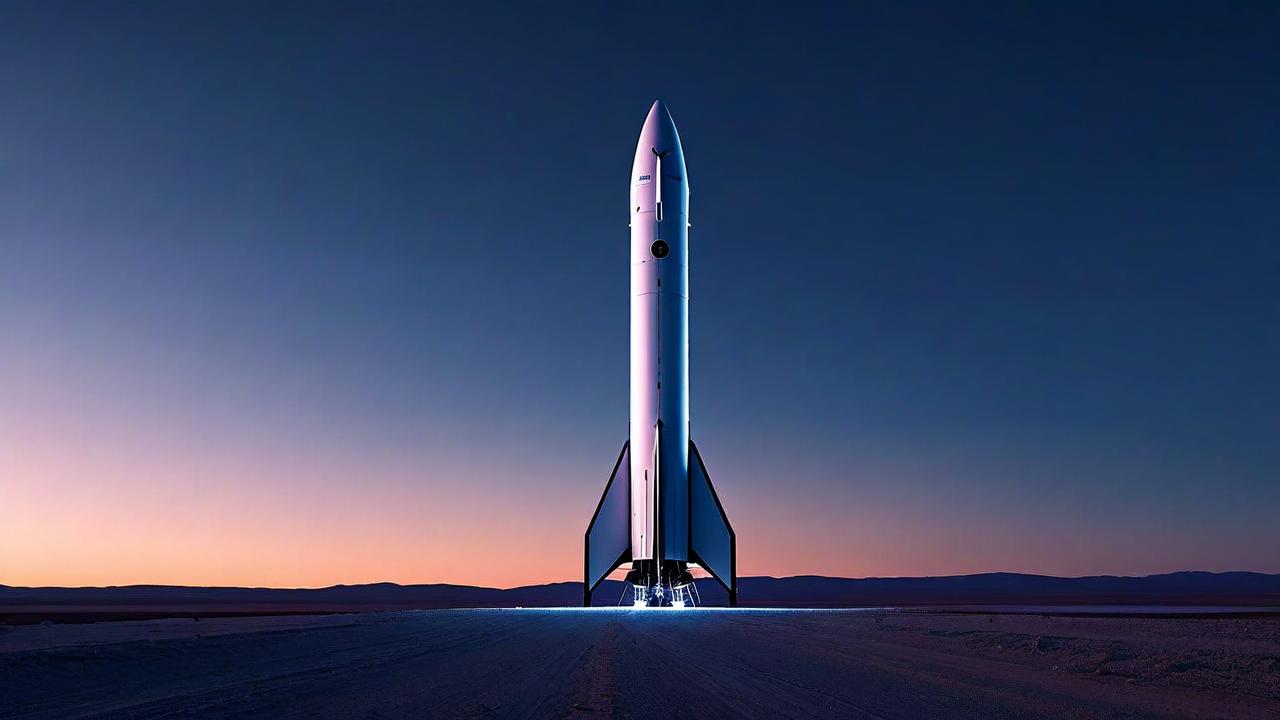

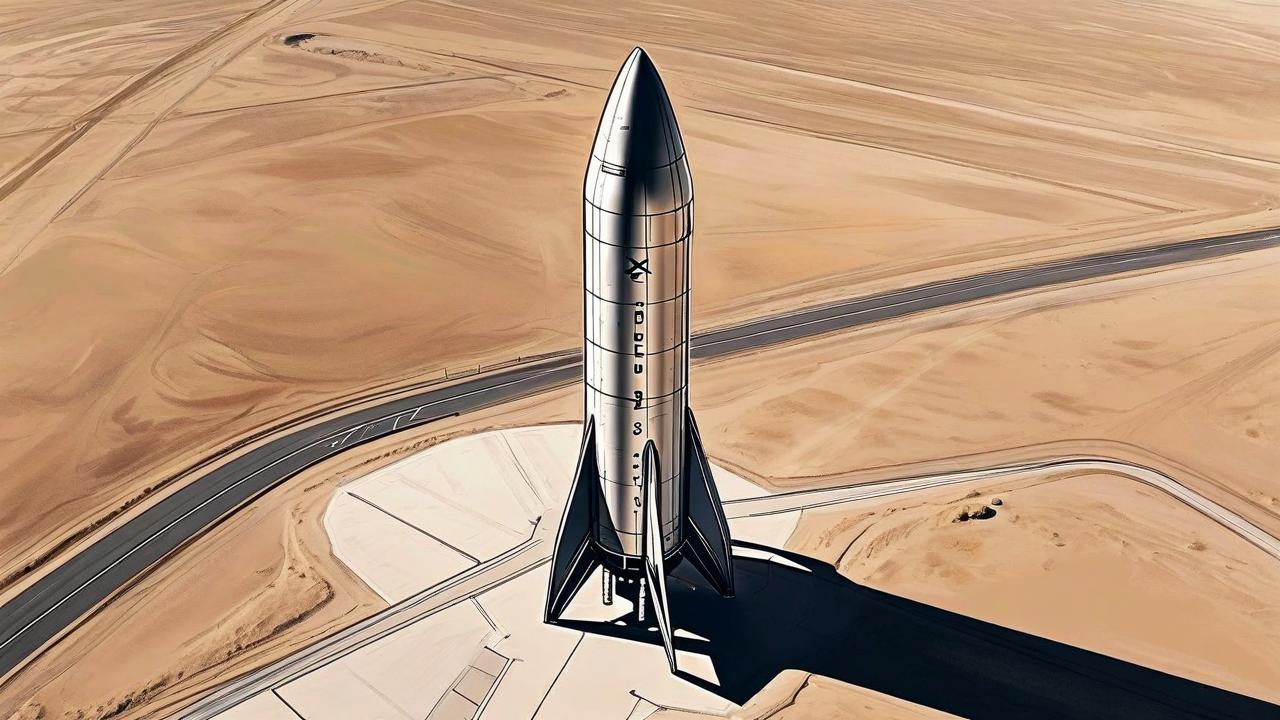
*this image is generated using AI for illustrative purposes only.
Space Exploration Technologies Corp (NASDAQ: SPCX) plans to launch orbital data centers into space as early as next year using its Starship rocket, but experts warn of significant logistical hurdles.
The ambitious project aims to deploy millions of solar-powered satellites equipped with AI chips to create a new orbital data center market. However, achieving this scale requires overcoming three major challenges: launching rockets at unprecedentedly low cost, cooling power-hungry computers in a vacuum, and regularly updating them with the latest chip technology.
Logistical Challenges
Christopher Smith, a senior aerospace engineer at UC Berkeley's Space Sciences Laboratory, highlighted the "tremendous" logistical challenges of maintaining a constellation of 1 million satellites, named Starmind by SpaceX. Smith's calculations suggest that SpaceX would need to launch more than nine Starship rockets daily based on the assumption that the company would replace the data center chips every five years, with each rocket carrying about 60 satellites.
Smith called the plan logistically 'crazy' and costly but cautioned against dismissing it, noting that Elon Musk has repeatedly defied conventional expectations. George Lordos, a space systems architect and lecturer at the Massachusetts Institute of Technology (MIT), believes that an initial constellation of AI satellites could be deployed by 2028. The scale of that constellation, however, remains uncertain. Lordos said SpaceX must significantly reduce Starship's booster and upper-stage turnaround times to rapidly expand its satellite network in the coming years.
Orbital AI Compute Plans
SpaceX is pitching investors on a trillion-dollar vision of millions of solar-powered satellites equipped with AI chips, aiming to create a new orbital data center market and strengthen Musk's position in the AI economy. However, the company acknowledged in its IPO filing that its orbital AI compute plans remain highly speculative, relying on complex, unproven or nonexistent technologies that may never become commercially viable.
Earlier this week, Musk revealed that SpaceXAI, the artificial intelligence arm of SpaceX, was adopting Nvidia Corp.'s (NASDAQ: NVDA) Vera CPUs for a more cost-effective, space-optimized Vera Rubin system for orbital AI. Musk also stated that SpaceX had designed a space-optimized Vera Rubin NVL72 system for launch to orbit in Q4 next year, with significant scale in 2028.
Solar Power and Launch Scale
In May, Musk had anticipated a steady surge in space solar power, with SpaceX's escalating solar power capacity in space. The company's progression from 10 megawatts across 3000 gen1 Starlink satellites to 100 megawatts with 7000 gen2 satellites was noted, with the upcoming gen3 expected to generate 1000 megawatts.
Elon Musk says SpaceX is targeting 30 Starship launches per day by 2030, equivalent to 9,000 launches annually. The ambitious goal reflects SpaceX's push for massive launch scale. However, he acknowledged that the number was "tiny" compared to "airplane flights" per day.
As of July 2026, there have been 13 Starship launches, with 8 successful missions and 5 failures.
What the Numbers Show
The disparity between the current launch cadence and the requirements for the Starmind constellation is stark. With only 13 launches completed as of July 2026, achieving the daily launch rate of nine rockets calculated by Christopher Smith would require an exponential increase in operational capacity. This highlights the gap between current execution and the scale needed for the proposed 1 million satellite network.

How might the requirement for daily Starship launches impact global launch infrastructure and regulatory frameworks by 2030?
What specific thermal management technologies are being developed to address the challenge of cooling AI chips in the vacuum of space?
Could the high failure rate of early Starship missions delay the 2028 timeline for significant orbital AI compute scale?
 18
18










 Access Market Heat-map & Insights
  Create, Save & Share your Screener
  Use 200+ Screening Filters





