Anthropic unveils Model Hardware Standard for AI robot control

scanx
Reviewed by
Ritika DScanX News Team
Key Highlights
  • Anthropic unveiled Model Hardware Standard (MHS) preview for AI agent control of physical devices
  • Standard aims to resolve multi-vendor integration delays in labs and manufacturing facilities
  • Early partners include Amazon Web Services, Danaher, QIAGEN, and Universal Robots
  • Technology requires expert oversight as AI lacks full contextual understanding of physical phenomena
powered bylight_fuzz_icon
49411671

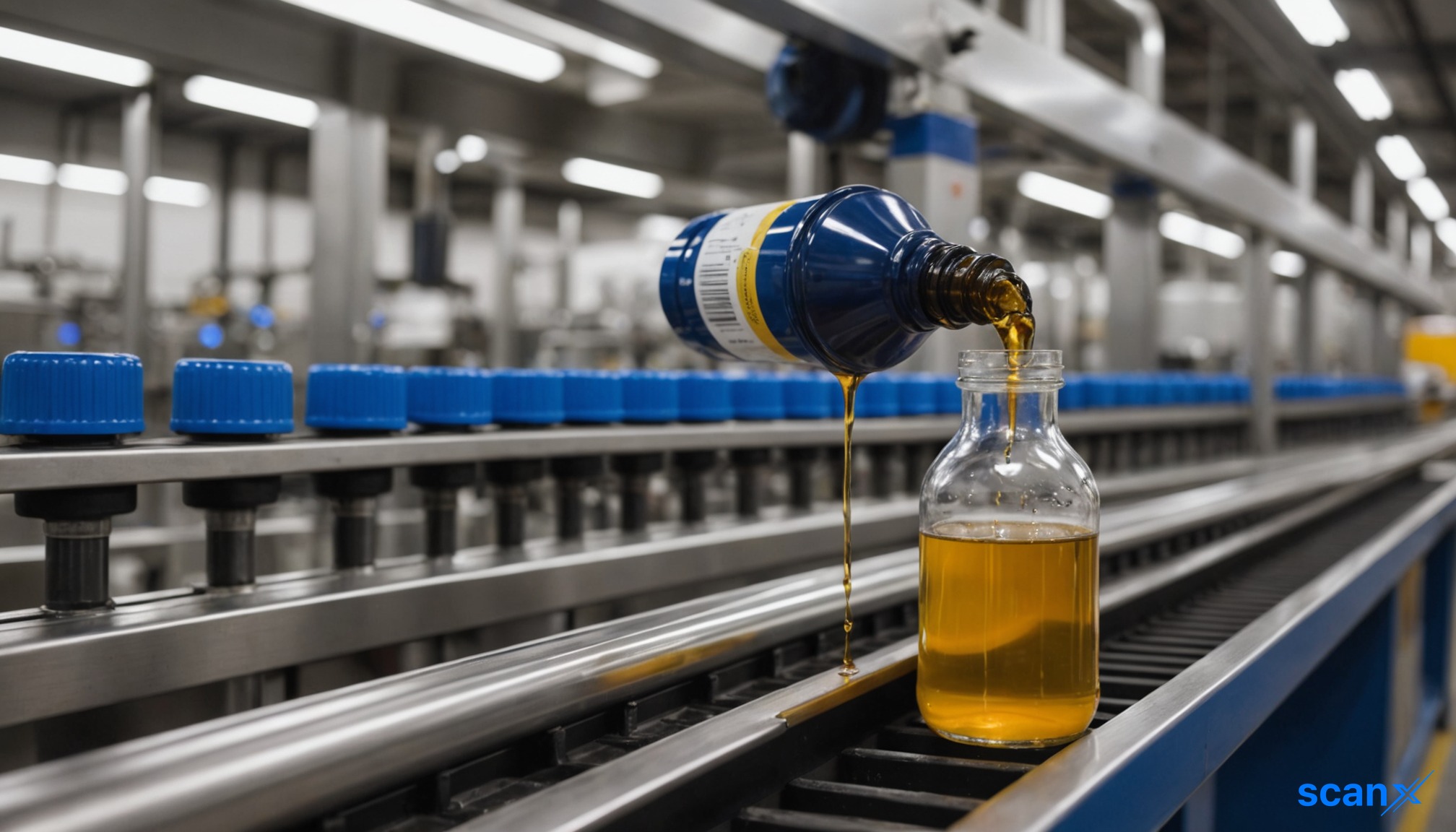
*this image is generated using AI for illustrative purposes only.

Anthropic launched a research preview of its Model Hardware Standard (MHS) on Thursday. The specification enables AI agents to discover, communicate with, and safely control physical devices such as laboratory equipment and robots.

The initiative targets a persistent integration challenge in manufacturing and scientific labs. Anthropic noted that connecting devices from different vendors often takes weeks or months due to proprietary programming interfaces. MHS introduces a standardized software driver acting as an intermediary, using basic commands like reading or writing temperature settings.

How It Works

The standard allows AI agents to operate multiple machines simultaneously, including microscopes, liquid handlers, and robotic arms. Users can describe safety limits in natural language, enabling the system to generate reference files detailing machine capabilities and constraints.

Once connected, devices are controlled via Anthropic’s Model Context Protocol. Agents can coordinate instruments, monitor results, and adjust parameters dynamically. Early testing showed Claude adjusting a laser and observing beam movement via camera until it learned the sequence, then converting that learning into a deterministic script for single-command alignment.

Industry Adoption

Several companies are testing or adding support for MHS:

  • Amazon Web Services plans support through Strands Robots.
  • Automata, Danaher, Doosan Robotics, MBF Bioscience, QIAGEN, Tecan, and Universal Robots are exploring integrations.

QIAGEN is testing MHS on its nucleic acid purification platform to help AI agents troubleshoot instrument problems. Tecan is adding support to its Fluent liquid-handling systems.

What the Numbers Show

The operational reality of current AI hardware control reveals a significant dependency on human oversight. While Anthropic demonstrated Claude’s ability to learn physical sequences, Genentech researchers had to intervene to clarify that foaming in protein samples was a physical issue rather than a software bug. This indicates that despite standardized communication protocols, AI agents currently lack sufficient contextual understanding of physical phenomena to operate fully autonomously without expert validation.

Limitations and Next Steps

Anthropic acknowledged that Claude’s understanding of the physical world remains imperfect. The technology currently works only with hardware possessing a programmable interface. The company plans to use the research preview for additional safety evaluations and is working with manufacturers to expand compatibility.

How might the standardization of AI hardware control via MHS disrupt the proprietary software ecosystems currently maintained by major robotics and lab equipment manufacturers?

What specific safety certification frameworks will need to be developed to legally allow AI agents to operate high-risk physical infrastructure without direct human oversight?

Could the dependency on programmable interfaces limit MHS adoption in legacy industrial sectors, and what retrofitting strategies might emerge to bridge this gap?

like17
dislike

Anthropic considers shareholder sales in $100 billion IPO

scanx
Reviewed by
Ritika DScanX News Team
Key Highlights
  • Anthropic considers allowing shareholder sales in its IPO, deviating from the SpaceX model
  • The company aims to raise up to $100 billion with a target valuation of $2 trillion
  • Annualized revenue run rate reached $65 billion by July, surpassing OpenAI's $40 billion
  • Prediction markets assign an 85% chance of an IPO by December 31, 2026
powered bylight_fuzz_icon
48308583

*this image is generated using AI for illustrative purposes only.

Anthropic is considering allowing shareholders to sell stakes in its upcoming initial public offering, marking a significant departure from the SpaceX playbook. This structural shift could impact dilution dynamics for existing investors as the AI firm prepares for a debut that may raise up to $100 billion.

Updated Filing Timeline and Underwriters

The company, led by Dario Amodei, filed a draft Form S-1 with the U.S. Securities and Exchange Commission on June 1. Bloomberg reports that Anthropic now expects to complete the public filing process by late August. Morgan Stanley, Goldman Sachs, and JPMorgan are reportedly working on the IPO, with other banks potentially added to the roster. Anthropic has been holding discussions with investors in recent weeks as it gears up for the debut.

SpaceX targeted $75 billion for its IPO and ultimately raised about $86.2 billion once the overallotment option was exercised. Anthropic aims to rival or exceed this figure, highlighting significant investor enthusiasm for the artificial intelligence industry. Details surrounding the IPO, including the final size, remain subject to change.

Prediction Market Signals

Polymarket, a prediction platform built on Polygon that uses the USDC stablecoin for wagering, tracks the likelihood of Anthropic’s IPO through specific contracts. Over $1.56 million has been bet on the "Anthropic IPO by __?" contract to date.

The probability of an imminent public debut has declined sharply. Bettors currently assign a 2% probability to Anthropic going public by September 15, 2026, representing a 33% drop in odds. The chance of a listing by September 30, 2026, stands at 11%, down 75%. Conversely, confidence increases for later dates: odds rise to 70% for October 31, 2026 (up 27%) and peak at 85% for December 31, 2026, indicating market belief that the company will go public within the calendar year.

Date: Probability: Change:
Sep. 15, 2026: 2% Down 33%
Sep. 30, 2026: 11% Down 75%
Oct. 31, 2026: 70% Up 27%
Dec. 31, 2026: 85% Highest

Revenue Growth and Valuation Context

Anthropic’s rapid expansion has been driven largely by growing demand from businesses using Claude for coding, research, automation, and other enterprise applications. The company’s annualized revenue run rate reportedly surged to $65 billion by the end of July. This places it ahead of OpenAI, whose annualized revenue reached about $40 billion.

In May, Anthropic overtook OpenAI as the world’s most valuable startup after raising $65 billion in Series H funding, valuing the company at $965 billion. Altimeter Capital, Dragoneer, Greenoaks, and Sequoia Capital led the funding round.

Investment bankers are constructing a valuation framework for Anthropic that anticipates annual revenues between $190 billion and $200 billion by 2028. This long-term forecast significantly exceeds the current annualized revenue run rate of more than $65 billion, which surpassed the approximately $47 billion reported in May. Bankers are applying enterprise value-to-revenue multiples based on these forward-looking estimates.

Anthropic's revenue growth has accelerated rapidly. The run rate stood at approximately $9 billion at the end of 2025 before climbing to more than $47 billion by May. For the second quarter of 2026, Anthropic expects revenue of at least $10.9 billion, more than double the previous quarter. This performance places the company on track to report its first operating profit, estimated at $559 million. New data indicates Q2 revenue reached $11.6 billion, exceeding earlier expectations.

Comparable Valuation Benchmarks

Bankers reference publicly traded companies such as Palantir Technologies Inc. (NASDAQ: PLTR), Cloudflare Inc. (NYSE: NET), and Space Exploration Technologies Corp (NASDAQ: SPCX) to establish valuation multiples. According to LSEG data cited by Reuters, Palantir trades at 53 times expected 2026 revenue, while Cloudflare trades at 41.6 times. SpaceX serves as a reference for companies valued primarily on future growth potential rather than current earnings.

Market Skepticism and Governance

Despite bullish projections, market participants express caution regarding valuation sustainability. David Merkel, a principal at Aleph Investments, questioned whether the underlying mathematics supports a potential $2 trillion valuation over time. He noted uncertainty about whether artificial intelligence produces sufficient additional productivity to justify current price premiums, stating, "Could they get a $2 trillion valuation, yeah they could, and I just wonder if it would stay there over time."

Dr Chan Ahn, founder and CEO of Tessera PE, noted that such a valuation requires investors to underwrite an extraordinary combination of growth and margin expansion. He highlighted the "first earnings report" as the biggest IPO risk, when companies face tougher scrutiny from public-market investors.

Ahead of the public filing, Anthropic is set to finalize a revolving credit facility that will come in above its roughly $10 billion target, expanding on the financing it pursued in July. It has also previously been reported that CEO Dario Amodei could receive super-voting shares ahead of the AI company’s IPO, giving him and other co-founders greater control even as their ownership stakes remain relatively small.

OpenAI Delays Debut

In contrast to Anthropic’s filing progress, OpenAI may not make its public debut this year. Reports indicate that OpenAI has delayed its IPO to next year after being advised to wait out volatile market conditions. This decision comes as investors closely monitor the post-listing performance of other high-profile technology companies, including SpaceX.

What the Numbers Show

The divergence between Anthropic's current run rate of more than $65 billion and its 2028 forecast highlights aggressive growth assumptions embedded in the IPO valuation case. While the company achieved a tenfold annual increase in revenue run rate for three consecutive years through early 2026, the projection to reach $200 billion by 2028 implies continued exponential scaling. The reliance on comparables like SpaceX, which are valued on future potential rather than current earnings, suggests that the valuation model prioritizes long-term market capture over near-term profitability metrics. The new $30 trillion TAM estimate further amplifies this forward-looking approach, surpassing SpaceX's $28.5 trillion figure.

How might the implementation of super-voting shares for Dario Amodei influence institutional investor appetite and corporate governance standards in the AI sector?

Given the skepticism regarding a $2 trillion valuation, what specific margin expansion or productivity metrics must Anthropic demonstrate in its first earnings report to justify current price premiums?

Will the divergence between Anthropic's aggressive 2028 revenue forecasts and its current run rate lead to significant post-IPO volatility if growth rates decelerate?

like17
dislike

More News on anthropic