

Sensex at 40: BSE Bets on Index Investing, Market Depth to Drive Next Phase of Growth


BSE MD Sundararaman Ramamurthy highlights Sensex's 40-year journey as a trusted market barometer, representing 40% of India's market capitalisation across 11 major sectors. BSE's strategic acquisition of full index ownership from S&P Dow Jones enables faster domestic decision-making, while the exchange's technology-driven turnaround expanded derivatives capacity from 10 crore to 1,800 crore daily orders. Regulatory changes in derivatives have actually helped BSE establish new products, with the exchange positioning for future growth through deeper index investing and improved market infrastructure.



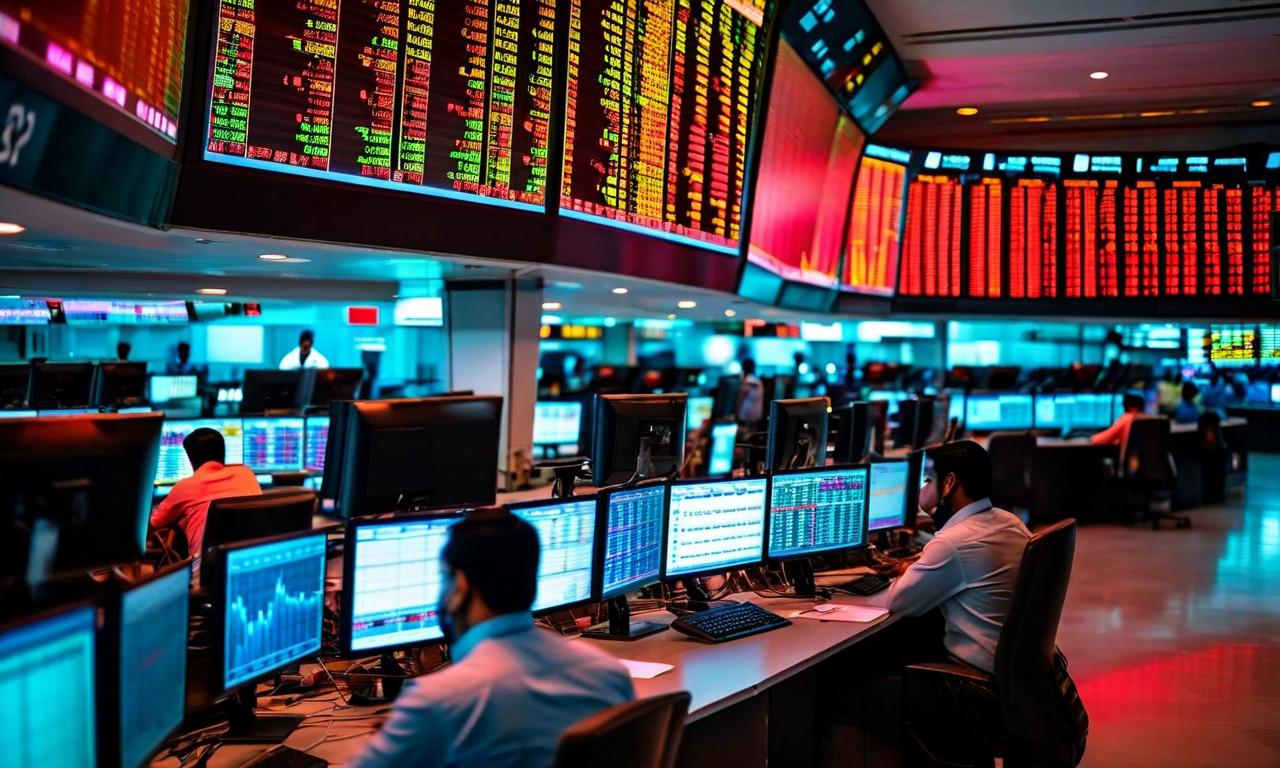
*this image is generated using AI for illustrative purposes only.
As the benchmark Sensex completes 40 years, BSE MD and CEO Sundararaman Ramamurthy says the index's enduring relevance lies in its ability to evolve with India's changing capital markets while remaining a trusted barometer of economic health. Speaking to ET Now, Ramamurthy emphasized that the longevity of any index depends on its construction methodology, periodic rebalancing, and ability to adapt to market realities.
Sensex: Four Decades of Market Leadership
Ramamurthy highlighted that Sensex has consistently evolved with global best practices, transforming into a free-float market capitalisation index with a transparent inclusion and exclusion framework. Despite tracking only 30 stocks, the index maintains significant market influence and broad sectoral representation.
| Parameter: | Details |
|---|---|
| Market Representation: | Nearly 40% of India's total market capitalisation |
| Sectoral Coverage: | 11 of India's 12 major sectors |
| Risk Profile: | Minimal diversifiable risk with strong market correlation |
| Market Position: | First reference point for market movements |
"That is why Sensex continues to be the first reference point whenever markets move," Ramamurthy added, noting the index's broad sectoral representation ensures strong correlation with the wider market.
Strategic Index Business Acquisition
Explaining the strategic rationale behind BSE acquiring full ownership of its index arm by buying out the S&P Dow Jones stake, Ramamurthy said index administration is central to India's capital formation story. In a fast-growing economy like India, index investing and index-linked mutual funds serve as critical channels for retail participation in capital markets.
"Decision-making had to be faster and fully aligned with domestic market needs. That required management control to be in India," he explained. With Sensex now managed as a 100% BSE subsidiary, the exchange has greater flexibility to introduce new indices, respond to investor trends, and support long-term economic objectives.
Technology-Driven Turnaround Strategy
Ramamurthy credited BSE's turnaround over the past three years to a sharp focus on identifying market gaps, cutting inefficiencies, and investing in technology. "If you identify a gap and fill it, you earn your right to exist," he said.
The exchange's transformation involved several key initiatives:
- Cost optimisation and filling long-vacant positions
- Cultural change within the organisation
- Massive upgrade in trading infrastructure
- Enhanced derivatives processing capabilities
BSE's derivatives processing capacity has expanded dramatically, showcasing the exchange's technological advancement:
| Metric: | Previous Capacity | Current Capacity |
|---|---|---|
| Daily Orders: | 10 crore orders | Nearly 1,800 crore orders |
| Processing Speed: | - | Over 22 lakh orders per second |
Regulatory Environment and Market Stability
On the frequent regulatory changes in the derivatives segment over the past year, Ramamurthy said India's regulatory framework is consultative rather than unilateral. "Evolution can be painful, but these changes were driven by investor protection and market quality, not disruption," he said.
While the broader derivatives market went through a phase of stabilisation, BSE benefited as a relatively recent entrant in index derivatives. "For us, the regulatory changes actually helped establish new products and gain traction," he noted.
Addressing concerns around uncertainty in derivatives regulations, Ramamurthy said clarity has improved significantly. "The intent is not to kill products or restrict participation, but to enhance awareness, protection and market depth. The regulatory environment today is progressive and constructive," he said.
Future Growth Outlook
As Sensex enters its fifth decade, BSE believes deeper index investing, improved market infrastructure, and collaborative regulation will continue to anchor India's equity markets in the years ahead. The exchange's focus on listening to market participants, addressing concentration risk concerns, and introducing differentiated products such as Sensex derivatives has been critical to its recovery and future positioning.
Historical Stock Returns for BSE
| 1 Day | 5 Days | 1 Month | 6 Months | 1 Year | 5 Years |
|---|---|---|---|---|---|
| -1.43% | +7.92% | -3.15% | +3.91% | +46.48% | +2,110.48% |









 Access Market Heat-map & Insights
  Create, Save & Share your Screener
  Use 200+ Screening Filters





