

Iran sets 7 conditions for Hormuz reopening; Brent holds above $100


- Iran demands US meet 7 conditions before reopening Strait of Hormuz
- Brent crude holds at $102.21 as diplomatic talks stall
- Persian Gulf crude exports recover to 14 million bpd from 4.5 million bpd
- Refined fuel shipments remain at 50% of pre-war levels
- Nasdaq 100 futures rise 0.35% amid mixed global market reaction

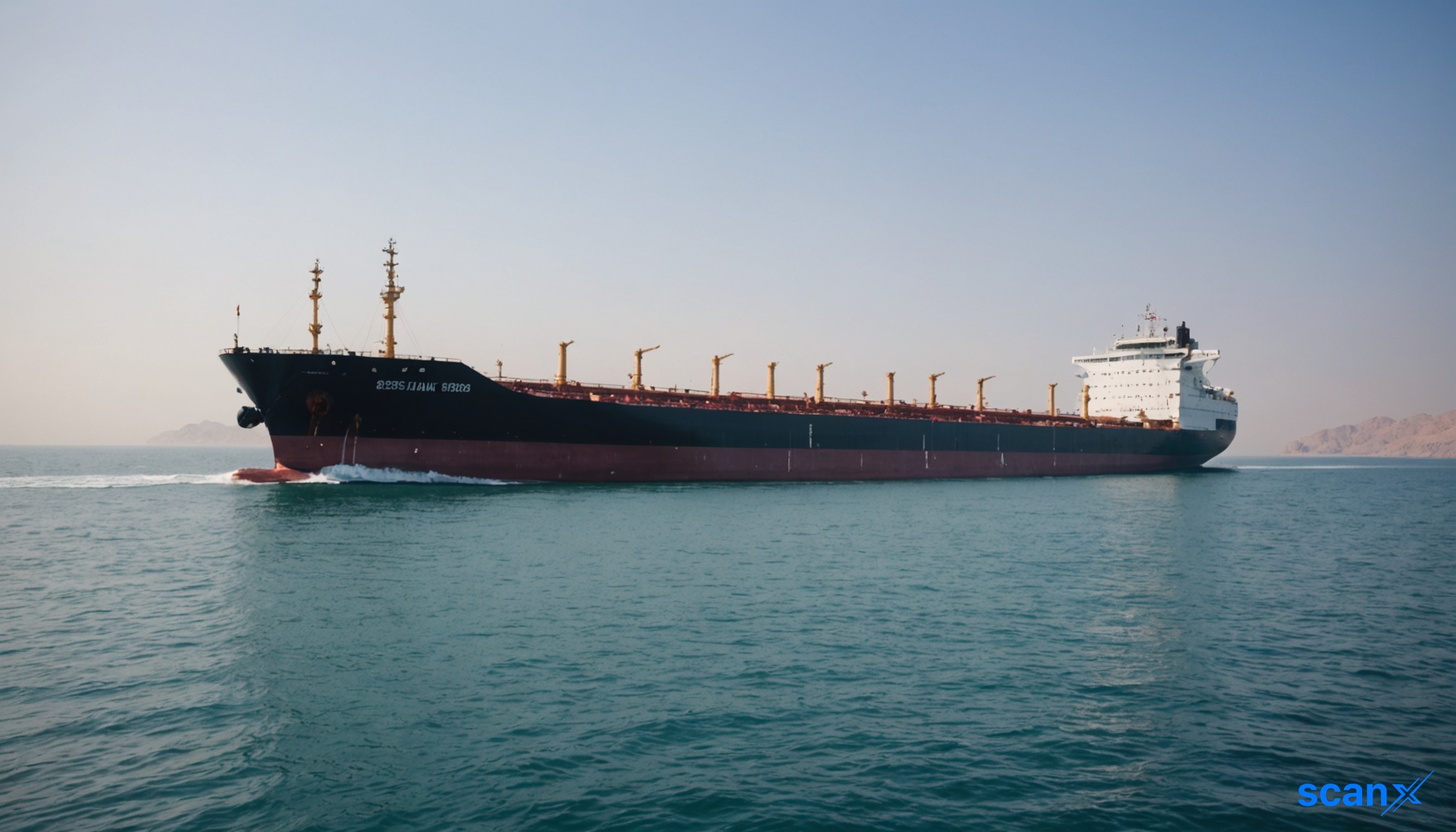

*this image is generated using AI for illustrative purposes only.
Iran’s parliament speaker Mohammad Bagher Ghalibaf stated Tehran will not fully reopen the Strait of Hormuz until Washington meets seven specific conditions. This firm stance maintains geopolitical pressure, keeping Brent crude above $102 per barrel amid ongoing indirect talks mediated by Qatar.
The diplomatic deadlock continues as Iranian Foreign Minister Abbas Araghchi’s stay in New York was not extended. Despite President Donald Trump rejecting an earlier Iranian proposal to reopen the strait, Araghchi noted that intermediaries had not formally delivered a definitive U.S. refusal. "We are waiting for the mediators to convey the definitive views to us," he said. The proposal sought a seven-day clock for reopening the strait and a halt to regional fighting in exchange for relief from economic blockades and access to frozen assets.
Diplomatic stalemate and US pushback
U.S. Ambassador to the UN Mike Waltz characterized Iran’s plan as a "cynical attempt," stating Washington could not accept Iran gaining access to billions in frozen assets. Treasury Secretary Scott Bessent confirmed that more than 80% of Iran's external flights had likely been shut down as part of tightened economic pressure. Meanwhile, Foreign Ministry spokesperson Esmaeil Baghaei denied reports that Iran had offered nuclear inspections in exchange for sanctions relief, emphasizing that restoring security in the waterway requires "clear steps" from the U.S.
President Pezeshkian reiterated that Iran is open to negotiations on its nuclear program but will not accept "bullying or coercion." He stated Iran is willing to make a peace deal before November midterms, urging a return to the June memorandum of understanding framework. Ghalibaf declared, "The era of wasting time and dictating unilateral demands is over," according to state media.
Market reaction to geopolitical tension
Equity futures showed mixed sentiment as investors weighed stalled diplomatic progress against recovering oil flows:
- Dow futures rose 23 points (0.04%) to 51,500.00
- S&P 500 futures gained 10 points (0.13%) to 7,787.25
- Nasdaq 100 futures rose 108.75 points (0.35%) to 31,170.50
Asian markets traded higher, with South Korea’s KOSPI rising 0.46% to 7,003.74, while Japan’s Nikkei 225 jumped 2.39% to 69,941.90. The U.S. dollar index stood at 101.966, up 0.04%. In commodities, WTI crude oil fell 0.40% to $90.75 per barrel, while Brent crude declined 0.04% to $102.21 per barrel. Natural gas futures fell 0.10% to $3.032 per MMBtu.
Oil flows recover despite Hormuz uncertainty
Market commentator The Kobeissi Letter reported that Persian Gulf crude exports have surpassed 14 million barrels per day, recovering sharply from a March low of about 4.5 million barrels per day. This marks an over 210% increase since the conflict began on February 28. The recovery is attributed to U.S. military efforts to secure the Strait of Hormuz and the establishment of a two-way shipping corridor along Oman’s coast.
However, refined fuel shipments remain around half their pre-war levels, keeping pressure on gasoline, diesel and jet fuel markets. "Oil flows are coming back, but the fuel market is still under intense pressure," the commentator wrote. The Strait of Hormuz handled roughly a fifth of global oil and liquefied natural gas flows before the conflict.
What the numbers show
The divergence between crude export recovery and refined fuel constraints highlights a structural bottleneck. While Persian Gulf crude exports have rebounded to 14 million barrels per day from 4.5 million, refined fuel shipments remain at 50% of pre-war levels. This suggests that while physical crude can move via the new shipping corridors, downstream capacity or logistical bottlenecks continue to constrain global supply chains. Simultaneously, the slight dip in Brent prices to $102.21 despite Iran’s hardline stance indicates traders are pricing in the partial normalization of flows rather than total disruption.
| Metric | Value | Change |
|---|---|---|
| Brent crude price | $102.21 | -0.04% |
| WTI crude price | $90.75 | -0.40% |
| Natural gas futures | $3.032 | -0.10% |
| Persian Gulf crude exports | 14 million bpd | +210% from low |
| Iran external flights shut down | >80% | N/A |

How might the persistent gap between recovered crude exports and constrained refined fuel shipments impact global gasoline and jet fuel prices in the coming weeks?
What specific economic or political incentives could drive the U.S. administration to engage with Iran's seven conditions before the November midterms?
Will the reliance on the Oman coastal shipping corridor prove sustainable long-term, or will it require further military investment to maintain security?
 19
19





 Access Market Heat-map & Insights
  Create, Save & Share your Screener
  Use 200+ Screening Filters





