

Tanfac Industries turns net debt-free after ₹250 cr QIP; Q1 revenue rises 6%


Tanfac Industries delivered resilient Q1 FY27 results with ₹187 crore revenue, becoming net debt-free via a ₹250 crore QIP. Despite margin pressure from sulphur costs, the company targets 30% revenue growth in FY27 driven by solar grade DHF and upcoming HFC-32 commissioning.


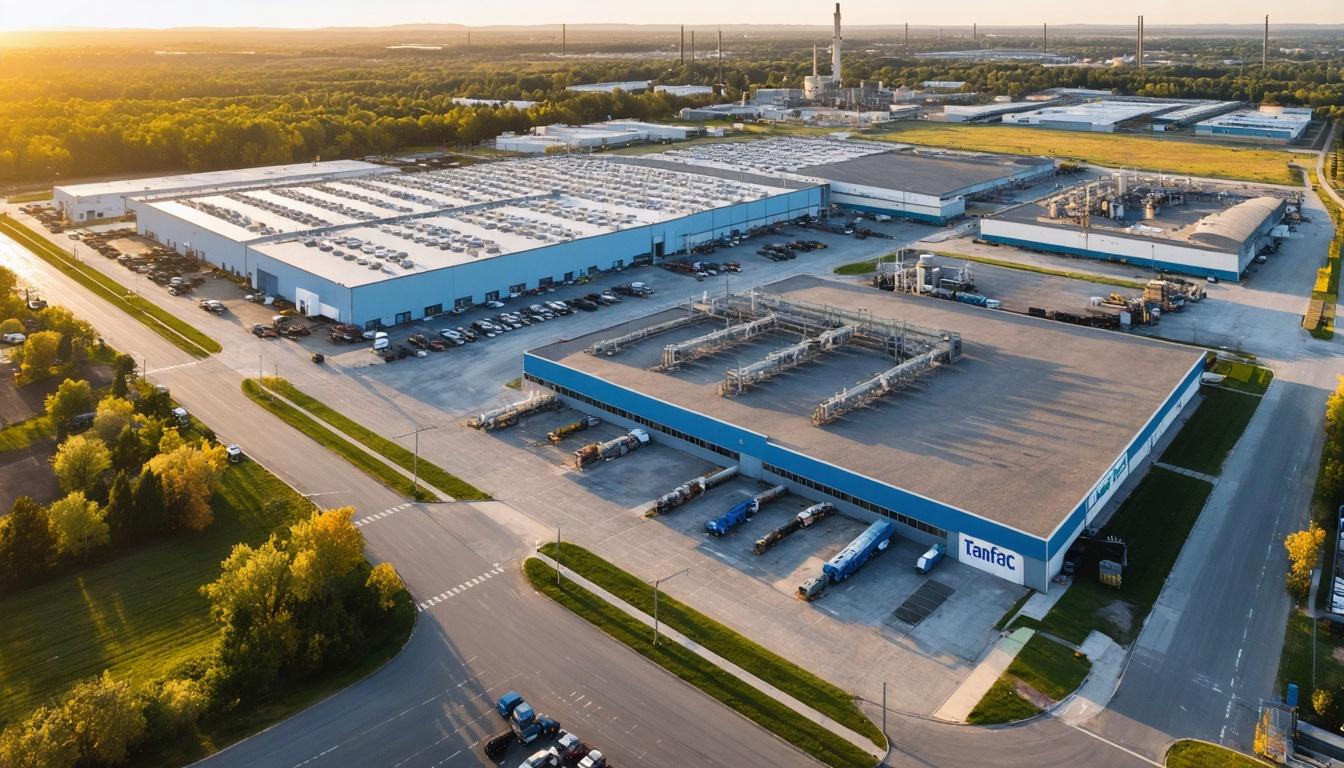
*this image is generated using AI for illustrative purposes only.
Tanfac Industries Limited delivered a resilient first quarter of FY27, reporting a 6% year-on-year rise in revenue to ₹187 crore while successfully eliminating its net debt through a ₹250 crore Qualified Institutional Placement (QIP). Although profit after tax (PAT) moderated to ₹16.8 crore from ₹19.4 crore in Q1 FY26 due to elevated sulphur prices and higher power costs, management highlighted that these margin pressures are temporary and expected to be passed through to customers within the standard 30–45 day pricing cycle. The company also announced board approval for a proposed preferential issue of approximately ₹100 crore, including an investment of around ₹61 crore by promoters Anupam Rasayan, further strengthening its capital structure for upcoming expansions.
The financial results were discussed during an analyst conference call held on July 27, 2026, with the transcript filed with BSE Limited on August 3, 2026, pursuant to Regulations 30 and 46(2)(oa) of the SEBI (Listing Obligations and Disclosure Requirements) Regulations, 2015. Vinod Kumar S, Company Secretary and Compliance Officer, signed the submission. The company also confirmed its plan to seek listing on the National Stock Exchange (NSE) subject to regulatory approvals, aiming to enhance liquidity and broaden investor participation.
Financial Performance
Revenue from operations grew to ₹187 crore in Q1 FY27 compared to ₹176 crore in the corresponding quarter last year. This growth was driven primarily by the ramp-up of the solar grade DHF business, which continues to witness strong demand from the solar industry. On a sequential basis, revenue declined marginally by around 3%, which management attributed to short-term external factors rather than underlying demand shifts.
Operating EBITDA stood at ₹28.6 crore, slightly down from ₹29 crore in Q1 FY26, resulting in an EBITDA margin of 15.3%. Margins were impacted by elevated sulphur prices—which rose from approximately ₹30 to ₹105—and higher fuel and power costs linked to geopolitical tensions in West Asia. Additionally, PAT was affected by deferred tax adjustments, though management expects the effective tax rate to normalize over the balance of FY27.
| Metric | Q1 FY27 | Q1 FY26 | Change |
|---|---|---|---|
| Revenue from Operations | ₹187 crore | ₹176 crore | +6.3% YoY |
| Operating EBITDA | ₹28.6 crore | ₹29 crore | -1.4% YoY |
| EBITDA Margin | 15.3% | ~16.5%* | Contracted |
| Profit After Tax (PAT) | ₹16.8 crore | ₹19.4 crore | -13.4% YoY |
*Note: Q1 FY26 EBITDA margin calculated from disclosed figures.
Strategic Initiatives and Growth Outlook
Tanfac’s strategic focus remains on moving up the fluorochemical value chain from commodity chemicals to higher-value technology-driven products. A key milestone is the execution of its 20,000 metric tons per annum HFC-32 refrigerant gas project, which is on schedule for commissioning by the end of Q3 FY27. The company has committed ₹315 crore against the total project cost of ₹395 crore, with long-term commercial agreements covering approximately 65% of plant capacity at an average price of $5.5 per kg. These contracts are largely export-oriented, with about 75% destined for overseas markets, particularly Japan.
The solar grade DHF business, where Tanfac is India’s sole domestic supplier, continues to progress well with both phases commissioned. Management noted that 80–85% of this capacity is already contracted under long-term agreements extending through FY29. Looking ahead, the company plans to invest approximately ₹300 crore in near-term expansions, including solar grade DHF expansion (₹30–40 crore), AHF expansion (₹120 crore), and entry into electronic grade applications for semiconductors (₹150 crore).
What the Numbers Show
The transition to a net debt-free status marks a pivotal shift in Tanfac’s risk profile, providing significant financial flexibility to fund its aggressive capex cycle without additional leverage. While near-term margins face headwinds from raw material volatility, the structural growth drivers—particularly the HFC-32 project and solar grade DHF ramp-up—are positioned to deliver substantial revenue and margin expansion. Management projects overall revenue growth of at least 30% for FY27 and over 60% for FY28, with blended EBITDA margins expected to improve to 21–22% in FY27 and potentially reach 25% once the HFC-32 project is fully operational. The heavy reliance on long-term contracts for new capacity mitigates price volatility risks, ensuring stable cash flows as the company scales.
Historical Stock Returns for TANFAC Industries
| 1 Day | 5 Days | 1 Month | 6 Months | 1 Year | 5 Years |
|---|---|---|---|---|---|
| -5.54% | +3.36% | -6.27% | +37.94% | +71.84% | +862.08% |

How might the successful commissioning of the HFC-32 project by Q3 FY27 impact Tanfac's revenue mix and margin profile in FY28, given that 75% of capacity is export-oriented?
What are the potential execution risks associated with entering the electronic grade semiconductor applications market, and how does this diversification strategy compare to competitors in the fluorochemical space?
Could the planned NSE listing significantly alter Tanfac's valuation multiples or attract a different investor demographic compared to its current BSE-only status?
 17
17











 Access Market Heat-map & Insights
  Create, Save & Share your Screener
  Use 200+ Screening Filters





