

Musk says Goldman Sachs $1.8 trillion space economy forecast is too low


Elon Musk criticized Goldman Sachs' $1.8 trillion space economy forecast for 2035 as too conservative. SpaceX reported Q2 revenue of $7.8 billion, up 92%, with a $47.5 billion backlog. The company aims to expand orbital AI infrastructure and launch 1,000 new Starlink satellites within a year.



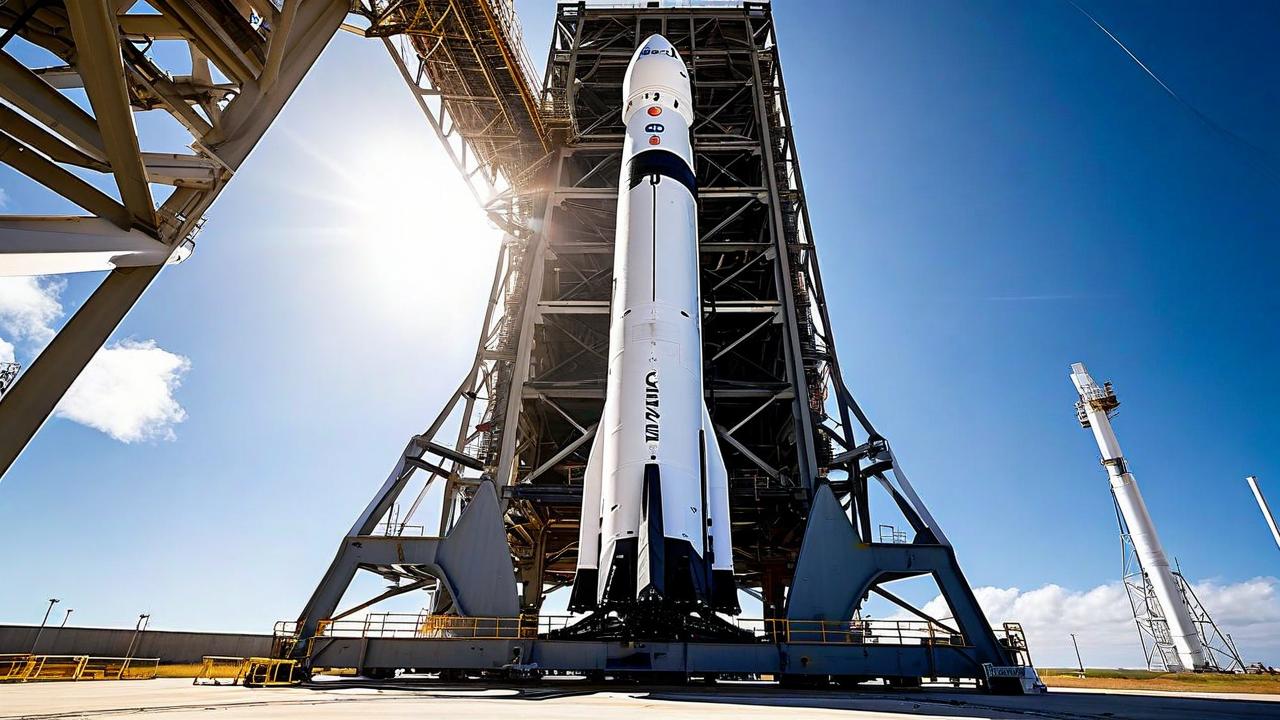
*this image is generated using AI for illustrative purposes only.
Elon Musk stated that Goldman Sachs’ estimate of a $1.8 trillion global space economy by 2035 is too conservative, arguing that reusable rockets, satellite networks, and orbital computing could create a significantly larger market. The comment followed the release of Goldman’s "Second Space Age" report, which projects the sector as a new pillar of the industrial economy driven by lower launch costs and private capital.
SpaceX Financial Performance
Space Exploration Technologies Corp. (NASDAQ: SPCX) demonstrated strong growth in its first public quarterly report. Second-quarter revenue nearly doubled to $7.8 billion, while the company maintained a substantial order book. Starlink, a key revenue driver, saw its subscriber base double to 12 million, contributing to a 66% rise in segment revenue.
| Metric: | Q2 Value | Change |
|---|---|---|
| Revenue: | $7.8 billion | Up 92% |
| Starlink Subscribers: | 12 million | Doubled |
| Backlog: | $47.5 billion | N/A |
| Launches YTD: | 78 | N/A |
The company’s total backlog stands at $47.5 billion, reflecting sustained demand for its launch and connectivity services. SpaceX has conducted 78 launches year-to-date, supporting operations across 167 countries.
Orbital Infrastructure Ambitions
Musk’s view that the market will exceed Goldman’s benchmark relies heavily on the expansion of orbital infrastructure. SpaceX plans to launch at least 1,000 next-generation Starlink V3 satellites within a year. Additionally, the company has sought approval for up to one million solar-powered data-center satellites to support orbital AI computing, with demonstrations targeted for late 2027.
What the Numbers Show
The divergence between Musk’s qualitative assessment and Goldman’s quantitative forecast highlights differing views on the scalability of reusable launch systems. While Goldman cites launch cost reductions from roughly $55,000 per kilogram during the Space Shuttle era to around $3,000 today, Musk implies that full reusability via Starship could drive costs lower still, unlocking markets such as point-to-point Earth transportation and Mars settlement that are not fully captured in current commercial models.
SpaceX shares were down 0.73% to $142.29 in overnight trading on Tuesday.

How might the potential approval of one million orbital data-center satellites impact global energy consumption and regulatory frameworks for space debris?
Could the introduction of Starship-driven point-to-point Earth transportation disrupt traditional aviation and logistics markets before 2035?
What are the implications for traditional aerospace competitors if SpaceX continues to lower launch costs below the $3,000 per kilogram threshold?
 20
20










 Access Market Heat-map & Insights
  Create, Save & Share your Screener
  Use 200+ Screening Filters





