

SpaceX closes $60 billion Cursor acquisition to boost AI ambitions


SpaceX finalized its $60 billion all-stock acquisition of Cursor, gaining access to over 50,000 enterprise clients and critical developer data. The deal aims to leverage SpaceX's compute infrastructure to enhance Grok AI models. While Morgan Stanley projects Cursor's revenue could reach $33 billion by 2030, prediction markets currently favor competitors Anthropic and OpenAI for coding model leadership.

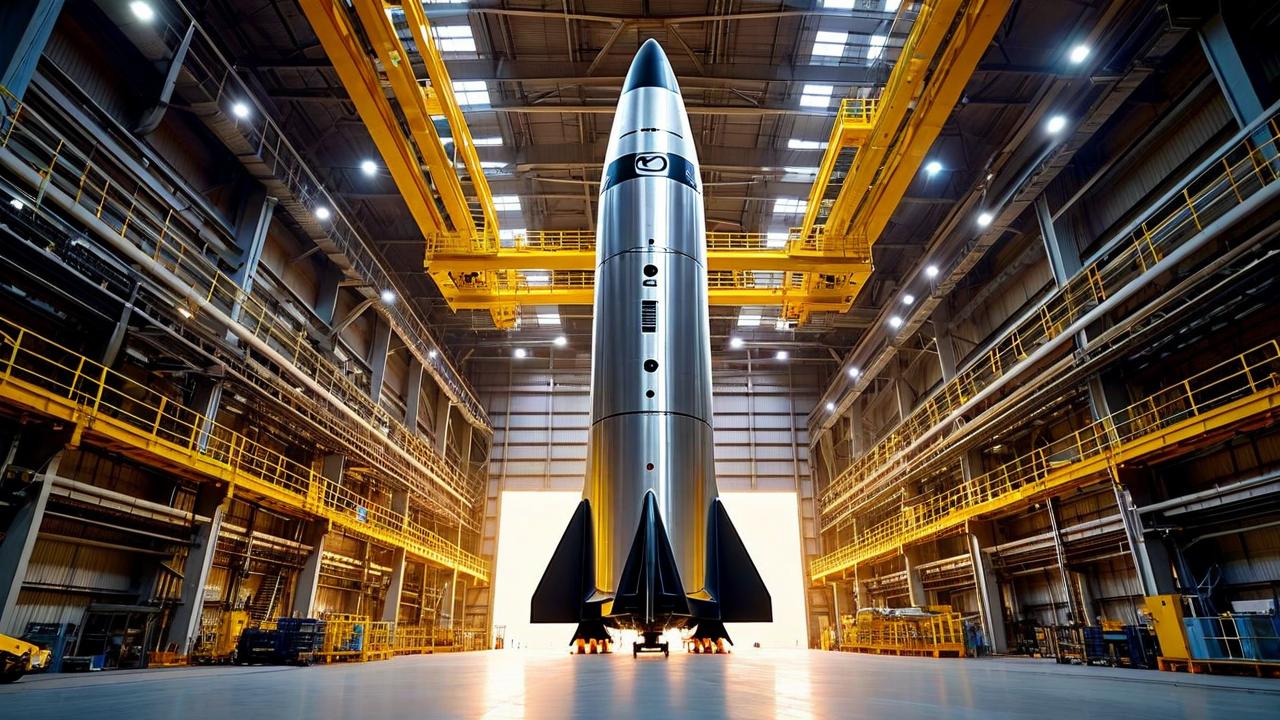

*this image is generated using AI for illustrative purposes only.
SpaceX (NASDAQ: SPCX) closed its $60 billion all-stock acquisition of Cursor on Friday, securing a strategic asset aimed at accelerating its artificial intelligence capabilities. The transaction, announced shortly after the company’s initial public offering, grants SpaceX access to Cursor’s extensive user base and proprietary data streams.
Cursor confirmed the closing on X and stated in a blog post that the integration provides access to what it described as the world’s largest GPU fleet. The company pointed to the recent release of Grok 4.6 as an early indicator of the combined entity’s potential.
Strategic Rationale
Analysts indicate the acquisition delivers three critical components for Elon Musk’s AI strategy: a large base of professional developers, established enterprise distribution channels, and a continuous stream of developer interaction data. PitchBook analyst Harrison Rolfes noted that owning a tool trusted daily by professional developers offers a faster path to enterprise AI revenue than competing solely in the model race.
Cursor reports usage by more than 50,000 enterprises, including 64% of the Fortune 500. Nvidia Corp. (NASDAQ: NVDA) CEO Jensen Huang has identified Cursor as his “favorite enterprise AI service,” noting that every Nvidia engineer now utilizes AI assistance for coding.
Data and Compute Synergies
The merger addresses compute constraints previously cited by Cursor. In April, the startup stated it was bottlenecked by compute capacity, observing that each increase in compute resulted in meaningfully more capable models. SpaceX highlighted that combining Cursor’s distribution with its Colossus training supercomputer, which it described as having “million H100 equivalent” capacity, could enable the development of highly capable models.
Cursor’s user base generates significant data on developer interactions with codebases. This data was used to jointly train Grok 4.5 with SpaceXAI on trillions of tokens in July.
Market Outlook and Valuation
Morgan Stanley forecasts Cursor’s annual recurring revenue run rate could climb from approximately $4 billion in June to $33 billion by 2030. Analyst Adam Jonas suggested that increased visibility into the Cursor-Grok synergy could reduce the implied valuation discount on SpaceX’s AI business. The bank maintains a $600 bull case target for SpaceX stock.
Despite the strategic fit, prediction market traders remain cautious about immediate dominance. On Kalshi, nearly $1 million was traded on markets forecasting the best AI coding model by the end of 2026. xAI holds a 13% probability of winning, trailing Anthropic at 54% and OpenAI at 30%.
What the Numbers Show
The valuation implies a significant premium on future growth potential rather than current earnings. With an acquisition price of $60 billion and a projected annual recurring revenue of $33 billion by 2030, the deal prices in substantial expansion over the next five years. The reliance on Cursor’s existing enterprise penetration (64% of Fortune 500) suggests the primary value driver is immediate distribution scale rather than organic user acquisition.

How will the integration of Cursor's enterprise distribution channels impact the revenue growth trajectory of SpaceX's AI division relative to its traditional aerospace business?
What specific regulatory or antitrust scrutiny might arise from SpaceX's consolidation of massive compute infrastructure with dominant developer tooling?
Could the reliance on Cursor's existing Fortune 500 client base create a bottleneck in upselling higher-tier AI services if competitors like Anthropic or OpenAI offer superior model performance?
 19
19










 Access Market Heat-map & Insights
  Create, Save & Share your Screener
  Use 200+ Screening Filters





