

SpaceX targets $100 billion annual run rate as AI revenue surges


SpaceX aims for a $100 billion annual revenue run rate by year-end, driven by AI compute sales. Musk projects AI revenue will exceed its Starlink unit in September. Q2 AI revenue was $2.56 billion versus $4.29 billion for connectivity. The strategy leverages rapid construction speed to command a premium price of $14 per hour for GB300 capacity, compared to $3 per hour for conventional alternatives.



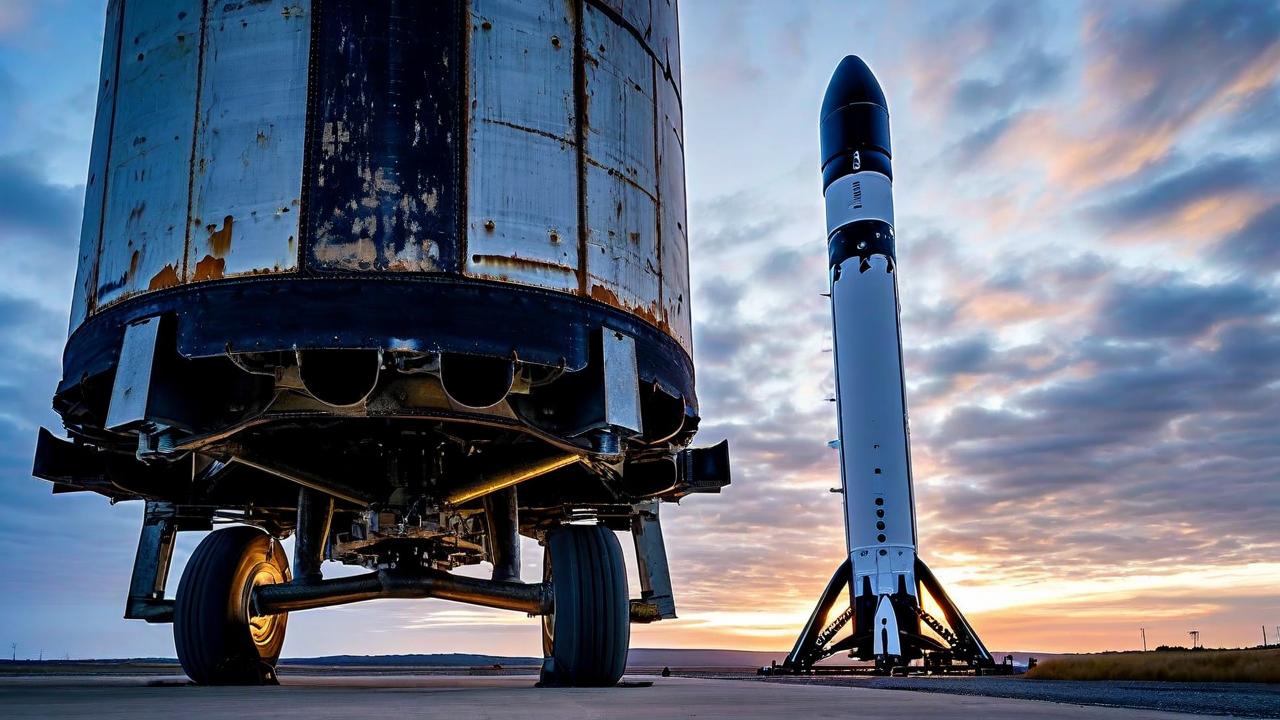
*this image is generated using AI for illustrative purposes only.
SpaceX CEO Elon Musk stated that artificial intelligence revenue will exceed all other business segments in September, significantly outpacing the rest of the company in the fourth quarter. The forecast signals a rapid shift in the company's revenue mix, with AI currently generating $2.56 billion of the $7.81 billion reported for the second quarter, trailing the $4.29 billion from its Starlink-led connectivity unit.
The company is targeting a roughly $100 billion annualized revenue run rate by year-end, more than triple the roughly $31 billion pace implied by the second quarter results. This aggressive growth target relies on scaling compute capacity and leveraging premium pricing for speed.
Revenue Composition and Growth Target
| Metric: | Value |
|---|---|
| Total Q2 Revenue: | $7.81 billion |
| Q2 AI Revenue: | $2.56 billion |
| Q2 Connectivity Revenue: | $4.29 billion |
| Target Annual Run Rate: | $100 billion |
The path to the $100 billion target involves monetizing scarce compute capacity at premium rates. SemiAnalysis estimates that one megawatt of cutting-edge Nvidia Corp. compute running frontier AI inference can support roughly $100 million in annual revenue. Due to scarcity, immediately available compute could rent for around $30 million to $50 million per megawatt each year.
SpaceX expects to have more than two gigawatts of compute capacity online by year-end. At SemiAnalysis's $40 million-per-megawatt assumption, two gigawatts of fully rented capacity would imply $80 billion in annualized revenue. CFO Bret Johnsen noted that new AI investments have payback periods of less than a year, suggesting rapid capital efficiency.
What the Numbers Show
SpaceX is effectively charging a significant premium for speed over conventional infrastructure. A recent deal with Alphabet Inc. illustrates this dynamic, with SemiAnalysis estimating SpaceX charges Google about $14 per hour for GB300 capacity, versus roughly $3 per hour for comparable conventional compute. This four-fold price difference reflects the timing advantage, as conventional data centers take 12 to 18 months to come online, while SpaceX can deliver large blocks of capacity within months.
Construction Speed and Market Sentiment
Musk has argued that building data centers is relatively simple compared with rocketry, noting that rockets "desperately want to blow themselves into tiny pieces." The execution record supports this claim. Musk's xAI built Colossus, a 100,000-GPU supercomputer, in 122 days, then doubled it to 200,000 GPUs in another 92 days. Nvidia said training began just 19 days after the first rack arrived.
SemiAnalysis estimates peak construction labor per gigawatt at roughly one-third the level of even the fastest conventional developers. Prediction-market traders are leaning bullish in the near term, with Polymarket pricing roughly a 73% chance SpaceX shares reclaim $140 by the end of August.

How will the rapid scaling of SpaceX's compute capacity impact Nvidia's supply chain constraints and pricing power for next-generation GPUs?
What regulatory or antitrust scrutiny might arise from SpaceX's ability to deliver AI infrastructure at a fraction of the time and cost of traditional hyperscalers?
Could the premium pricing model for speed create a two-tiered AI market, and how might this affect smaller tech companies lacking access to such rapid deployment?
 16
16





 Access Market Heat-map & Insights
  Create, Save & Share your Screener
  Use 200+ Screening Filters





