

UltraTech Cement becomes first Indian firm to cross 2 GW green capacity


- UltraTech Cement becomes first Indian cement firm to surpass 2 GW captive green energy capacity
- Cumulative 2,024 MW capacity now meets 48% of total power requirements
- Portfolio includes 1,580 MW renewables and 444 MW waste heat recovery systems
- Company targets 85% green energy share in power mix by 2030

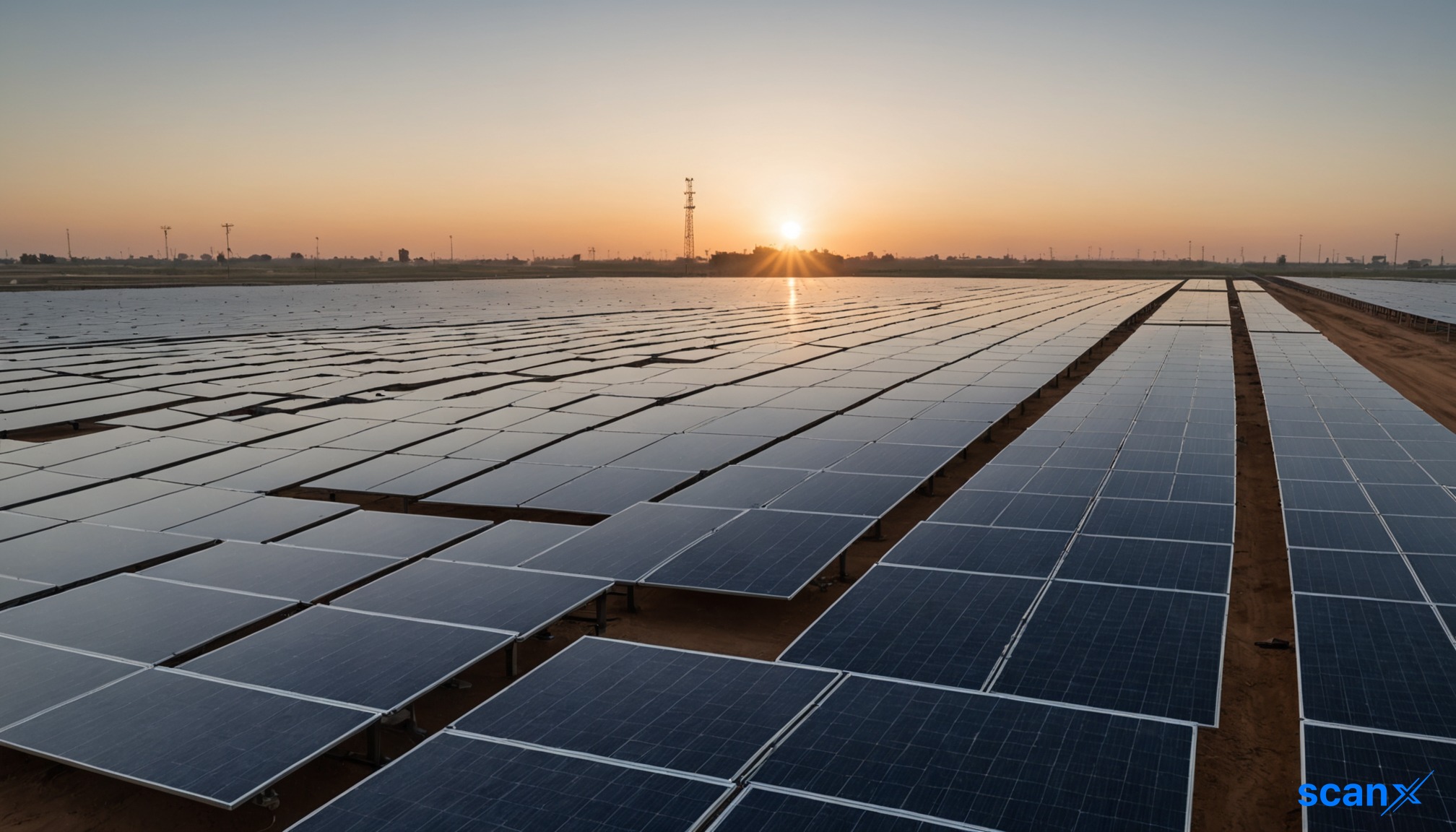

*this image is generated using AI for illustrative purposes only.
UltraTech Cement has become the first cement company in India to commission over 2,024 MW of green energy capacity for captive use. This milestone was achieved following the addition of 116.55 MW wind capacity in Rajasthan and 10 MW waste heat recovery capacity in Karnataka.
The cumulative capacity now meets approximately 48% of the company's current power requirements. The portfolio comprises 1,580 MW of renewable energy and 444 MW of Waste Heat Recovery System (WHRS) capacity. In FY27 so far, nearly one-third of UltraTech's 76 Indian manufacturing units have maintained green energy utilisation above 50%, with five units exceeding 95%.
Capacity Composition and Recent Additions
The latest expansion includes the commissioning of an Inter-State Transmission System (ISTS)-connected wind-solar hybrid project in Barmer, Rajasthan, and a WHRS unit at the Sarlanagar integrated manufacturing facility in Karnataka. These additions follow the commissioning of 430 MW of green energy capacity in FY26.
| Component | Capacity | Share of Total Green Energy |
|---|---|---|
| Renewable Energy | 1,580 MW | 78.1% |
| Waste Heat Recovery (WHRS) | 444 MW | 21.9% |
| Total Installed Capacity | 2,024 MW | 100% |
Strategic Shift Away From Thermal Power
UltraTech has not invested in new captive thermal power capacity for more than ten years, covering both greenfield projects and brownfield expansions. K C Jhanwar, Managing Director, stated that crossing the 2 GW mark reflects a decade-long strategy to balance reliability with rapid transition in a hard-to-abate sector. The company notes that this shift significantly reduces exposure to fossil fuel supply constraints and power price volatility.
What the Numbers Show
The data reveals a strong correlation between capacity scale and operational resilience. With 48% of power needs met by green sources, the company has effectively halved its dependence on conventional grid power and fossil fuels compared to pre-transition baselines implied by the current mix. Furthermore, the fact that five units exceed 95% green utilisation demonstrates that high-penetration renewable models are technically viable even in energy-intensive cement production, challenging the notion that such sectors must rely heavily on thermal baseloads.
Future Targets and Storage Integration
UltraTech aims to increase the share of green energy in its total power mix to 85% by 2030. As a member of RE100, it has committed to meeting 100% of electricity requirements through renewable sources by 2050. To support intermittent renewables, the company is integrating Battery Energy Storage Systems (BESS). In 2025, it operationalised India's first on-site hybrid round-the-clock renewable energy project at Sewagram Cement Works in Gujarat, combining solar, wind, and battery storage.
Historical Stock Returns for UltraTech Cement
| 1 Day | 5 Days | 1 Month | 6 Months | 1 Year | 5 Years |
|---|---|---|---|---|---|
| +1.32% | -1.85% | -4.82% | +1.28% | -10.29% | +45.00% |

How will UltraTech's 85% green energy target by 2030 impact its long-term capital expenditure plans for Battery Energy Storage Systems (BESS)?
What competitive pressure might this milestone place on other major Indian cement manufacturers to accelerate their own decarbonization timelines?
How does the reliance on Inter-State Transmission Systems (ISTS) for wind-solar hybrids expose UltraTech to regulatory changes in India's power trading framework?
 20
20





 Access 50+ Readymade Screeners
  Use 200+ Custom Filters
  Get Full Market Insights





