

Lantronix Q4 revenue beats estimates at $31.2 million


- Q4 revenue reached $31.2 million, an 8% YoY increase, beating estimates
- Unmanned systems contributed $12.6 million in FY26, driven by regulatory tailwinds
- Non-GAAP gross margin expanded to 44.1% in Q4 from 40.6% a year ago
- Company ended debt-free with $60 million in cash after raising $44 million
- Acquired Wesima Networks' IoT business to boost software mix to 10%

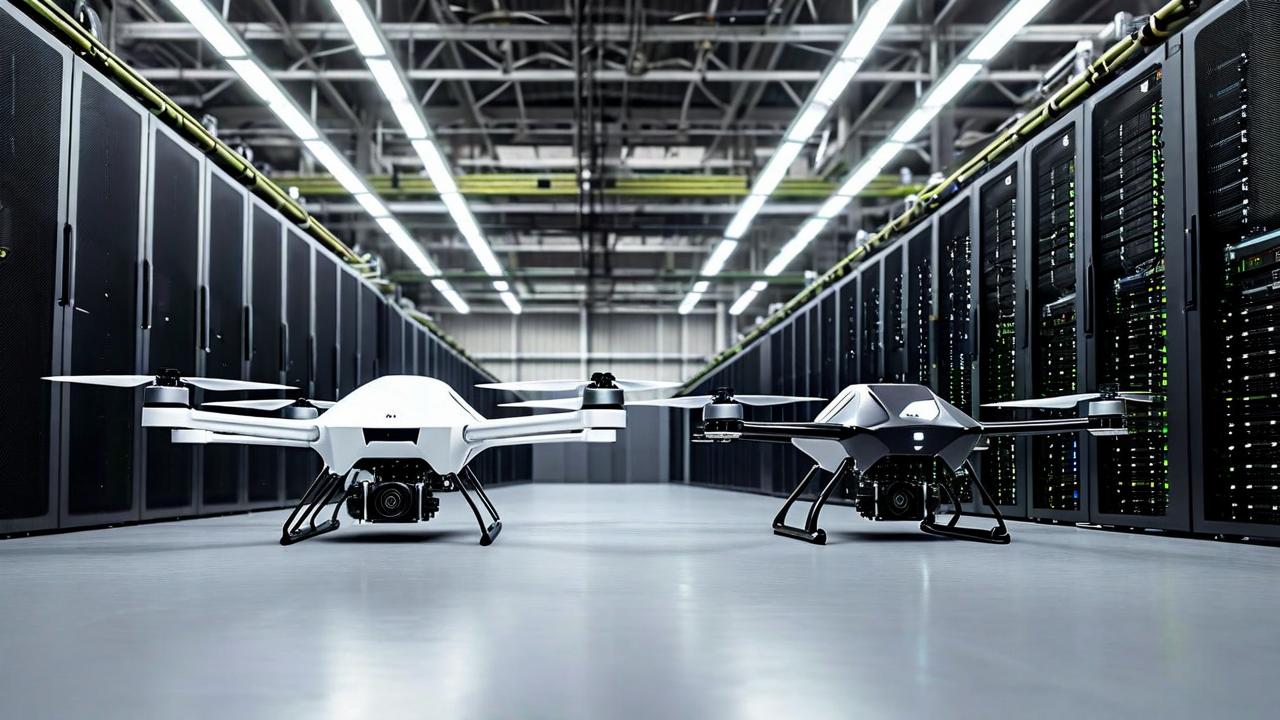

*this image is generated using AI for illustrative purposes only.
Lantronix Inc (NASDAQ: LTRX) reported fiscal fourth-quarter revenue of $31.2 million, beating the $30.724 million estimate. The adjusted earnings per share of $0.04 were in line with market expectations.
The Irvine-based Edge AI and Industrial IoT provider closed the year with a GAAP net loss of $0.01 per share, while non-GAAP EPS stood at $0.04. This represents an 8% year-over-year increase from $28.8 million in Q4FY25.
The company delivered full-year FY26 revenue of $120.9 million, with unmanned systems emerging as a significant growth driver, contributing $12.6 million—above the midpoint of its prior guidance range.
Financial Performance
Lantronix achieved its fifth consecutive quarter of sequential revenue growth, signaling stabilization in its core business. For the full year, the company recorded a GAAP net loss per share of ($0.10) compared to ($0.29) in FY25. On a non-GAAP basis, earnings per share improved to $0.15 from $0.14 in the prior year.
Gross margins improved significantly, reaching 44.1% on a non-GAAP basis in Q4, up from 40.6% a year ago. This expansion was driven by favorable revenue mix and supply chain efficiency, despite industry-wide memory cost pressures.
| Metric | Q4FY26 | Q4FY25 | Change |
|---|---|---|---|
| Net Revenue | $31.2 million | $28.8 million | +8% |
| GAAP EPS | ($0.01) | ($0.07) | Improved |
| Non-GAAP EPS | $0.04 | $0.01 | +300% |
| Non-GAAP Gross Margin | 44.1% | 40.6% | +350 bps |
What the Numbers Show
The divergence between GAAP and non-GAAP results highlights the impact of non-cash charges on reported profitability. While GAAP metrics reflect a net loss, non-GAAP adjustments—including share-based compensation, depreciation, and restructuring costs—reveal an underlying operational profit. This suggests that core operational efficiency is improving even as accounting-based losses persist due to strategic investments and one-time charges.
Furthermore, the acquisition of Wesima Networks’ industrial IoT business for $11.7 million immediately boosts the software and services revenue mix to approximately 10%. With gross margins in the mid-to-high 60s for this segment, the move supports the company's transition toward a higher-margin, recurring-revenue model.
Balance Sheet Strength
Lantronix significantly strengthened its financial position, ending FY26 with $60 million in cash and no debt. This represents a substantial improvement from June 30, 2025, when the company held $20.1 million in cash and carried long-term debt obligations. The company raised over $44 million in net proceeds through public and ATM offerings during the quarter and repaid the remaining $8.7 million of debt.
The debt-free status provides greater flexibility for future acquisitions and R&D investments. Operating cash flow remained positive at approximately $1.9 million for the quarter and $9.9 million for the full fiscal year.
Strategic Initiatives
The company expanded its unmanned systems engagements to more than 30 at year-end, up from approximately 10 at the start of FY26. Key partnerships include collaborations with Swarmer Inc for custom compute platforms and DoD Solution for drone autonomy integration.
Regulatory tailwinds, including FCC restrictions on DJI products and new Section 232 tariffs on foreign drones, are accelerating demand for domestic, NDAA-compliant solutions like Lantronix’s. The company also secured a design win with SambaNova Systems for its out-of-band management solution in AI infrastructure racks.
Additionally, Lantronix acquired Vecima Networks’ Industrial IoT business, including the Nero Global Tracking SaaS platform. This acquisition is expected to add approximately $5.3 million in annual revenue, including $4.5 million in annual recurring revenue (ARR).
Outlook
Management expects double-digit revenue growth in fiscal 2027. For Q1FY27, the company provided guidance of:
- Revenue: $31.0 million to $33.0 million
- Non-GAAP EPS: $0.04 to $0.06
CEO Saleel Awsare stated that Lantronix is transforming from a broad-based hardware provider into a focused, higher-margin solutions platform, with unmanned systems expected to represent 15% to 20% of total revenue in FY27.

How might the integration of Vecima Networks' Nero Global Tracking SaaS platform impact Lantronix's customer retention rates and recurring revenue stability in FY27?
What specific risks could arise from Lantronix's heavy reliance on regulatory tailwinds like FCC restrictions on DJI and Section 232 tariffs for its unmanned systems growth?
Given the $60 million cash position and debt-free status, what is management's timeline or criteria for deploying capital toward further acquisitions versus R&D in the Edge AI space?
 16
16













 Access 50+ Readymade Screeners
  Use 200+ Custom Filters
  Get Full Market Insights





