

Infleqtion to deploy fault-tolerant quantum computer in Illinois


Infleqtion announced the deployment of its fault-tolerant, neutral-atom quantum computer at the Illinois Quantum & Microelectronics Park by 2027. The Sqale system features over 50 logical qubits and integrates with NVIDIA NVQLink. The company also opened the Chicago Quantum Innovation Center to focus on energy grid optimization.


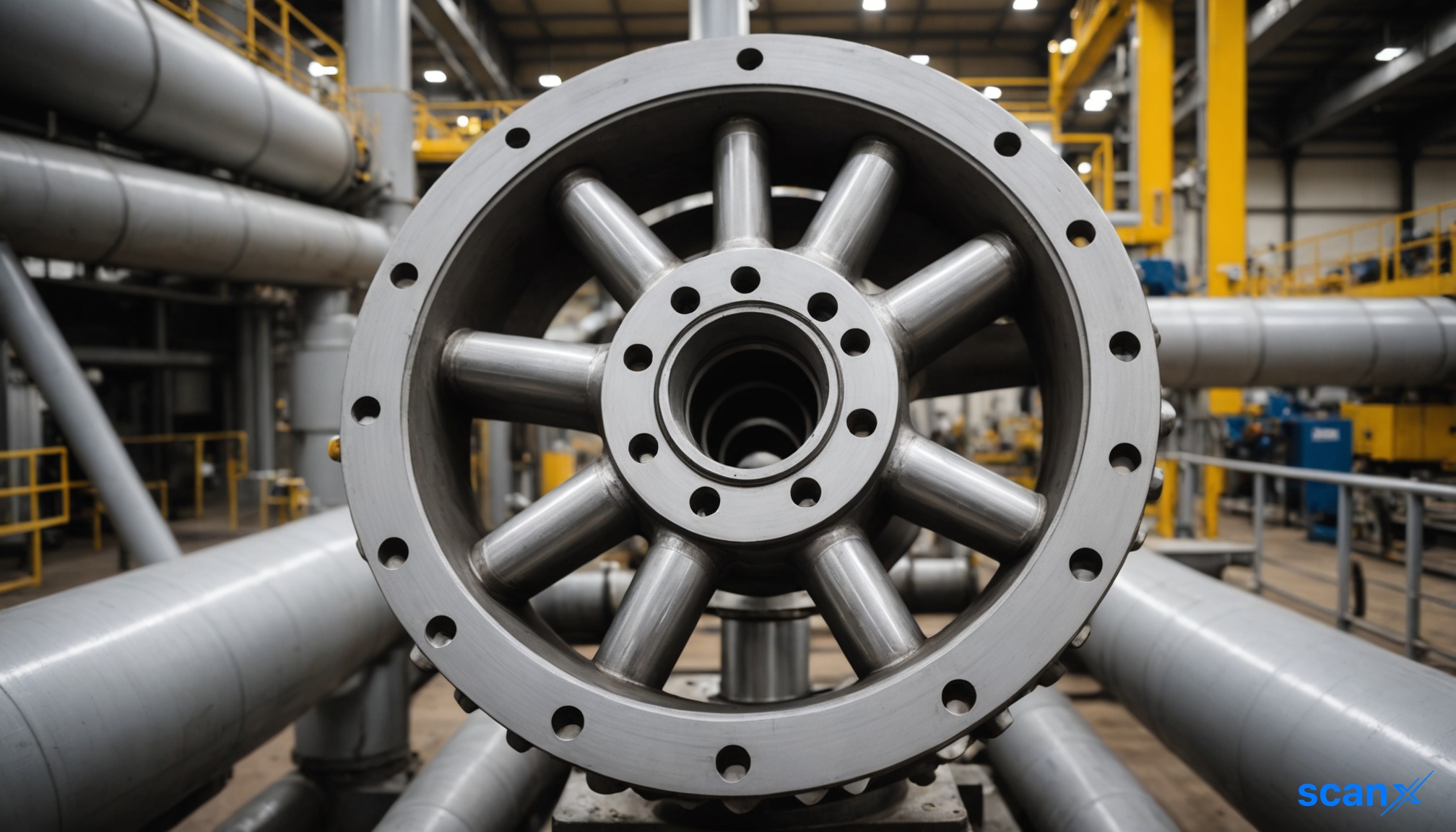
*this image is generated using AI for illustrative purposes only.
Infleqtion will deploy its fault-tolerant, neutral-atom quantum computer at the Illinois Quantum & Microelectronics Park (IQMP), with delivery planned in 2027. The company also opened a new Chicago Quantum Innovation Center to expand its work on quantum computing applications and continues to grow its Illinois workforce and investment. The Center aims to begin its work as a center of excellence for applying quantum computing to the American energy grid.
Infleqtion's Sqale system is a full-stack quantum computing platform built for fault-tolerant performance and integrated with NVIDIA NVQLink, enabling low-latency coupling between the quantum processor and GPU-accelerated computing. The system is designed to demonstrate more than 50 logical qubits on a path toward the program's 100-logical-qubit target, with an architecture that supports scaling beyond 1,000 physical qubits. Through Infleqtion's Superstaq software, researchers and developers will be able to access the platform via the National Quantum Algorithm Center (NQAC).
Putting Quantum Computing to Work on Energy
Infleqtion's new Chicago Quantum Innovation Center is where that access turns into practical applications. The Center opens with a focus on the American energy grid, applying quantum optimization to problems grid operators face today, including unit commitment, contingency analysis and nuclear fuel loading, with the goal of safer, more reliable operations.
"Energy is one of the best proving grounds for quantum computing because the problems are consequential and immediate," said Pranav Gokhale, CTO and co-founder at Infleqtion. "AI data centers are pulling more power than the grid was built to handle, and old tools can't keep up."
Key Specifications of the Sqale System
| Feature | Specification |
|---|---|
| Logical Qubits Target | More than 50 logical qubits (path to 100) |
| Physical Qubits Scaling | Supports scaling beyond 1,000 physical qubits |
| Integration | NVIDIA NVQLink for low-latency coupling |
| Software Access | Superstaq via National Quantum Algorithm Center |
Infleqtion holds an ARPA-E-funded award for the Enhancing Neutral-atom Computers for Optimizing Delivery of Energy (ENCODE) project and is a partner on an energy-sector award through the National Quantum Algorithm Center's Grand Challenges program, led by Professor Fred Chong at the University of Chicago, alongside Constellation Energy and EPRI.
Infleqtion's neutral-atom systems are already operational in the United Kingdom — including the UK's only operational 100-physical-qubit quantum computing system, delivered to the National Quantum Computing Centre — and deployed in Japan. The Illinois system intends to bring that same operating experience, and the same technology platform, to American infrastructure.

How will the 2027 deployment timeline align with the projected energy demands of AI data centers that require immediate solutions?
What are the potential regulatory hurdles for integrating quantum optimization solutions into critical American energy grid infrastructure?
Could the success of the ENCODE project trigger increased government funding for quantum applications in other critical infrastructure sectors?
 18
18






 Access Market Heat-map & Insights
  Create, Save & Share your Screener
  Use 200+ Screening Filters





