

Dell Q2 EPS beats 43% on AI demand; analysts raise targets


- Adjusted EPS reached $7.04, beating estimates by 43%
- Revenue hit $46.97 billion, up 58% YoY
- Record $60.9 billion in AI server orders booked
- Full-year FY27 revenue guidance raised to $192 billion
- Stock rose 7.65% in premarket trading Wednesday

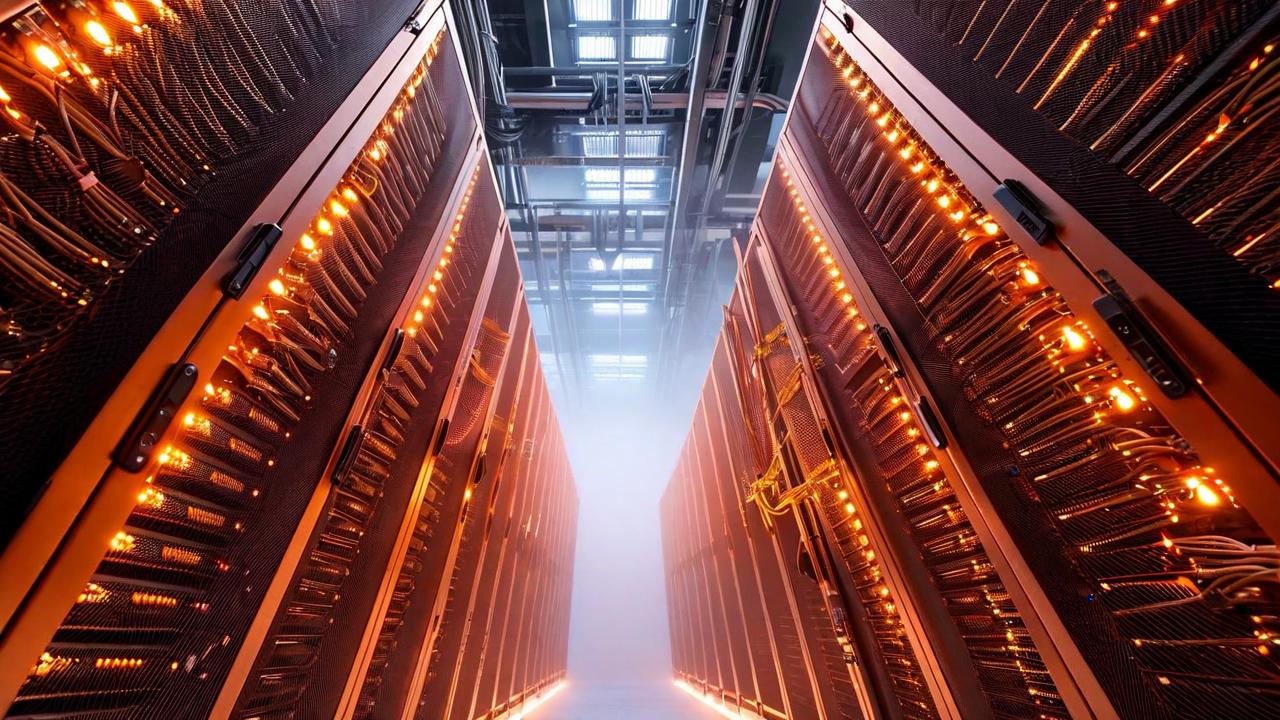

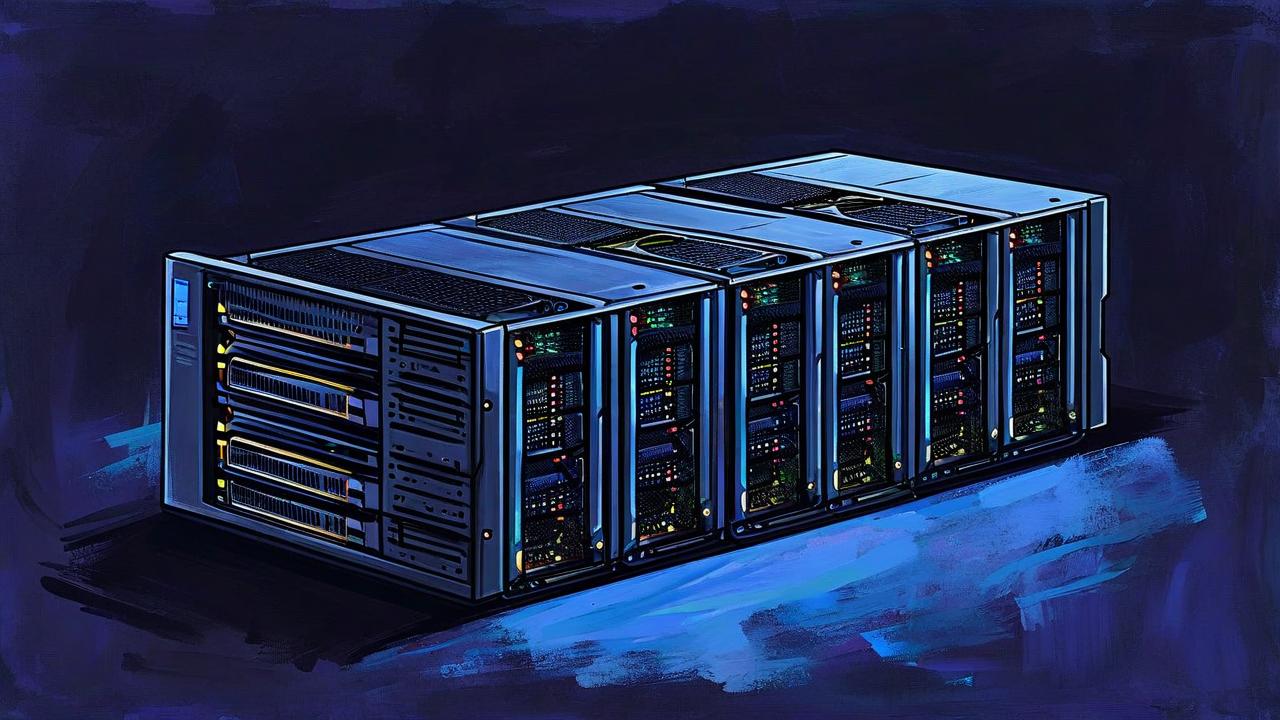
*this image is generated using AI for illustrative purposes only.
Dell Technologies (NYSE: DELL) shares rose in premarket trading Wednesday after the company posted a significant earnings beat for its second quarter of fiscal year 2027. The rally occurred despite broader market weakness, with Nasdaq and S&P 500 futures slipping.
Adjusted earnings per share reached $7.04, surpassing the analyst consensus estimate of $4.91 by 43 percent. Quarterly sales climbed to $46.97 billion, exceeding the $44.95 billion estimate by 4.5 percent and representing a 58 percent year-over-year increase.
Supply Chain Constraints
CEO Jeff Clarke revealed that the AI boom is running on an "endless scrambling for scarce parts." On the earnings call, Clarke detailed shortages spanning nearly every layer of the hardware stack, including DRAM, NAND, CPUs, disk drives, power components, substrates, and optical parts.
Clarke described the situation as "welcome to the life of a supply chain person at Dell Technologies," noting that the company is "chasing parts" and that "demand outran supply" both last quarter and this quarter. Despite these challenges, Dell has responded by optimizing component allocation, shifting resources toward its infrastructure business as PC demand softened.
Industry context underscores the severity of these bottlenecks. Counterpoint Research director MS Hwang stated last month that competing memory expansion plans will not translate into meaningful production until "2028 at the earliest." SK Hynix Inc. (NASDAQ: SKHY) CEO Kwak Noh-Jung warned that the current memory shortage could persist through 2030.
Segment Performance
The Infrastructure Solutions Group (ISG) drove much of the growth, reporting record revenue of $31.8 billion, up 89 percent year-over-year. Within ISG, AI-Optimized Servers revenue hit a record $16.4 billion, a 100 percent year-over-year increase. Traditional Servers and Networking revenue also reached a record $10.5 billion, up 122 percent. Storage revenue stood at $4.9 billion, up 26 percent. ISG operating income surged 225 percent to $4.8 billion.
The Client Solutions Group (CSG) reported revenue of $15 billion, up 20 percent year-over-year. Commercial Client revenue was $13.2 billion, up 22 percent, while Consumer revenue was $1.8 billion, up 7 percent. CSG operating income rose 42 percent to $1.1 billion.
JPMorgan analyst Joseph Cardoso noted that growth extends beyond AI, with traditional server revenue more than doubling as customers modernized data centers. About 1.2 million installed assets still use Dell’s 14th-generation technology or older systems. Cardoso expects security needs, data-center resilience and demand from AI inference workloads to drive further upgrades.
What the Numbers Show
The divergence between the revenue beat and the earnings beat highlights a notable acceleration in profitability relative to sales growth. While revenue growth of 58 percent is strong, the surge in year-over-year earnings per share suggests significant operational leverage or margin expansion during the quarter. The fact that the EPS beat was nearly ten times larger than the revenue beat indicates that profit generation outpaced top-line momentum considerably against analyst models.
| Metric | Current Quarter | Prior Year Same Period | YoY Change |
|---|---|---|---|
| Adjusted EPS | $7.04 | $2.32 | +203.45% |
| Revenue | $46.97 billion | $29.78 billion | +58% |
Market Reaction and Analyst Commentary
Dell stock rose 7.65 percent to $457.50 in premarket trading Wednesday. This follows an 8.47 percent rise to $461 in Tuesday’s extended trading after the report, despite closing 6.8 percent lower at $425 during regular hours. The results drew an emphatic "WOW" from Jim Cramer, who posted on X: "Dell-on tonight!! WOW." Analyst Ben Bajarin compared Dell’s trajectory to Nvidia Corp., stating that investors who like Nvidia’s growth will "really" like Dell’s.
Patrick Moorhead, CEO of Moor Insights & Strategy, noted that Dell is doing "exactly what it told investors" at its capital market day, citing supply chain advantages and a broad portfolio as key strengths. Daniel Newman, CEO of Futurum Group, called it a "monster quarter" with a powerful demand signal for the AI buildout.
COO Jeff Clarke noted that customers are investing in IT environments as value drivers, particularly in AI servers. The company booked a record $60.9 billion in AI server orders and exited the quarter with a record $95 billion backlog. Over the past four quarters, the company booked $131.7 billion in orders, while its five-quarter pipeline continued to grow sequentially.
JPMorgan maintained an Overweight rating on Dell and raised its December 2027 price forecast to $635 from $565. The firm called the company’s execution "best in class," citing record AI orders, disciplined pricing and record ISG margins. Raymond James maintained an Outperform rating and raised its price forecast to $617. UBS kept a Neutral rating and lifted its forecast to $500. Bernstein maintained an Outperform rating and raised its forecast to $650. Bank of America maintained a Buy rating and raised its price forecast to $600. Deutsche Bank initiated coverage with a Hold rating and a $480 forecast. The stock holds a Buy consensus rating with an average price forecast of $526.63.
Technical Analysis and Outlook
Technically, the stock remained in a long-term uptrend. It traded 0.5 percent above its 20-day simple moving average of $457.18 and 5.8 percent above its 50-day average of $434.22. Shares stood 27.4 percent above the 100-day average and 85.4 percent above the 200-day average. However, momentum showed signs of cooling, with the moving average convergence divergence indicator remaining below its signal line and a negative histogram. Resistance stood near $463.50, with support around $424.
Looking ahead, Dell expects third-quarter adjusted EPS of $6.50, versus the $4.49 analyst estimate. Revenue guidance is set at $49 billion, compared to the $41.43 billion estimate.
Additionally, Dell raised its full-year fiscal 2027 revenue forecast to $192 billion and increased its adjusted EPS outlook to $25.50. The company now expects $74 billion in AI server revenue for fiscal 2027, up from its previous forecast of $60 billion. Shares have surged 232.55 percent year-to-date and 251.36 percent over the past year.
Long-Term AI Opportunity
Dell Technologies sees a more than $1 trillion opportunity in AI infrastructure through 2030, as surging inference demand and the rise of enterprise AI agents are expected to reshape data centers.
Clarke said the opportunity extends well beyond training AI models. "Agentic demand is reshaping the data center and the underlying infrastructure," he said, adding that inference-driven token demand could grow 87 times to 3,600 quadrillion tokens by 2030.
Dell expects training demand to increase fivefold to 850 zettaflops by 2030, while enterprise agentic AI could become the largest workload by 2028. More broadly, Clarke said Dell expects AI to account for 75 percent of all data center demand by 2030, requiring an additional 200 gigawatts of power.
Dell believes roughly half of that incremental data-center power demand will come from neocloud providers, sovereign customers and enterprises — markets where it already has a significant presence. "If you look at that math, we think the opportunity in front of us is more than a trillion dollars over that timeframe," Clarke said.
He added that Dell’s engineering expertise, global deployment capabilities and customer support give it an advantage as AI infrastructure becomes increasingly complex. "We believe we’re well-positioned," Clarke said. "The scale of our deployment capabilities is unmatched globally."
Dell is held by the Tortoise AI Infrastructure ETF (NYSE: TCAI), the GraniteShares 2x Long DELL Daily ETF (NASDAQ: DLLL) and the American Customer Satisfaction ETF (BATS: ACSI).

How might the persistent supply chain shortages for critical components like DRAM and CPUs through 2028-2030 impact Dell's ability to fulfill its record $95 billion backlog and meet raised revenue guidance?
Given that enterprise agentic AI is projected to become the largest workload by 2028, what specific hardware adaptations or software integrations is Dell prioritizing to capture this shift from training to inference-driven demand?
With AI expected to account for 75% of data center demand by 2030 requiring an additional 200 gigawatts of power, how is Dell collaborating with energy providers and neocloud customers to address potential power infrastructure bottlenecks?
 17
17







 Create Custom Screeners
  Access 200+ Pre-built Filters
  Use 50+ Readymade Screener





