Cathie Wood projects $10 trillion Starship revenue by 2030

scanx
Reviewed by
Anirudha BScanX News Team
Key Highlights
  • Cathie Wood projects $10 trillion annual Starship revenue by 2030 based on 10,000 launches
  • Elon Musk replied to the post on X saying "It's not impossible"
  • ARK estimates each Starship launch adds 61 Tbps capacity, implying $1 billion revenue
  • SpaceX generated $18.67 billion in revenue in 2025
  • Starship Flight 14 targets September 22 for first orbital flight
powered bylight_fuzz_icon
51091395

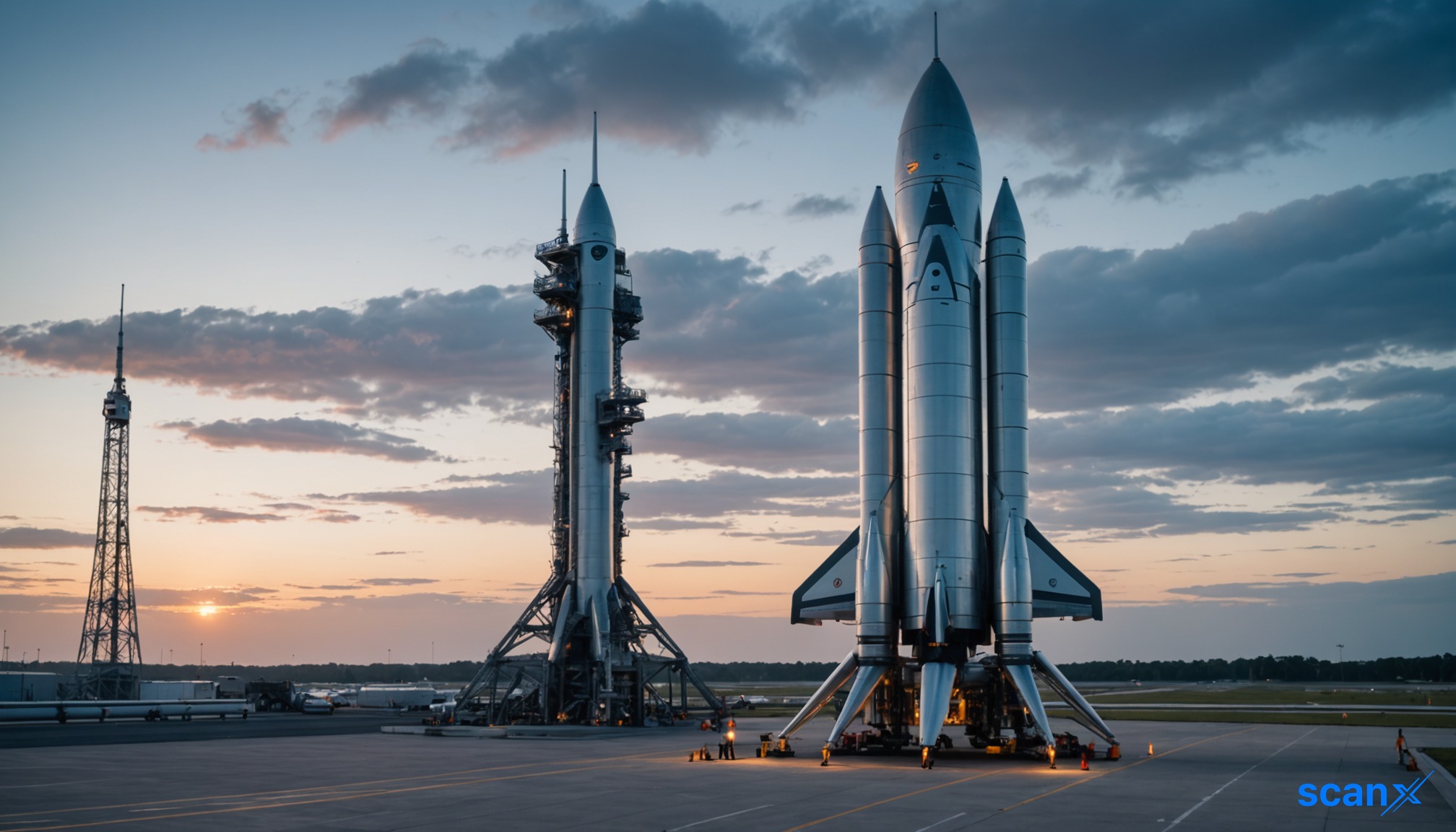
*this image is generated using AI for illustrative purposes only.

ARK Invest CEO Cathie Wood projects that Space Exploration Technologies Corp.’s (NASDAQ: SPCX) Starship vehicle could generate $10 trillion in annual revenue by 2030. Elon Musk responded to the estimate on X, stating, "It’s not impossible."

Revenue Projection Logic

Wood based the calculation on a projected launch cadence of 10,000 flights per year, with each launch generating $1 billion in revenue. She argued that if SpaceX achieves this volume, its recent IPO, valued at approximately $1.75 trillion, would represent a deep value opportunity in hindsight.

The revenue model relies heavily on Starlink capacity expansion. ARK researcher Sam Korus estimates Starlink currently monetizes roughly $19 million per terabit per second (Tbps) of capacity. A single Starship launch could add roughly 61 Tbps of capacity, implying about $1 billion in connectivity revenue at current rates. Korus noted that revenue per Tbps should decline as capacity expands.

Capacity and Deployment Milestones

SpaceX filings support the underlying capacity jump, though not the total revenue projection. Each next-generation V3 satellite is designed to deliver 1 Tbps of downlink capacity. Starship could deploy up to 60 V3 satellites at once, representing more than 20 times the downlink capacity of a Falcon 9 launch.

Elon Musk confirmed that SpaceX will begin deploying the Starlink V3 constellation this month. The network aims to deliver more than 100 times the bandwidth of the current roughly 11,000-satellite network. Starship Flight 14 is targeted for September 22, pending regulatory approval.

Financial Context and Market Reaction

SpaceX CFO Bret Johnsen stated that Flight 14 will carry production V3 satellites and mark Starship’s first "revenue-generating flight." This contrasts with Musk’s June comment that SpaceX might reach approximately $1 trillion in revenue by 2030. The company generated $18.67 billion in revenue in 2025.

SpaceX priced its June IPO at $135 per share, raising $75 billion at a valuation of roughly $1.77 trillion. Shares rose on their Nasdaq debut but were down 0.58% to $142.66 during after-hours trading on Tuesday.

What the Numbers Show

Wood’s $10 trillion annual revenue target implies a 54-fold increase from the $18.67 billion reported for 2025. This extrapolation assumes a linear scaling of monetization rates despite Korus’s caution that revenue per Tbps should decline as capacity expands.

Disclaimer: This article is AI-generated using data from ViewTrade. ScanX is not liable for any inaccuracies.

How might the anticipated decline in revenue per Tbps as Starlink capacity expands impact the feasibility of ARK Invest's $10 trillion annual revenue projection by 2030?

What regulatory hurdles could delay the September 22 target for Starship Flight 14, and how would such delays affect SpaceX's timeline for achieving a 10,000-flight annual cadence?

Given the divergence between Musk's $1 trillion revenue estimate and Wood's $10 trillion projection, which key operational metrics will be most critical in validating SpaceX's long-term valuation?

like20
dislike

Musk highly confident SpaceX will launch Nvidia AI computers in space in 2027

scanx
Reviewed by
Ritika DScanX News Team
Key Highlights
  • Elon Musk expresses high confidence in launching Nvidia VR NLV72 AI computers in space by late 2027
  • Experts view orbital data centers as a 2030s project due to cooling, radiation, and logistical hurdles
  • SpaceX CFO reveals a $13 billion ARR compute deal with an unnamed company
  • Additional compute agreements exist with Alphabet and Anthropic
  • SPCX shares fell 1.73% to $148.59 in overnight trading
powered bylight_fuzz_icon
50400134

*this image is generated using AI for illustrative purposes only.

Space Exploration Technologies Corp. (NASDAQ: SPCX) CEO Elon Musk has reaffirmed his high confidence that the company will launch Nvidia Corp. (NASDAQ: NVDA) AI computers into space by late 2027, despite industry experts characterizing the initiative as a next-decade challenge.

Vision for Orbital Infrastructure

Musk responded to social media speculation on Sunday, stating, "I am highly confident that SpaceX will be launching Nvidia VR NLV72 AI computers in space next year." This comment reinforces earlier disclosures that a space-optimized version of Nvidia’s Vera Rubin NVL72 system is designed for launch in the fourth quarter of 2027. The company’s AI unit, SpaceXAI, plans to utilize Nvidia Vera CPUs for a space-optimized Vera Rubin system, with significant scale expected in 2028.

The broader vision involves millions of solar-powered satellites equipped with AI chips. Musk had previously highlighted that this infrastructure could support a trillion-dollar revenue target by 2030, noting a non-zero chance of achieving this milestone.

Technical and Logistical Challenges

Despite Musk’s confidence, experts maintain that significant hurdles remain. Evelyn Chow, portfolio manager at Neuberger, described the timeline as an early 2030s event, citing the need for substantial satellite launches over the next four to five years. She identified cooling as a major technical issue, noting that terrestrial liquid cooling methods function differently in the vacuum of space. Radiation tolerance is also cited as a critical requirement.

Blaine Curcio, founder of Orbital Gateway Consulting, called the 2030s timeline a fair assessment but cautioned that SpaceX has previously surprised investors. He pointed out that GPUs evolve quickly, meaning a state-of-the-art data center launched at enormous cost might become obsolete within a couple of years.

Christopher Smith, a senior aerospace engineer at UC Berkeley’s Space Sciences Laboratory, highlighted tremendous logistical challenges for maintaining a constellation of 1 million satellites called Starmind. Smith’s calculations suggest SpaceX would need to launch more than nine Starship rockets daily to replace data center chips every five years, assuming each rocket carries about 60 satellites.

Compute Deals and Market Context

SpaceX CFO Bret Johnsen recently revealed that the company reached an agreement with an unnamed entity to provide compute capabilities resulting in annual recurring revenue (ARR) of $13 billion. SpaceX also has compute agreements in place with Alphabet Inc. (NASDAQ: GOOGL) (NASDAQ: GOOG) and Anthropic.

In parallel developments, the company unveiled the fourth-generation Starlink router, featuring faster peak speeds, better connectivity in congested areas, water resistance, and Wi-Fi 7 technology.

What the Numbers Show

The $13 billion ARR deal underscores the commercial ambition behind the orbital compute strategy, linking hardware deployment directly to substantial recurring revenue streams. However, the disparity between Musk’s 2027 launch target and the expert consensus of a 2030s timeline highlights the tension between aggressive corporate roadmaps and the physical constraints of space logistics, particularly regarding chip replacement cycles and launch frequency.

SPCX shares fell 1.73% to $148.59 during overnight trading.

Disclaimer: This article is AI-generated using data from ViewTrade. ScanX is not liable for any inaccuracies.

How will the rapid obsolescence cycle of GPU technology impact the long-term ROI of SpaceX's orbital data centers if hardware becomes outdated before its five-year replacement window?

What specific engineering solutions is SpaceX developing to address the critical challenges of liquid cooling and radiation tolerance for AI chips in a vacuum environment?

Could the logistical requirement of launching nine Starship rockets daily to maintain the Starmind constellation constrain SpaceX's capacity for other commercial or government missions?

like15
dislike

More News on space exploration technologies corp