

Beryl Drugs net profit falls 25% in FY26 to ₹42.48 lakh


- Net profit fell 25% YoY to ₹42.48 lakh in FY26 due to BFS shutdown
- Total revenue declined 14% to ₹1,931.02 lakh; EPS dropped to ₹0.84
- Long-term borrowings fully repaid; short-term debt stands at ₹239.13 lakh
- Shareholders to vote on raising RPT limit with Aminova Infusions to ₹8 crore

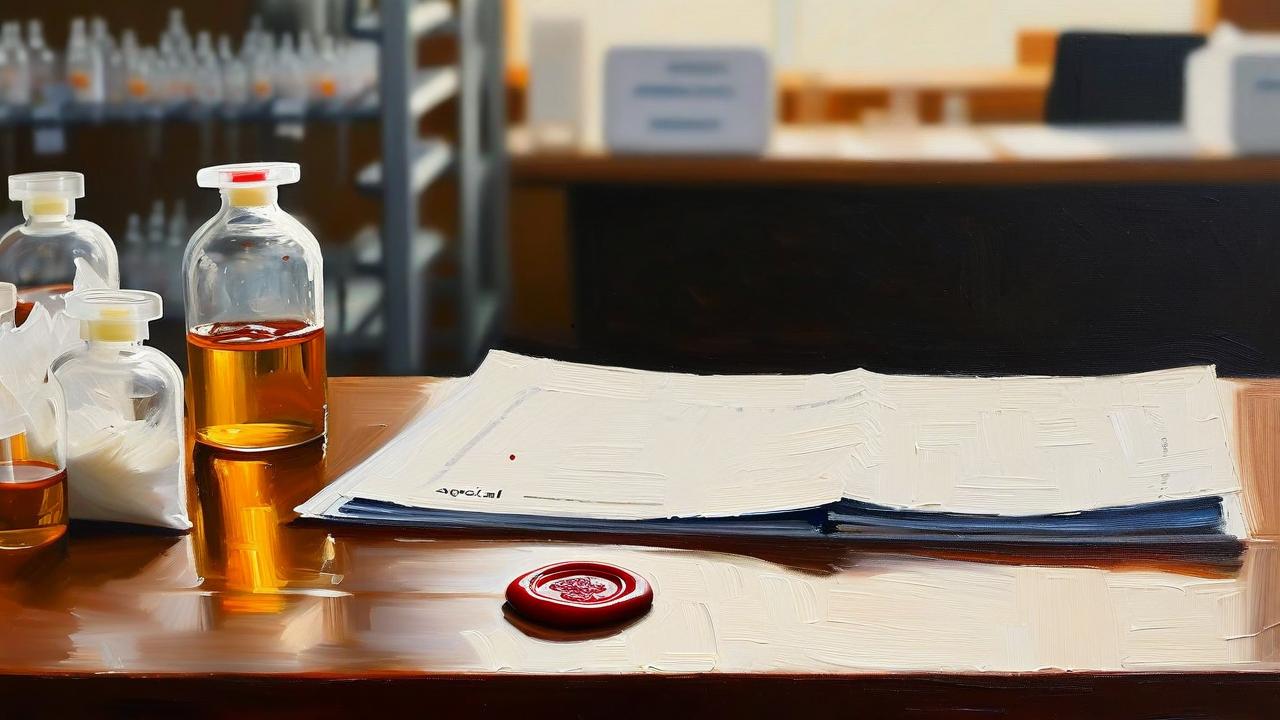

*this image is generated using AI for illustrative purposes only.
Beryl Drugs reported a net profit of ₹42.48 lakh for FY26, down from ₹56.75 lakh in the previous fiscal year. The decline was driven by lower revenue and a temporary regulatory shutdown of its Blow Fill Seal (BFS) manufacturing section.
The company's total revenue for the year ended March 31, 2026, stood at ₹1,931.02 lakh, compared to ₹2,255.48 lakh in FY25. Revenue from operations specifically dropped to ₹1,882.02 lakh from ₹2,114.62 lakh. The Board of Directors has not recommended any dividend for the year.
Financial Performance
The company faced operational headwinds after the Office of the Controller, Food and Drugs Administration, Madhya Pradesh, directed it to stop manufacturing activities in the BFS section effective January 20, 2025. Production was suspended from February 2025 until the order was revoked on November 28, 2025, following compliance measures.
| Metric | FY26 | FY25 | Change |
|---|---|---|---|
| Total Revenue | ₹1,931.02 lakh | ₹2,255.48 lakh | -14.4% |
| Revenue from Operations | ₹1,882.02 lakh | ₹2,114.62 lakh | -11.0% |
| Profit Before Tax | ₹58.80 lakh | ₹85.43 lakh | -31.2% |
| Net Profit | ₹42.48 lakh | ₹56.75 lakh | -25.2% |
| EPS (Basic) | ₹0.84 | ₹1.12 | -25.0% |
Other income declined significantly to ₹49.00 lakh from ₹140.86 lakh, largely due to the absence of one-time receipts such as refund of delay supply charges (₹114.17 lakh) recognized in the prior year. This was partially offset by unclaimed creditors written back (₹30.74 lakh).
Balance Sheet and Debt
The company strengthened its balance sheet by fully repaying long-term borrowings of ₹173.58 lakh outstanding at the beginning of the year. As of March 31, 2026, Beryl Drugs had no long-term debt. Short-term borrowings stood at ₹239.13 lakh, primarily under a cash credit limit with Punjab National Bank.
Total assets decreased to ₹1,496.33 lakh from ₹1,598.69 lakh. Cash and cash equivalents fell to ₹27.35 lakh from ₹81.44 lakh. Trade receivables saw a sharp reduction to ₹208.83 lakh from ₹545.71 lakh, reflecting improved collection efforts. However, inventory levels rose to ₹312.64 lakh from ₹190.28 lakh, attributed to the accumulation of finished goods during the BFS shutdown.
Related-Party Transaction Approval
Beryl Drugs is seeking shareholder approval at its 33rd Annual General Meeting (AGM) on September 29, 2026, to increase the aggregate monetary limit for material related-party transactions with Aminova Infusions Pvt. Ltd. The proposed revision raises the ceiling from ₹5.00 crore to ₹8.00 crore.
Aminova Infusions is promoted by Mr. Shailendra Pathak, the Whole-Time Director of Beryl Drugs. The transactions involve the sale and distribution of PP bottles and FFS products. The Audit Committee recommended the proposal, citing Aminova’s market-development capabilities. No related party will vote on this resolution.
What the Numbers Show
The divergence between falling revenue and rising inventory highlights the operational disruption caused by the BFS shutdown. While trade receivables improved significantly—reducing working capital blockage—the reliance on short-term borrowings (₹239.13 lakh) against low cash reserves (₹27.35 lakh) indicates tight liquidity management during the recovery phase. The absence of long-term debt improves the capital structure, but profitability remains pressured until full production normalization is sustained.
Historical Stock Returns for Beryl Drugs
| 1 Day | 5 Days | 1 Month | 6 Months | 1 Year | 5 Years |
|---|---|---|---|---|---|
| +6.06% | +6.15% | +10.69% | +37.88% | +13.31% | +76.18% |

How will the proposed increase in related-party transaction limits with Aminova Infusions impact Beryl Drugs' supply chain independence and future margin stability?
What specific operational strategies is management implementing to prevent a recurrence of regulatory shutdowns in the BFS manufacturing section?
Given the low cash reserves and reliance on short-term borrowings, what are the company's plans to strengthen liquidity as production normalizes post-shutdown?
 15
15






 Create Custom Screeners
  Access 200+ Pre-built Filters
  Use 50+ Readymade Screener





