

AMD Server Revenue Outlook Up 70% In 2027, Beats 2025 Market


Advanced Micro Devices, Inc. (NASDAQ: AMD) projects server revenue growth exceeding 80% in H2 2026 and at least 70% in 2027. The 2027 outlook is 20% larger than the entire 2025 server market. Key drivers include Helios AI rack commitments from OpenAI, Meta, and Anthropic, and the rollout of Venice CPUs. Supply constraints remain the primary challenge.

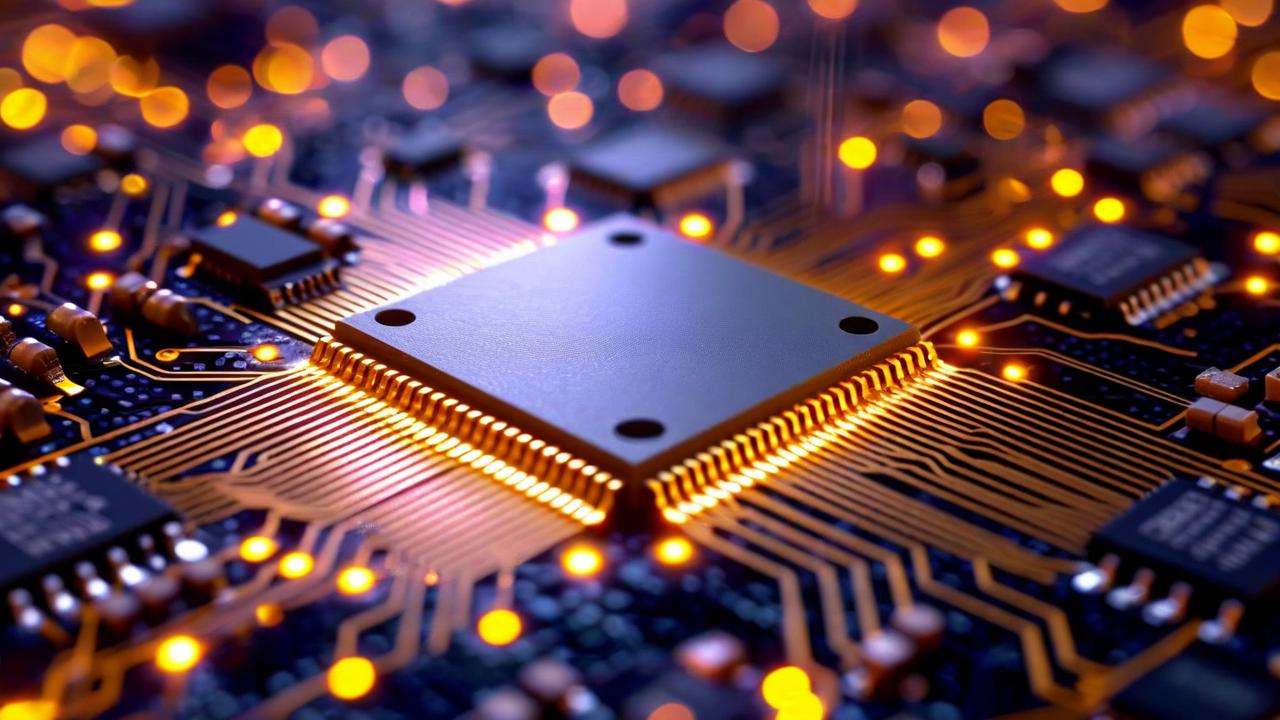

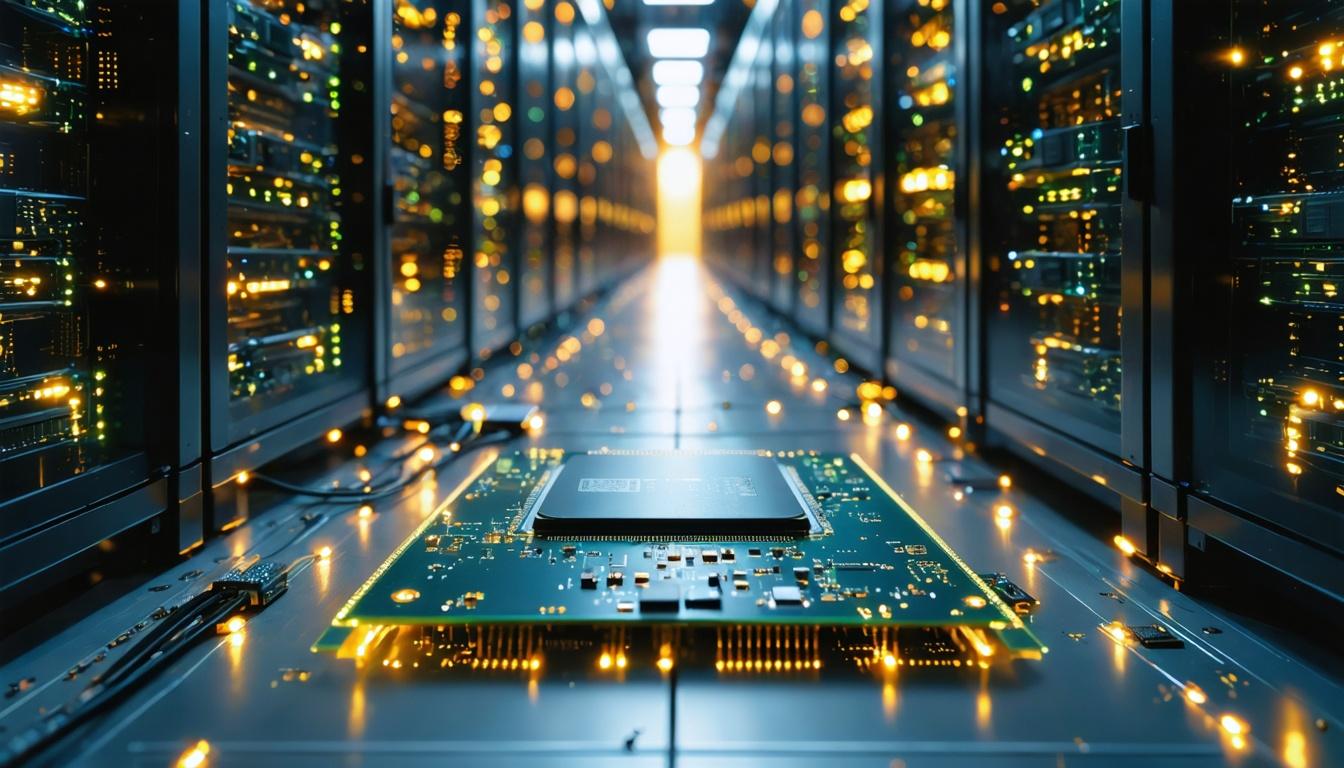
*this image is generated using AI for illustrative purposes only.
Advanced Micro Devices, Inc. (NASDAQ: AMD) signaled a significant acceleration in its data center strategy, projecting that its early 2027 server revenue outlook is already roughly 20% larger than the entire server market was in 2025. The company expects server revenue growth to exceed 80% in the second half of 2026 and at least 70% in 2027. Its broader data center business, including artificial intelligence, is expected to grow well above 100% in 2027.
Server And AI Growth Outlook Accelerates
Matt Ramsay, Corporate Vice President of Financial Strategy and Investor Relations at AMD, noted that the company’s server business grew more than 50% in the first quarter and more than 70% in the second quarter. Both cloud and enterprise revenue increased more than 70% during this period.
The company raised its estimate for the server CPU market to $220 billion by 2030 and continues to target more than 50% revenue share. Ramsay indicated that agentic computing could account for roughly two-thirds of the market as AI spending shifts from training to inference.
| Metric | Growth/Outlook |
|---|---|
| Q1 Server Revenue Growth | >50% |
| Q2 Server Revenue Growth | >70% |
| H2 2026 Server Revenue Growth | >80% |
| 2027 Server Revenue Outlook | >70% |
| 2027 Data Center Business Growth | >100% |
Helios Anchors AMD's AI Expansion
AMD plans to begin shipping components for its Helios AI racks to manufacturing partners in September. These components include MI450 accelerators, Venice CPUs, and Pensando networking products. Management expects a significant revenue ramp in the fourth quarter, followed by another increase in the first quarter.
Customer commitments provide visibility into this expansion:
- OpenAI and Meta Platforms, Inc. (NASDAQ: META) have secured 1-gigawatt commitments each.
- Anthropic has committed to 1 gigawatt, with an ambition to reach 2 gigawatts.
- Deployments are also expected through Oracle Corporation (NYSE: ORCL) Cloud Infrastructure and Microsoft Corporation (NASDAQ: MSFT) Azure.
Ramsay stated that while customer demand remains strong, deployment speeds will depend on the availability of land, power, infrastructure, and capital.
ZT Systems Supports Rack-Scale Push
AMD acquired ZT Systems to add system-level expertise as it expands beyond individual chips into complete rack-scale AI systems. Ramsay said ZT Systems has helped strengthen the Helios design and reduce execution risks. The company plans to begin the Helios ramp with a limited number of manufacturing partners before expanding more broadly.
AMD Says ROCm Is Closing The Software Gap
AMD highlighted progress with ROCm, its AI software platform, as it competes with NVIDIA Corporation's (NASDAQ: NVDA) CUDA ecosystem. Ramsay said improvements over the past 18 months have reduced friction for large customers, narrowing the competitive gap enough that software is no longer a central concern in discussions with leading AI companies.
Venice Expands AMD's CPU Roadmap
AMD is sampling its next-generation Venice server CPUs to customers. Venice scales to 256 cores and 512 threads and targets workloads ranging from traditional cloud computing to AI infrastructure and agentic systems. The company plans to follow Venice with its Florence CPU family in 2028.
What the Numbers Show
The divergence between AMD’s projected 2027 server revenue and the total 2025 market size underscores a fundamental shift in market dynamics. With the 2027 outlook being 20% larger than the entire 2025 market, AMD’s growth assumptions rely not just on gaining share but on a massive expansion of the total addressable market, driven largely by the transition to agentic computing which management estimates could comprise two-thirds of future demand.
Supply Remains The Key Constraint
AMD identified supply as its biggest near-term challenge rather than demand. The company continues to work with Taiwan Semiconductor Manufacturing Company Ltd. (NYSE: TSM), where it ranks among the largest customers. AMD has also announced a $10 billion investment in Taiwan's technology ecosystem, largely focused on back-end capacity. The company is working with partners to secure sufficient memory supply.

How might the transition of two-thirds of AI spending from training to inference impact AMD's competitive positioning against NVIDIA's CUDA ecosystem?
What specific risks could arise from AMD's reliance on a limited number of manufacturing partners for the initial Helios rack-scale system rollout?
Could infrastructure bottlenecks regarding power and land availability constrain AMD's ability to fulfill its multi-gigawatt commitments with clients like OpenAI and Meta?
 16
16





 Access 50+ Readymade Screeners
  Use 200+ Custom Filters
  Get Full Market Insights





