AMD Bear ETFs Rally on Stock Slide Despite Earnings Beat

scanx
Reviewed by
Ritika DScanX News Team
Key Highlights

Advanced Micro Devices Inc. shares fell approximately 10% despite beating Q2 earnings estimates with $11.54 billion in revenue and $1.66 EPS. Inverse ETFs DAMD and AMDD surged 15% and 10% respectively, reflecting investor concern over doubled capital expenditures and delayed AI catalysts.

powered bylight_fuzz_icon
47506022

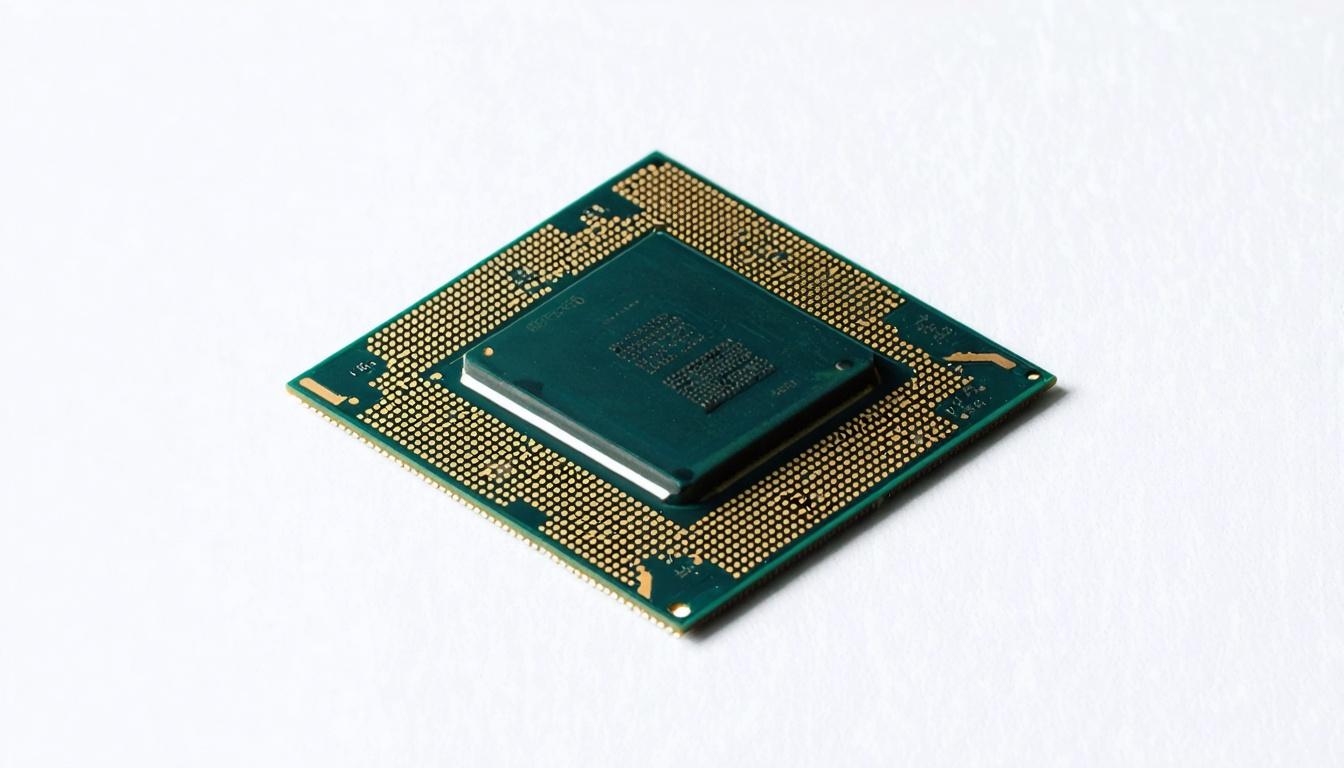
*this image is generated using AI for illustrative purposes only.

Inverse exchange-traded funds (ETFs) tracking Advanced Micro Devices Inc. (NASDAQ: AMD) rallied sharply on Wednesday, driven by a post-earnings decline in the chipmaker’s stock price. The Defiance Daily Target 2X Short AMD ETF (NYSE: DAMD) surged approximately 15%, making it one of the top-performing leveraged ETFs of the day. Simultaneously, the Direxion Daily AMD Bear 1X Shares (NASDAQ: AMDD) rose about 10%. These gains occurred as AMD shares tumbled roughly 10%, illustrating how inverse single-stock products can quickly capitalize on downside moves in high-beta technology stocks.

The market reaction came despite AMD reporting second-quarter results that exceeded Wall Street expectations. The company posted revenue of $11.54 billion and adjusted earnings per share of $1.66. Additionally, AMD provided third-quarter revenue guidance of about $13 billion, which also topped analyst estimates. The divergence between the strong financial report and the negative stock performance highlights the sensitivity of AI-related valuations to forward-looking catalysts rather than just historical performance.

Investor sentiment shifted negatively due to concerns regarding the near-term impact of AMD’s upcoming Helios AI platform and a significant increase in spending. Capital expenditures for the quarter reached $808 million, more than double the year-ago level. Market participants appeared to have priced in an even stronger outlook for artificial intelligence, leading to disappointment over the lack of immediate catalysts from the Helios platform.

What the Numbers Show

The data reveals a disconnect between operational performance and market valuation expectations. While revenue and earnings beats typically drive positive stock reactions, the sharp sell-off suggests that investors are prioritizing future growth trajectories and cost structures over current profitability. The doubling of capital expenditures to $808 million signals aggressive investment in infrastructure, which may weigh on near-term margins or free cash flow, prompting bearish positioning through leveraged ETFs.

Metric Value
Q2 Revenue $11.54 billion
Adjusted EPS $1.66 per share
Q3 Revenue Guidance About $13 billion
Capital Expenditures $808 million
DAMD Gain About 15%
AMDD Gain Around 10%

Analysts offered mixed perspectives on the selloff. Bank of America analyst Vivek Arya advised clients to "ignore the quarterly noise," arguing that the market reaction was short-sighted. Arya noted that Helios shipments are likely to accelerate in the fourth quarter and throughout 2027, suggesting that the long-term AI growth story remains intact despite the immediate volatility.

The trading activity underscores the growing role of single-stock inverse ETFs as tactical instruments for traders navigating earnings events. With high expectations for AI leaders, even positive earnings reports can trigger sharp reversals if they fail to meet elevated consensus forecasts. Investors should note that products like DAMD and AMDD are designed to track daily inverse performance, making them suitable primarily for short-term trading strategies rather than long-term investment positions.

Disclaimer: This article is AI-generated using data from ViewTrade. ScanX is not liable for any inaccuracies.

How might AMD's doubled capital expenditures impact its free cash flow and margin compression in the near term compared to competitors like NVIDIA?

What specific performance metrics or shipment volumes from the Helios AI platform will be required in Q4 to reverse the current bearish sentiment?

Could the sharp rise in inverse ETF trading volume signal a broader shift in institutional risk appetite toward high-beta AI stocks despite strong earnings?

like19
dislike

AMD Q2 Results: BofA Raises 2027 EPS Estimate by 20%

scanx
Reviewed by
Ashish TScanX News Team
Key Highlights

Bank of America maintains a Buy rating on AMD with a $620 price target, raising its 2027 EPS estimate by 20% to $15.88 and 2028 EPS by 34% to $23.88. Analyst Vivek Arya urges investors to look past recent stock volatility caused by Nvidia endorsements, focusing instead on the critical 2027 ramp of AMD’s Helios platform. The bank projects revenue growth accelerating to 77% in 2027 as AMD targets a larger share of the expanding $2 trillion AI compute market.

powered bylight_fuzz_icon
47504219

*this image is generated using AI for illustrative purposes only.

Advanced Micro Devices Inc. (NASDAQ: AMD) shares declined 7% on Wednesday following strong second-quarter results, a move analyst Vivek Arya of Bank of America attributes to market overreaction to competitor news rather than fundamental weakness. Despite reporting revenue of $11.54 billion, which beat consensus by 2%, and data-center sales surging 107% year-over-year to $6.72 billion, the stock fell after Elon Musk stated that SpaceX uses Nvidia GPUs exclusively. Arya advised clients to "ignore the quarterly noise," asserting that investors are judging AMD’s AI opportunity prematurely. The stakes for shareholders hinge on the transition from individual GPU sales to complete AI systems, where AMD’s upcoming Helios platform aims to compete directly with Nvidia’s system-level advantages.

BofA reiterated its Buy rating on AMD with a $620 price objective, implying nearly 28% upside from recent trading levels. The bank increased its calendar 2026 earnings estimate by 2% to $7.62 per share from $7.50. More significantly, BofA lifted its 2027 earnings estimate by 20% to $15.88 from $13.26, and its 2028 estimate by 34% to $23.88 from $17.84. These revisions reflect expectations that AMD’s Helios rack-scale platform will begin ramping in earnest during the fourth quarter before accelerating through 2027. Arya noted that the "'27 Helios ramp [is] more important than mid-'26 trends," emphasizing that the company continues to execute flawlessly in GPU, agentic CPU, and customer traction.

The bank projects substantial revenue acceleration as the Helios cycle matures. BofA expects revenue growth to jump from 47% in 2026 to 77% in 2027, with annual sales reaching approximately $90 billion. By 2028, revenue forecasts rise to $128.3 billion. This growth trajectory supports the widening gap between near-term and long-term earnings estimates, signaling that the core investment thesis relies on future product cycles rather than current quarter performance. AMD guided third-quarter revenue to roughly $13 billion, slightly above the Street’s expectation of $12.5 billion, providing a bridge to the anticipated acceleration.

What the Numbers Show

The divergence between BofA’s modest 2026 revision and aggressive 2027-2028 upgrades highlights a structural shift in AMD’s valuation drivers. While current data-center sales are growing rapidly, the bank believes the real test begins when AMD competes at the system level with Helios. Management estimates the total AI compute market could exceed $2 trillion by 2030, comprising over $1.4 trillion for accelerators and $220 billion for server CPUs. With AMD currently holding 7%–8% of the AI GPU market and 25%–30% of server CPUs, the thesis does not require displacing Nvidia entirely but rather capturing share in an expanding market. BofA projects data-center sales could reach ~$170 billion by fiscal-year 2030, up from ~$32 billion in fiscal-year 2026, potentially pushing earnings above $30 per share.

Metric 2026 Estimate 2027 Estimate 2028 Estimate
Earnings Per Share $7.62 $15.88 $23.88
Revenue Growth 47% 77% N/A
Revenue Total ~$90 billion implied ~$90 billion $128.3 billion

Arya’s note underscores that the recent stock decline was triggered by external commentary regarding Nvidia’s dominance in specific high-profile accounts like SpaceX, rather than any deterioration in AMD’s execution. The bank’s analysis suggests that the market is mispricing the timeline for AMD’s competitive response. By focusing on the 2027 Helios ramp, BofA positions the current valuation as disconnected from the long-term potential of the AI compute market, which management sees as exceeding $2 trillion by 2030.

Disclaimer: This article is AI-generated using data from ViewTrade. ScanX is not liable for any inaccuracies.

How might the transition from individual GPU sales to AMD's Helios rack-scale systems impact gross margins compared to Nvidia's current system-level offerings?

What specific technical or logistical barriers could delay the anticipated 2027 ramp-up of the Helios platform, and how would that affect BofA's $15.88 EPS estimate?

Could Elon Musk's public endorsement of Nvidia for SpaceX trigger a broader shift in hyperscaler procurement strategies away from multi-vendor approaches?

like15
dislike

More News on Advanced Micro Devices Inc