

Tesla CEO Musk calls robot hand engineering 'shockingly difficult'


- Elon Musk states no existing robot hand can drive a screw into wood
- TrendForce identifies complex hand assembly as a major production bottleneck
- Kalshi traders assign 7% probability to public Optimus sales by end of 2026
- Boston Dynamics uses four fingers to reduce cost and failure points

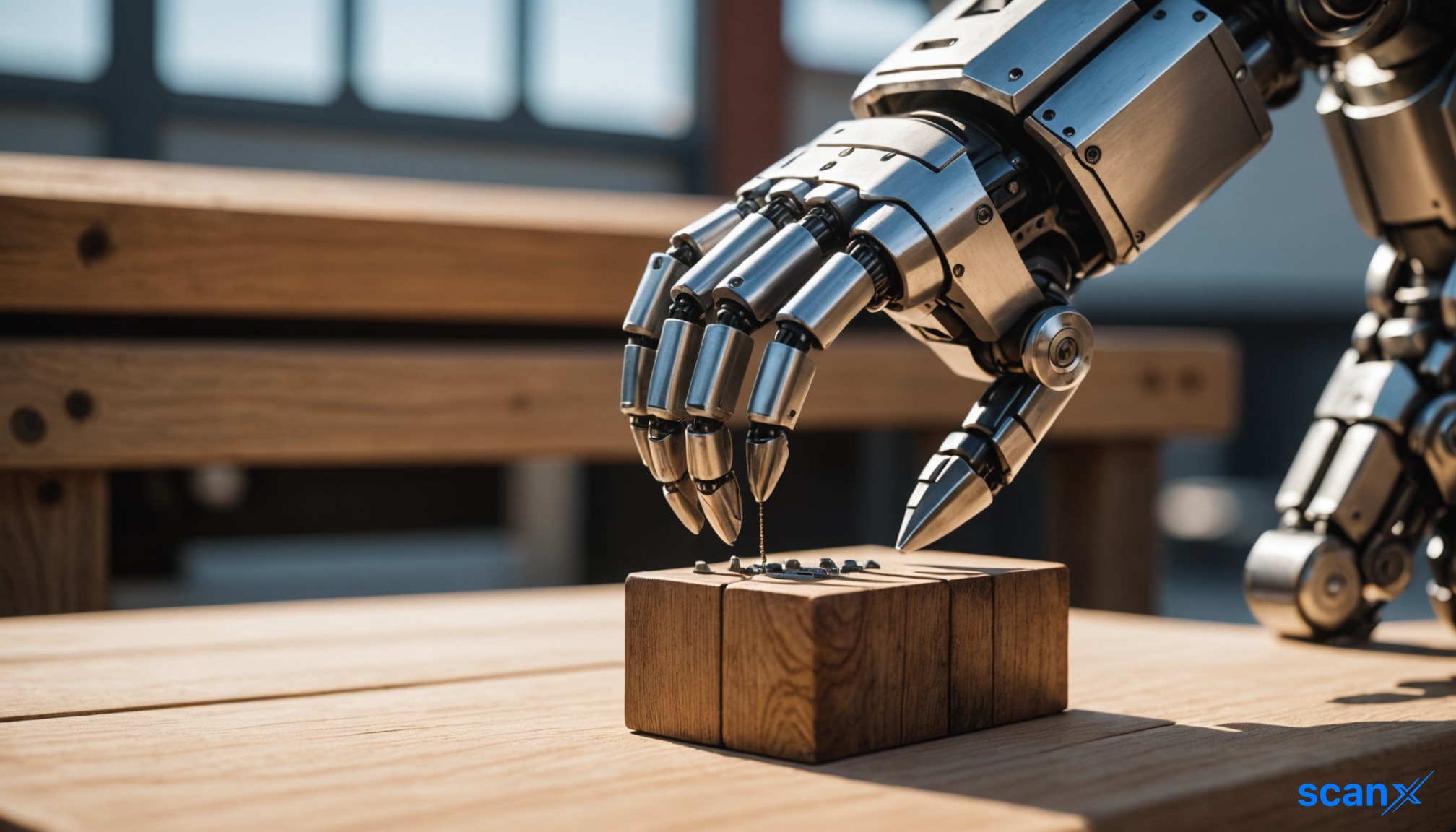

*this image is generated using AI for illustrative purposes only.
Tesla Inc CEO Elon Musk has described the development of human-like robot hands as "shockingly difficult," stating that no existing design, not even a demonstration, can perform basic tasks like driving a screw into wood.
Musk made these remarks during an interview with Tesla Owners Silicon Valley on Saturday. He highlighted that even simple actions, such as signing one's name, require extraordinarily precise finger movements that current robotic technology struggles to replicate reliably.
Engineering Challenges and Production Bottlenecks
The complexity of robotic hands poses a significant hurdle for Tesla, which plans to achieve an annual production capacity of 1 million Optimus robots. Musk previously predicted that the Optimus line could eventually account for approximately 80% of the company's total value.
According to Musk, driving a self-tapping screw into wood is particularly challenging because it requires applying considerable force while maintaining precise control. He noted that touch sensors are prone to damage or wear after repeated movements, unlike human fingers which can repair themselves.
Research firm TrendForce identified Optimus's complex hands as a major production bottleneck in an October 8 report. The firm stated that the hands still require extensive manual assembly, and manufacturing consistency along with sensor reliability need improvement.
Competing Approaches in Robotics
Other robotics companies are addressing dexterity challenges with different strategies:
- Boston Dynamics: The company opted for four fingers instead of five for its Atlas humanoid robot. It explained that adding a fifth finger would increase costs and potential failure points without providing sufficient benefit for industrial tasks.
- Citrini Research: In September, the research firm argued that basic humanoid walking and running were largely solved problems. However, complex dexterity remains much harder, though simpler repetitive tasks could become commercially viable before robots achieve human-level capabilities.
Musk contrasted these approaches by describing Optimus as a general-purpose robot intended to perform a broad range of human activities, including those requiring fine finger control.
Production Timeline and Market Sentiment
Tesla announced in January that it planned to begin producing its third-generation Optimus before the end of 2026. Musk acknowledged on Saturday that the initial production ramp would be extremely slow due to engineering challenges and the need to establish a supply chain for specialized robot components.
Market sentiment reflects caution regarding the timeline. On prediction market platform Kalshi, traders placed the probability of Tesla offering Optimus to the public before the end of 2026 at just 7%, with approximately $401,000 traded on the contract. This contract specifically concerns public sales rather than robots deployed internally at Tesla.
What the Numbers Show
The divergence between Tesla’s long-term valuation target and near-term market expectations highlights the scale of the execution risk. While Musk projects that Optimus could represent 80% of Tesla's value, the market currently assigns only a 7% probability to public availability by the end of 2026. This gap underscores that while the strategic ambition is high, the immediate commercial viability is constrained by unresolved hardware complexities, specifically in hand dexterity and sensor durability.

How might the identified bottlenecks in robotic hand assembly impact Tesla's ability to meet its projected 1 million annual production target for Optimus?
What alternative sensor technologies or material innovations could Tesla adopt to overcome the durability issues associated with touch sensors in high-frequency use cases?
How does the 7% market probability for public availability by 2026 influence investor sentiment and potential valuation adjustments for Tesla's robotics division?





 Create Custom Screeners
 Access 200+ Pre-built Filters
 Use 50+ Readymade Screener





