

Tesla CEO Musk backs engineer's warning on AI compute shortage


- Elon Musk agreed with engineer Yun-Ta Tsai that Tesla's custom inference computers are strategically vital amid rising AI demand
- Tesla plans to produce AI5 and AI6 custom chips in 2027 and 2028 respectively
- The company is developing a $3 billion Terafab in Austin to secure long-term AI chip supply
- Musk stated Tesla would lack sufficient AI chips for Optimus scaling without the Terafab


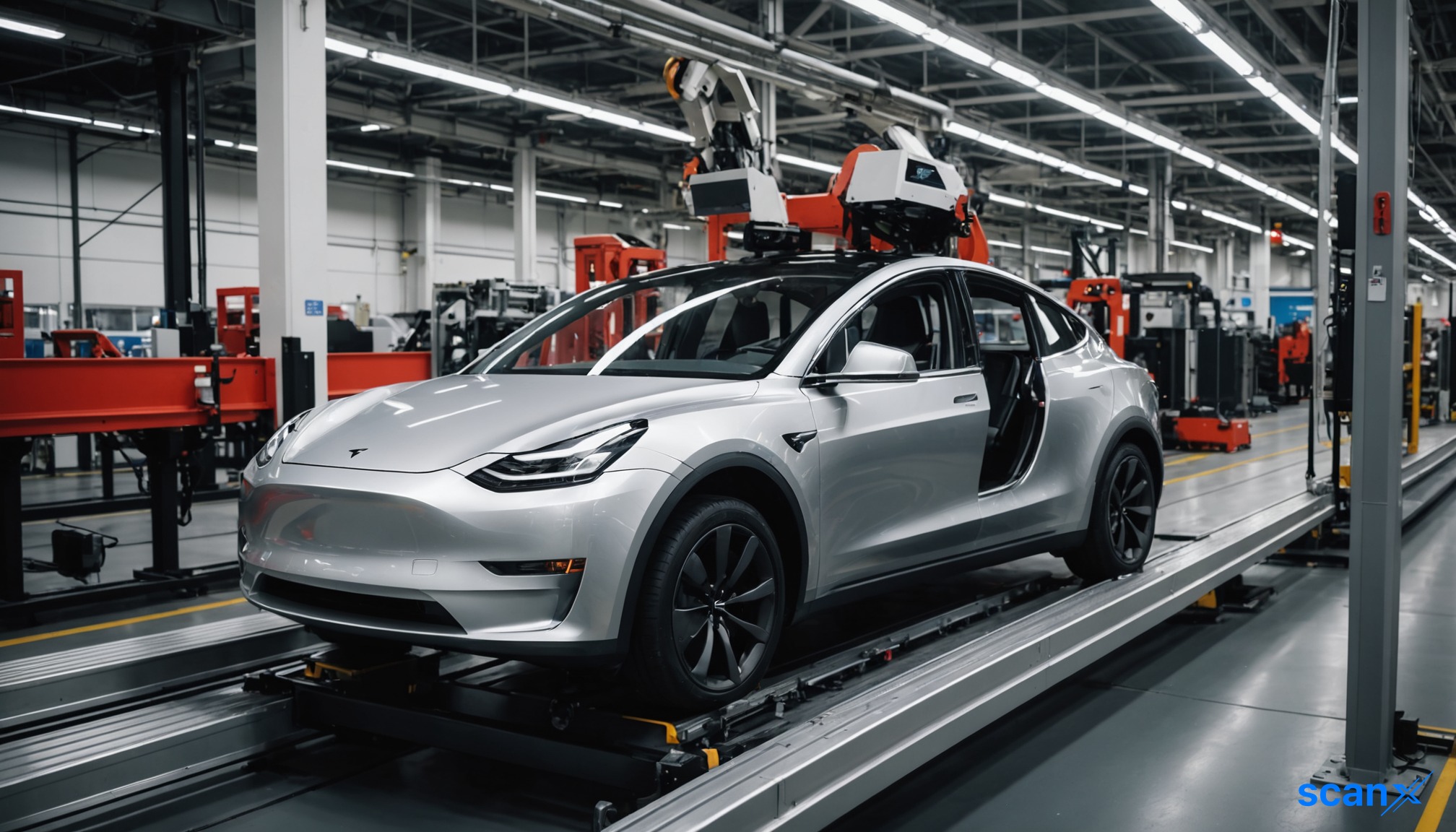
*this image is generated using AI for illustrative purposes only.
Tesla Inc. CEO Elon Musk affirmed that the automaker's early investment in custom inference computers may prove pivotal as artificial intelligence demand accelerates. Musk agreed with an internal engineer's assessment that current compute shortages represent only the initial phase of a broader constraint.
Engineer cites scaling advantage
In response to Tesla engineer Yun-Ta Tsai on X, Musk stated "Yes" regarding the strategic value of Tesla's proprietary hardware. Tsai argued that the company's years of iterating and scaling its own inference computers for each vehicle sold could be "unprecedented" before the superintelligence era. He noted, "The current compute shortage is only the tip of the iceberg. When autonomy becomes indispensable, the real shortage will follow."
Tesla's approach relies on advanced vision and planning AI supported by efficient inference hardware. The company states its custom chips are optimized for performance per watt and mass deployment in cars, reducing reliance on general-purpose processors.
Chip roadmap and Terafab strategy
Tesla's hardware strategy is advancing through its AI5 and AI6 chip generations. The company reported in January that development of both custom inference chips had progressed, with production planned for 2027 and 2028, respectively. Musk has indicated AI5 will "punch far above its weight," primarily optimizing for edge computing in Robotaxi and Optimus applications.
To address long-term supply constraints, Tesla is pursuing the Terafab project. During the second-quarter earnings call, Musk explained that the facility is necessary because Tesla otherwise "simply won't have enough AI chips" to scale Optimus. The project aims to accelerate iteration across logic, memory, packaging, and chip testing.
| Project | Timeline / Cost | Purpose |
|---|---|---|
| AI5 Chip | Production 2027 | Edge computing for Robotaxi/Optimus |
| AI6 Chip | Production 2028 | Next-gen inference hardware |
| Terafab | ~$3 billion (Austin) | Secure AI chip supply chain |
Reuters reported in April that Tesla, SpaceX, and xAI are pursuing Terafab partly because Musk expects external suppliers cannot satisfy their long-term chip requirements. The broader industry context involves hundreds of billions of dollars flowing into AI infrastructure as companies secure chips, cloud capacity, and power.
What the numbers show
The disclosed figures highlight a divergence between near-term product timelines and long-term infrastructure needs. While AI5 and AI6 production are scheduled for 2027 and 2028, the $3 billion Austin fab investment signals that Tesla anticipates chip scarcity extending well beyond these dates. This suggests the company views semiconductor supply, rather than software capability alone, as the primary bottleneck for scaling autonomous systems.

How might the $3 billion Terafab investment impact Tesla's capital expenditure outlook and free cash flow projections through 2028?
What specific competitive advantages will Tesla's AI5 and AI6 chips offer against Nvidia's upcoming Blackwell and Rubin architectures in the edge inference market?
Could the Terafab project trigger a broader industry shift toward vertical integration among other major AI developers facing similar supply constraints?






 Access Market Heat-map & Insights
 Create, Save & Share your Screener
 Use 200+ Screening Filters





