Nvidia revives Rubin CPX AI chip with major redesign for 2027 production

scanx
Reviewed by
Ritika DScanX News Team
Key Highlights
  • Ming-Chi Kuo confirms Nvidia revived Rubin CPX AI chip for Q1 2027 production
  • New design features 168GB HBM4 memory and standalone MGX ETL rack architecture
  • CPX will handle AI prefill tasks alongside Vera Rubin GPUs in a 1:1 ratio
  • Nvidia Q2 revenue surged 106% YoY to $96.22 billion, beating estimates
  • Shares rose 1.36% to $220.50 amid strong Vera Rubin production ramp
powered bylight_fuzz_icon
49783087

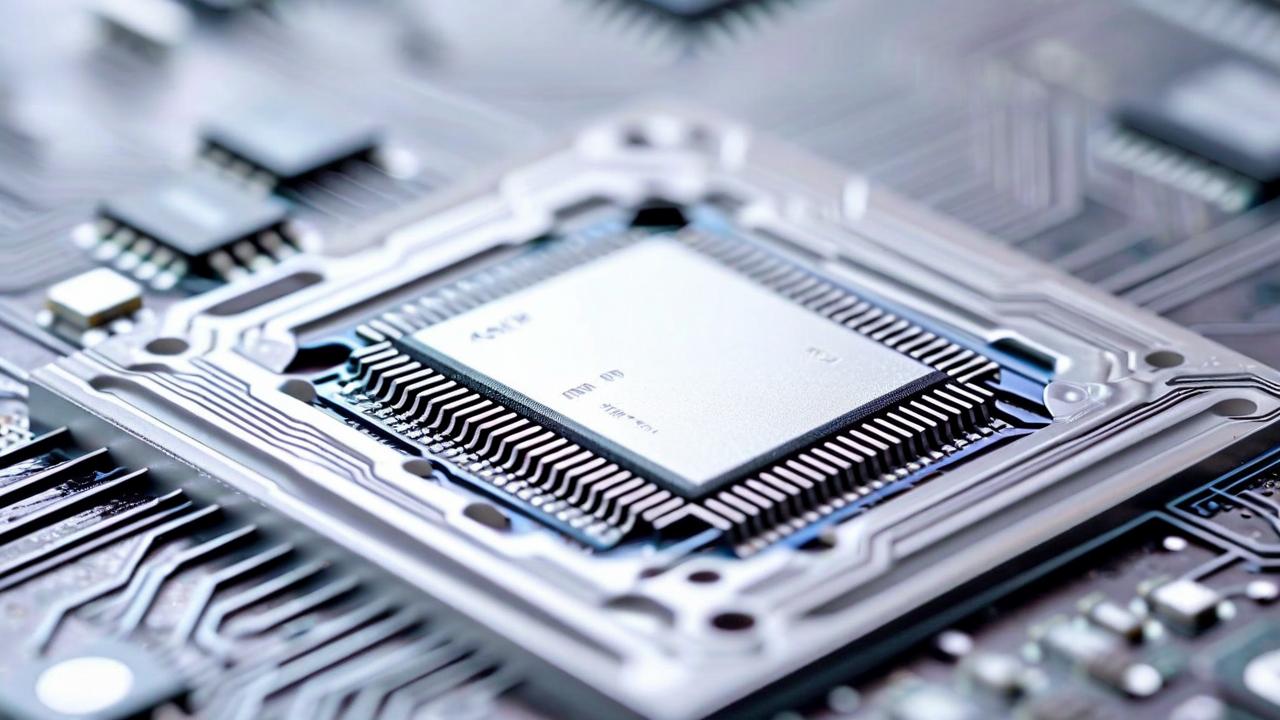
*this image is generated using AI for illustrative purposes only.

Nvidia Corp (NASDAQ: NVDA) has revived its Rubin CPX AI accelerator program after market speculation suggested it had been dropped from the roadmap. Analyst Ming-Chi Kuo stated on Monday that industry checks confirm the chip giant plans to begin production in the first quarter of 2027.

The revived Rubin CPX features a substantially redesigned architecture aimed at delivering stronger prefill performance. Prefill is the stage of AI inference where a model reads and processes input before generating a response. Kuo noted that the new design includes significant changes to both GPU specifications and rack architecture compared to the earlier CPX iteration.

Technical Specifications and Architecture

The updated Rubin CPX will feature 168GB of HBM4 high-bandwidth memory per GPU. This sits between the 288GB of HBM4 memory found in Nvidia’s standard Rubin GPUs and the 128GB of GDDR7 memory in the previous CPX design.

Component Memory Type Capacity Notes
Rubin CPX (Revived) HBM4 168GB Redesigned for prefill
Rubin GPU HBM4 288GB Standard inference
CPX (Previous) GDDR7 128GB Earlier design

Kuo explained that the revived CPX will move into a standalone MGX ETL rack rather than sharing space with Rubin GPUs. Customers can configure systems with 64, 128, 192, or 256 CPX GPUs. Within each 64-GPU module, eight compute trays house eight CPX GPUs each, alongside a switch tray. NVLink will connect the eight GPUs within each tray, while Ethernet handles communication between trays and rack modules.

Integration with Vera Rubin Systems

Rubin CPX is expected to work alongside Nvidia’s Vera Rubin NVL72 systems rather than replacing them. Kuo said Nvidia recommends a 1:1 ratio of CPX to Rubin GPUs. In this configuration, CPX handles the prefill stage and generates the KV cache before transferring that information to Rubin over Ethernet RDMA for the decode stage.

This announcement follows Nvidia’s GTC 2026 event, where the company appeared to remove CPX from its roadmap, instead highlighting Groq 3 LPUs and LPX racks. Nvidia did not immediately respond to requests for comment.

Financial Context

Nvidia reported $96.22 billion in second-quarter revenue in August, marking a 106% increase from a year earlier. This figure surpassed the Street consensus estimate of $92.18 billion. The company also confirmed that Vera Rubin was ramping into full production, with CoreWeave, Nebius, Microsoft Azure, Google Cloud, and Oracle Cloud among its partners.

Nvidia shares closed at $220.50 on Monday, up 1.36%. In after-hours trading, the shares were down 0.10%. According to Benzinga Edge Rankings, Nvidia ranks in the 98th percentile for growth and maintains positive price-trend ratings across short-, medium-, and long-term time frames.

Disclaimer: This article is AI-generated using data from ViewTrade. ScanX is not liable for any inaccuracies.

How might the 1:1 CPX-to-Rubin GPU configuration impact total cost of ownership for hyperscalers compared to using standard Rubin GPUs for both prefill and decode stages?

What are the potential supply chain implications for HBM4 memory manufacturers given the revived CPX's specific 168GB requirement versus the 288GB standard Rubin GPUs?

Could the separation of CPX into standalone MGX ETL racks create integration challenges or latency issues when communicating with Vera Rubin NVL72 systems over Ethernet RDMA?

like15
dislike

Nvidia Q2 Results: Revenue up 106% to $96.2 billion amid bubble fears

scanx
Reviewed by
Anirudha BScanX News Team
Key Highlights
  • Nvidia Q2 revenue rose 106% YoY to $96.2 billion, with net profit doubling to $59.7 billion
  • Former NYT bureau chief Howard French warns Nvidia's financing web resembles late-1980s Japan
  • Company mobilizing over $500 billion in third-party AI infrastructure financing
  • Nvidia guaranteed up to $105 billion in lease/power payments for OpenAI's Ohio project
  • Polymarket gives Nvidia 76% chance to be world's largest company by end of 2026
powered bylight_fuzz_icon
49737004

*this image is generated using AI for illustrative purposes only.

Nvidia Corp (NASDAQ: NVDA) reported a record second-quarter performance, with revenue surging 106% to $96.2 billion and net profit more than doubling to $59.7 billion. Despite the strong operational results, market observers are raising concerns about the sustainability of the underlying financing structures supporting this growth.

Howard W. French, former New York Times Tokyo bureau chief, argues in a Foreign Policy column that the financial ecosystem forming around Nvidia increasingly mirrors corporate Japan in the late 1980s. His analysis suggests that while the technology is real, the capital allocation patterns carry significant risk.

The Financing Structure

French notes that the S&P 500 trades at approximately 23 times expected earnings, roughly one-third of the multiple seen in Tokyo in December 1989. His primary concern lies not with Nvidia’s valuation but with its deepening entanglement with customers through complex financing arrangements.

In August, Nvidia signed preliminary agreements to mobilize more than $500 billion in third-party financing for AI infrastructure. Additionally, the company agreed to guarantee up to $105 billion in lease and power payments for OpenAI’s 4.25-gigawatt data-center project in Ohio.

Financing Commitment Amount Counterparty/Context
Third-party AI infrastructure financing >$500 billion Preliminary agreements
Lease and power payment guarantee Up to $105 billion OpenAI (Ohio project)
Cloud-service agreements $36 billion AI providers

Separately, Nvidia has committed $36 billion under cloud-service agreements with AI providers. The company warned it may be required to purchase capacity that these providers cannot sell, effectively placing Nvidia on both sides of the boom: selling hardware while simultaneously financing the demand for it.

Parallels With 1980s Japan

French draws parallels to Japan’s late-1980s corporate system, where major industrial groups owned stakes in one another and financed each other’s expansion. Capital flowed based on relationships rather than cash flow, often continuing even as markets weakened.

He observes that Nvidia is entering a similar web by supplying AI companies while investing in them and financing their expansion. This occurs even as profits from AI services have yet to match the enormous infrastructure spending.

Japan’s technological dominance was substantial; its companies controlled about 80% of global DRAM production in the 1980s. However, the bubble still burst, and the Nikkei did not regain its 1989 peak until February 2024, more than 34 years later.

What the Numbers Show

The divergence between Nvidia’s operational profitability and its balance sheet exposure highlights a structural shift. While net profit doubled to $59.7 billion on $96.2 billion in revenue, the company’s commitment to guarantee up to $105 billion for a single customer’s power and lease obligations represents nearly 18% of its annualized revenue run rate. This concentration of off-balance-sheet risk alongside direct cloud commitments of $36 billion indicates that Nvidia’s future earnings stability is increasingly tied to the creditworthiness and monetization success of its clients, rather than solely its own sales execution.

French also points to cheaper Chinese open models as a potential threat to AI service economics, which could drive down returns just as Nvidia finances ever more expensive infrastructure.

Market Sentiment

Despite these warnings, prediction markets remain bullish. Polymarket traders assign Nvidia a 76% chance of ending 2026 as the world’s largest company. Apple Inc (NASDAQ: AAPL) holds a 14% probability, while Alphabet Inc (NASDAQ: GOOGL) stands at 9%.

French concedes his analogy is imperfect but maintains that Japan’s experience demonstrates that technological dominance and excessive capital spending are not mutually exclusive. The core risk remains that as Nvidia helps finance demand for its own chips, it becomes more exposed if customers struggle to generate returns on that spending.

Disclaimer: This article is AI-generated using data from ViewTrade. ScanX is not liable for any inaccuracies.

How might the emergence of cheaper Chinese open-source AI models impact the return on investment for the $500 billion in infrastructure Nvidia is helping to finance?

What specific regulatory or accounting changes could force Nvidia to bring its $105 billion guarantee for OpenAI onto its balance sheet, and how would that affect its credit rating?

If AI service providers fail to monetize their infrastructure spending at expected rates, what mechanisms does Nvidia have to mitigate the risk of stranded assets under its cloud-service agreements?

like18
dislike

More News on NVIDIA Corp