

BNP warns US ban on Chinese optical transceivers could raise AI costs


BNP Paribas warns that a proposed FCC ban on Chinese optical transceivers could disrupt AI infrastructure deployment, raising costs and delaying projects for major tech firms. With Chinese manufacturers expected to hold over 60% of the global market in 2026, restrictions could impact DSP suppliers like Broadcom and Marvell, while constraining supply for Nvidia and AMD's next-gen platforms amidst a projected 41% market growth to $31 billion.



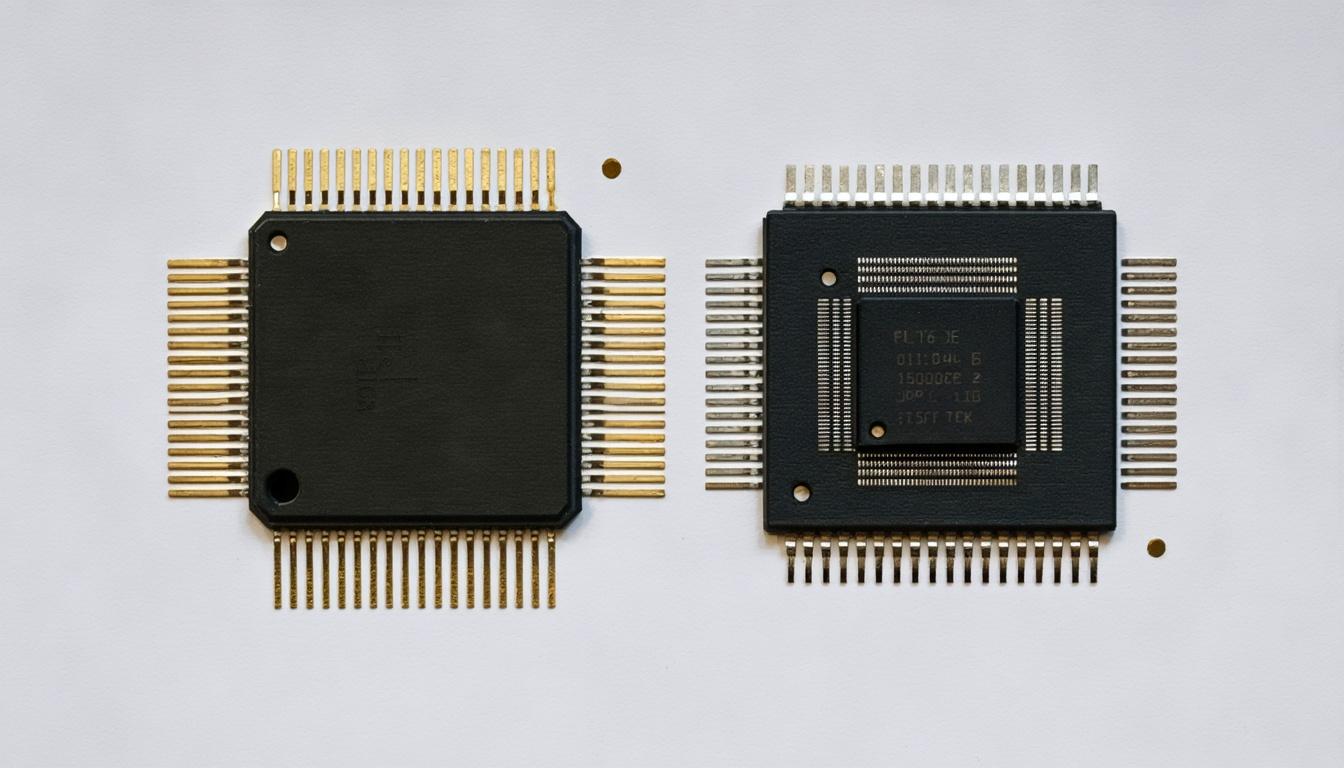
*this image is generated using AI for illustrative purposes only.
A proposed Federal Communications Commission ban on new imports of Chinese-made optical transceivers could significantly increase costs and delay the deployment of US artificial intelligence infrastructure, according to a new note from BNP Paribas. The bank argues that restricting Chinese suppliers, who are projected to control more than 60% of the global data center optical transceiver market in 2026, would create unintended bottlenecks for major technology companies including Broadcom Inc., Marvell Technology Inc., Nvidia Corp., and Advanced Micro Devices Inc.
Optical transceivers are critical components that convert electrical signals into optical signals, enabling high-speed data transfer between servers in AI clusters. As AI infrastructure expands, these networking devices become as vital as the graphics processing units performing computations. Without sufficient transceiver capacity, even advanced AI chips cannot communicate efficiently across thousands of interconnected servers, potentially stalling the rollout of next-generation systems.
The supply chain for these components is deeply interconnected, meaning a ban would ripple beyond Chinese manufacturers. Optical transceivers rely heavily on digital signal processors, which account for roughly 40% of a transceiver’s bill of materials. Chinese transceiver makers are major customers of DSP suppliers such as Broadcom, Marvell, Credo Technology Group Holding Ltd., and MaxLinear Inc. A curtailment of Chinese production could therefore reduce demand for these essential chips.
| Component Supplier | Role in Transceiver Manufacturing | Potential Impact of Ban |
|---|---|---|
| Broadcom Inc. | Digital Signal Processor (DSP) supplier | Loss of demand from Chinese transceiver makers |
| Marvell Technology Inc. | Digital Signal Processor (DSP) supplier | Loss of demand from Chinese transceiver makers |
| Credo Technology Group Holding Ltd. | Digital Signal Processor (DSP) supplier | Loss of demand from Chinese transceiver makers |
| MaxLinear Inc. | Digital Signal Processor (DSP) supplier | Loss of demand from Chinese transceiver makers |
| Lumentum Holdings Inc. | Laser component supplier | Weaker demand if production slows |
| Coherent Corp | Laser component supplier | Weaker demand if production slows |
The implications extend to end-users of AI hardware. Transceivers produced by Chinese firms Innolight and Eoptolink are widely used in server systems built around Nvidia’s upcoming Vera Rubin platform and Advanced Micro Devices’ MI450 accelerators. BNP Paribas analyst Karl Ackerman notes that replacing this manufacturing capacity would not be straightforward, as US suppliers are unlikely to immediately produce enough 800G and emerging 1.6-terabit transceivers to meet hyperscaler demand.
What the Numbers Show
The timing of this potential regulatory shift coincides with a period of rapid market expansion. BNP forecasts the data center optical transceiver market will grow 41% year over year to roughly $31 billion in 2026. This growth is driven by the rollout of Nvidia’s Vera Rubin systems, AMD’s MI450 platform, Alphabet Inc.’s TPU8 processors, and Amazon.com Inc.’s Trainium 3 chips. An outright ban risks tightening supplies during this peak demand phase, adding inflationary pressure to already record AI capital spending rather than strengthening the domestic ecosystem.

How might major US chipmakers like Broadcom and Marvell adjust their supply chain strategies to mitigate revenue loss if Chinese transceiver demand collapses?
Could the potential cost increases and deployment delays accelerate efforts by hyperscalers to develop in-house optical interconnect solutions?
What specific policy alternatives, such as targeted tariffs or subsidies for domestic manufacturing, might the FCC consider to balance national security with AI infrastructure needs?
 20
20














 Access Market Heat-map & Insights
  Create, Save & Share your Screener
  Use 200+ Screening Filters





