

Sensex Records Worst Start to Year in Decade with 1.93% Decline


BSE Sensex recorded its worst start to a calendar year in a decade, declining 1.93% in the first 10 days of 2026. Foreign institutional investors sold ₹11,784 crores worth of equities despite domestic institutional buying of ₹17,900 crores. Geopolitical tensions, delayed US-India trade talks, and sector rotation drove broad-based weakness, with cyclical sectors declining 4.70%-5.80% while defensive stocks showed resilience.


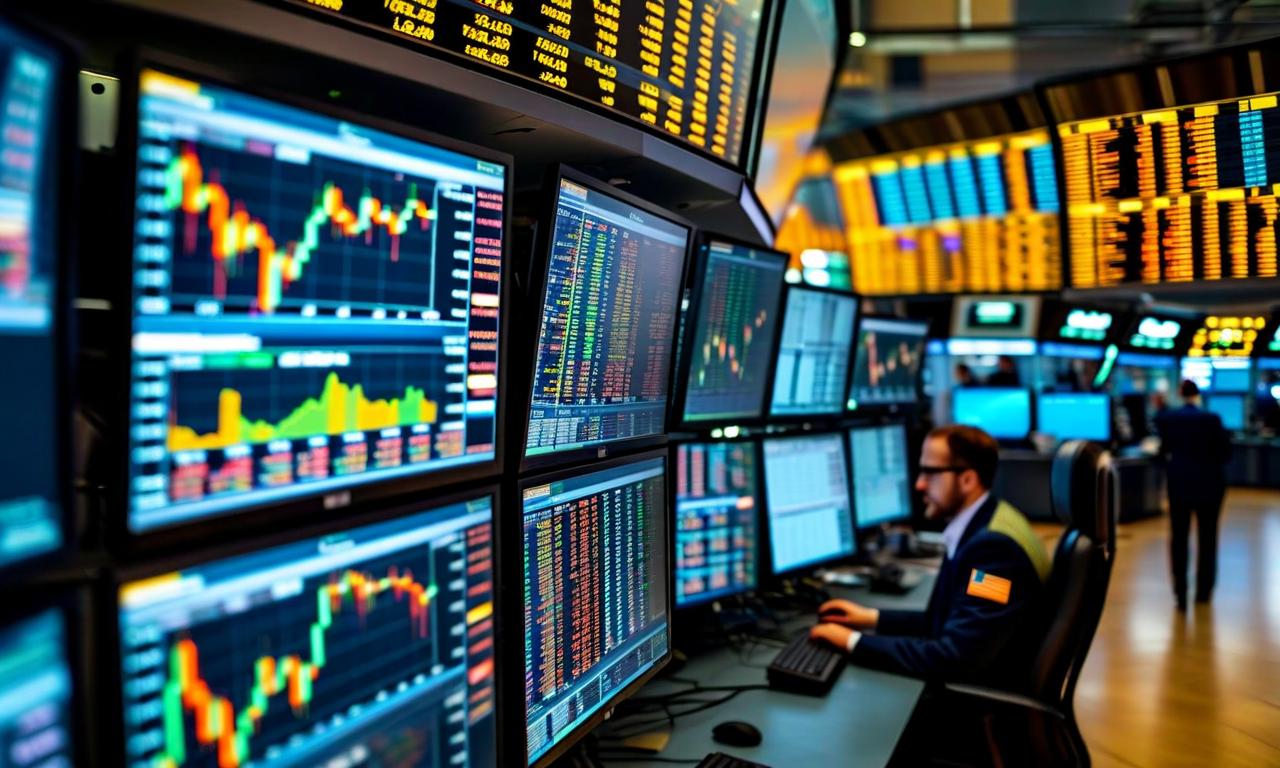
*this image is generated using AI for illustrative purposes only.
India's equity markets have endured their most challenging start to a calendar year in the past decade. The benchmark BSE Sensex declined 1.93% between January 1 and January 10, 2026, marking the worst opening stretch for Indian equities since 2016, when the index had fallen 4.53% amid global growth concerns and China-led volatility.
Market Performance in Opening Week
The selloff intensified during the first full trading week of 2026, with broad-based weakness across market segments.
| Index | Weekly Decline | Closing Level |
|---|---|---|
| Sensex | 2.55% | 83,576 |
| Nifty 50 | 2.45% | 25,683 |
| Midcap Index | 2.60% | - |
| Smallcap Index | 3.00%+ | - |
The broader market indices performed even worse than benchmark indices, with midcap and smallcap stocks declining 2.60% and over 3.00% respectively, signaling a clear shift toward risk aversion among investors.
Foreign Investment Outflows Drive Weakness
Foreign institutional investor (FII) selling emerged as a primary driver of market weakness. Net cash market outflows from FIIs reached ₹11,784 crores through January 9, continuing the negative trend from 2025 when foreign investors were net sellers worth ₹1.66 lakh crores.
| Investment Flow | Amount (₹ Crores) | Period |
|---|---|---|
| FII Outflows | 11,784 | Till January 9 |
| DII Inflows | 17,900 | January 2026 |
| Weekly FII Sales | 8,808 | Week ended January 9 |
| Weekly DII Purchases | 15,700 | Week ended January 9 |
Despite robust domestic institutional investor buying of nearly ₹17,900 crores in January, the Nifty still declined over 600 points during the week, highlighting the intensity of negative sentiment.
Geopolitical and Trade Concerns
According to Dr. Ravi Singh, Chief Research Officer at Master Capital Services, multiple factors contributed to the market pressure. Rising geopolitical uncertainty emerged after the US approved Russian sanctions legislation that could lead to steep tariffs, including on countries purchasing Russian energy. The lack of progress on the anticipated US-India trade agreement, which markets expected to advance early in the year, further dampened investor confidence.
VK Vijayakumar, Chief Investment Strategist at Geojit Investments, noted that foreign investors entered 2026 continuing the selling trend from the previous year, when FII outflows also contributed to a nearly 5.00% decline in the rupee.
Sector-wise Impact
The selloff affected most sectors, with cyclical and policy-sensitive segments bearing the heaviest impact.
| Sector | Weekly Decline | Key Factors |
|---|---|---|
| Oil & Gas | 4.70%-5.80% | Trade fears, commodity uncertainty |
| Energy | 4.70%-5.80% | Global volatility |
| Infrastructure | 4.70%-5.80% | Policy sensitivity |
| Banking | Negative | Post record-high correction |
| Defence | Modest gains | Defensive positioning |
| Consumer Durables | Modest gains | Domestic demand focus |
Defensive sectors such as defence stocks and consumer durables demonstrated relative resilience, ending the week with modest gains as investors sought safety in domestic demand-linked themes.
Market Outlook and Investment Strategy
Ajit Mishra, SVP of Research at Religare Broking, observed that the sharp decline has broken the Nifty's short-term uptrend, with the index slipping below key moving averages and signaling potential near-term weakness unless it decisively recovers lost levels.
Vinod Nair, Head of Research at Geojit Investments, emphasized that while near-term volatility appears likely, India's domestic fundamentals remain supportive. Strong GDP growth, resilient credit demand, and steady consumption trends could attract selective buying opportunities even if headline indices remain range-bound.
Analysts recommend focusing on quality large-cap stocks, avoiding aggressive positions in high-risk segments, and maintaining preparedness for short-term market swings. The consensus suggests that sustained market recovery will likely depend on two critical factors: a turnaround in FII investment flows and clearer signals regarding global trade developments and earnings growth momentum.
Historical Stock Returns for BSE
| 1 Day | 5 Days | 1 Month | 6 Months | 1 Year | 5 Years |
|---|---|---|---|---|---|
| -1.43% | +7.92% | -3.15% | +3.91% | +46.48% | +2,110.48% |










 Create Custom Screeners
  Access 200+ Pre-built Filters
  Use 50+ Readymade Screener





